The Ultimate Guide to Designing Your Sports T-Shirt Quilt in 2026

The Ultimate Guide to Designing Your Sports T-Shirt Quilt in 2026

Your finishers’ shirts and jerseys aren’t just fabric; they’re the technical blueprints of your greatest milestones. It’s common to feel a surge of hesitation when you think about cutting into these high-performance materials to create a sports t-shirt quilt. You’ve likely worried that a standard layout will look cluttered or that delicate moisture-wicking fabrics won’t hold their shape over time. We understand that these pieces represent your sweat and dedication. They deserve a preservation method that prioritizes both structural integrity and aesthetic beauty.

This guide teaches you how to design a sophisticated heirloom that balances professional precision with your unique athletic narrative. You’ll discover how to transform diverse fabrics, from heavy mesh jerseys to thin tech-tees, into a durable work of art that refuses to sag or stretch. We’ll walk through the essential preparation steps, explore artistic layouts like the Masonry style, and explain how expert longarm quilting ensures your legacy lasts for generations. You’re about to move from a box of forgotten gear to a curated masterpiece that captures the energy of every finish line.

The Value of a Sports T-Shirt Quilt: Preserving Your Athletic Journey

A sports t-shirt quilt acts as a specialized textile archive, capturing the kinetic energy of seasons past in a way that no photo album can. While standard t-shirts might represent a casual concert or a vacation, athletic apparel carries the distinct weight of early morning practices and hard-won victories. Every running shirt, varsity jersey, or club tee is a tangible record of personal growth and physical endurance. By moving these pieces from a dusty box in the attic into a functional piece of art, you create a lasting legacy. A memory quilt from t-shirts serves as a powerful gift, honoring an athlete’s dedication with a durable, tactile narrative that remains relevant for decades.

From Varsity Letters to Finish Line Photos

Selecting the right pieces for your project involves more than just grabbing shirts that fit a specific color. You want to curate a collection that represents the full arc of an athletic career, from those first varsity letters to a picture of you with the medals earned at a major finish line. Many athletes choose to integrate high-performance jerseys and even elements from a memorial t-shirt quilt to honor a late teammate or coach who inspired their journey. This process turns a disparate pile of clothing into a cohesive story. Here are some tips on choosing what shirts to include in your quilt.  Securing these fabrics within a professionally constructed quilt preserves their physical integrity far better than traditional storage methods, which may lead to yellowing or dry rot.

Why Sports Fabrics Need Professional Care

Modern athletic gear presents a complex set of challenges because it frequently mixes unstable materials like open-hole mesh, technical "dry-fit" synthetics, and heavy, rubberized screen-printed graphics. A basic "t-shirt blanket" often sags or distorts over time under the uneven weight and tension of these diverse textiles. To ensure your sports t-shirt quilt remains a professional-grade heirloom, it requires specific quilting techniques that stabilize each individual block before assembly. This technical precision prevents the stretchy nature of performance fabrics from causing the entire design to stretch over time, ensuring your milestones stay perfectly aligned for years.

Choosing the Right Layout for Your Sports Memories

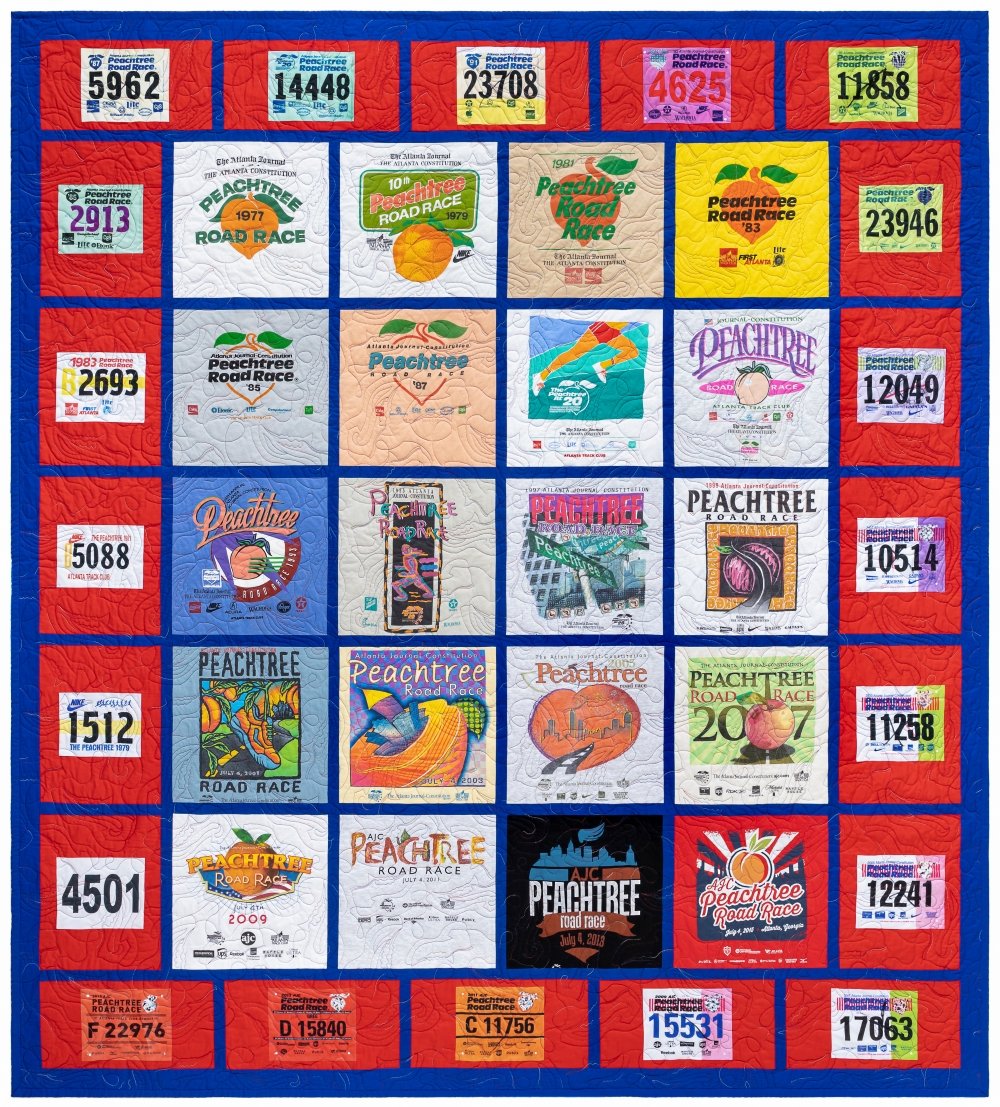
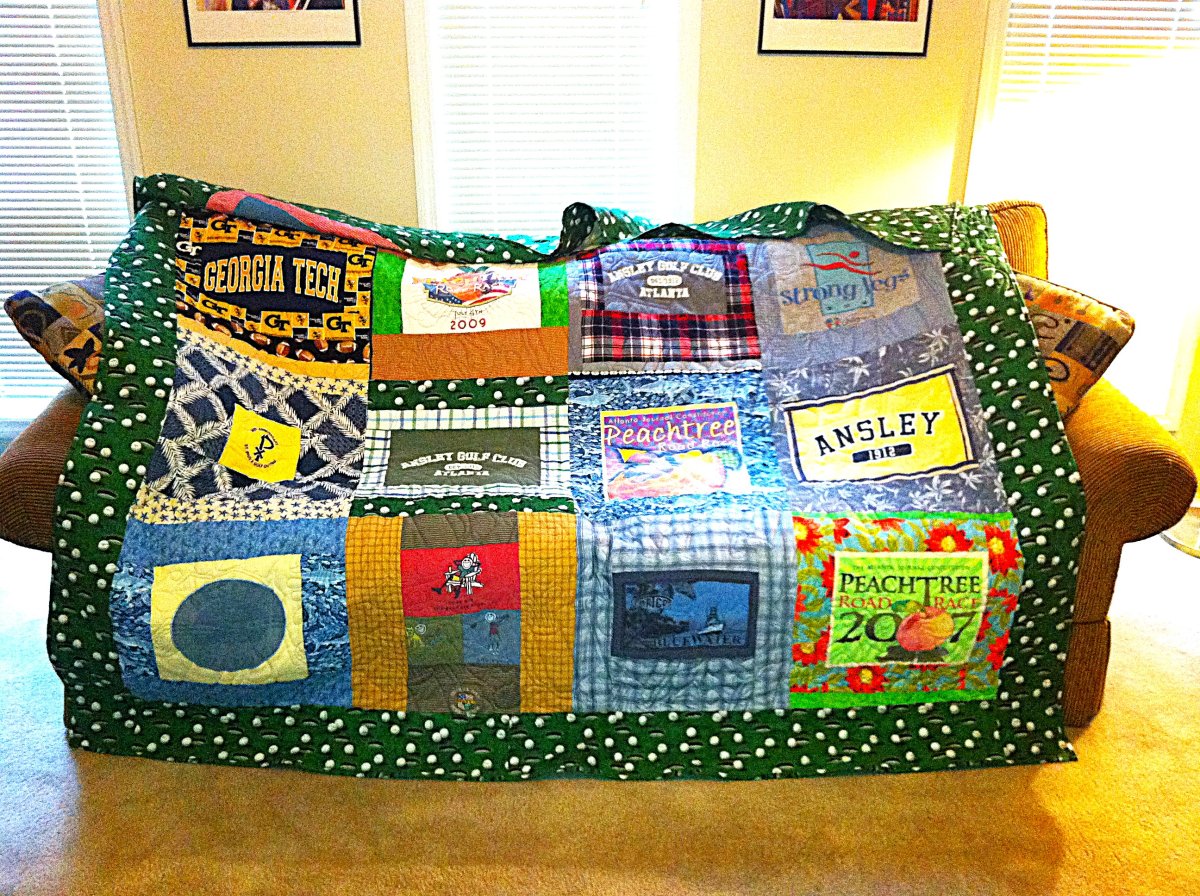
Many amateurs or generic services rely on a standard grid of uniform squares, a choice that often leads to your most prized jersey logos being cut off or surrounded by awkward, empty gaps. This rigid approach fails to capture the dynamic nature of athletic achievements. A professional sports t-shirt quilt should instead reflect the movement and energy of the games themselves. By moving beyond basic blocks, you ensure every oversized graphic and small sleeve detail is preserved in its entirety. This intersection of quilting and storytelling allows for a visual rhythm that guides the eye across your career milestones without interruption or compromise. Can we do a standard grid?  Absolutely, know that the pieces that you want to include must all measure to the size of the squares included in the design as seen in the sample photo at the top of this article.

The Freestyle and Masonry Advantage

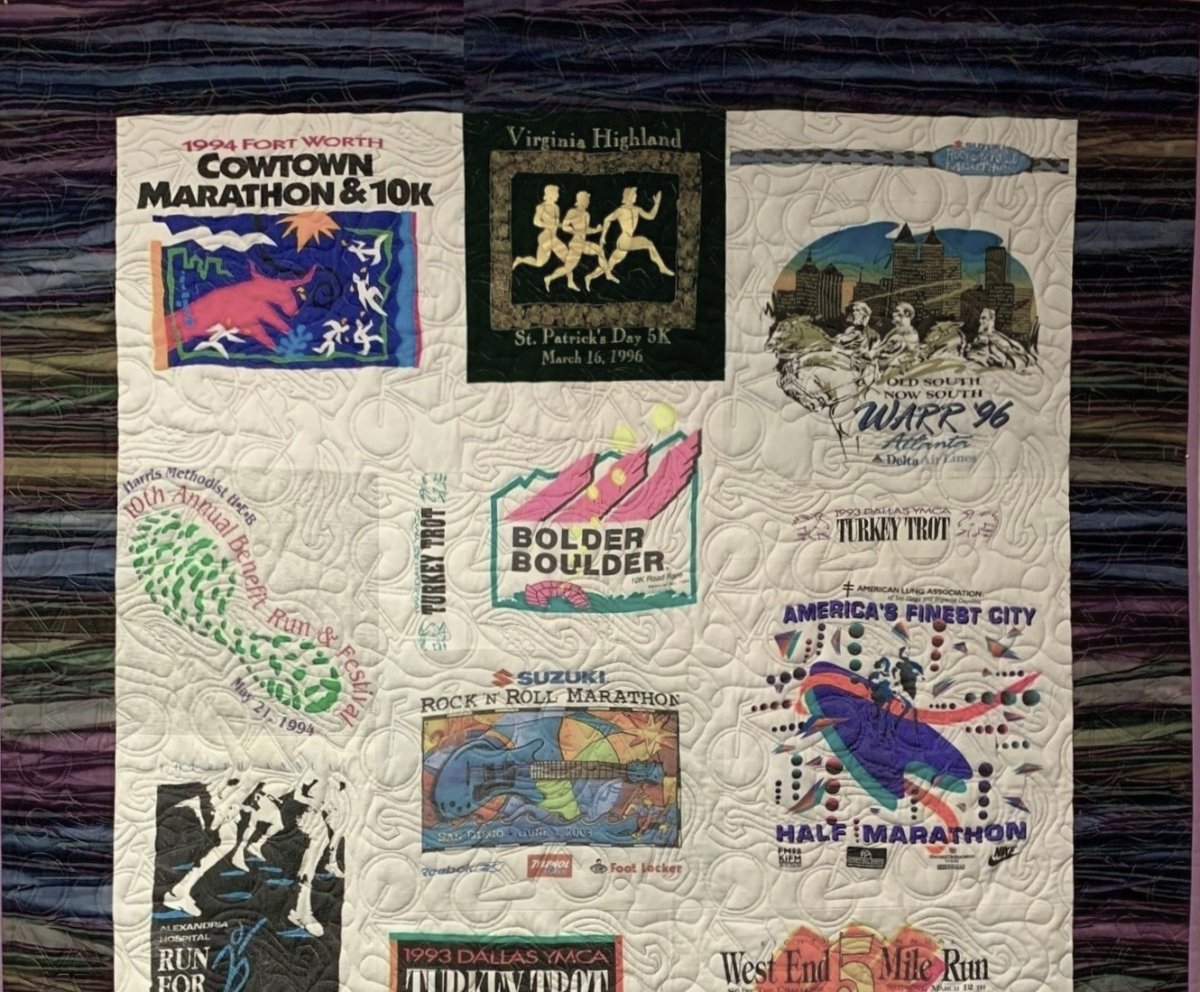
A freestyle t-shirt quilt acts as a sophisticated puzzle. Each block is cut to fit the unique dimensions of the graphic rather than a pre-set template, making it the ideal solution for large chest logos and small sleeve numbers. If you prefer a bit more order, the Masonry T-Shirt Quilt offers a structured yet varied aesthetic, reminiscent of a modern gallery wall. For athletes with a more unconventional spirit, the Wonky T-Shirt Quilt and Artsy T-Shirt Quilt introduce energetic angles and creative overlaps that mirror the intensity of the field. These choices ensure your quilt feels like a deliberate design rather than a messy grid.

Designing for Specific Sports Clusters

When organizing your collection, consider grouping items by season, year, sport, or specific achievement levels. Creating a 10K shirt quilt requires a layout that honors the race-specific graphics, often placing the most significant event in your desired order for maximum impact. This clustering technique helps the viewer follow your progress from a rookie to a seasoned competitor. If you’re feeling overwhelmed by the options, exploring our Portfolio can help you visualize how different styles handle your specific jersey sizes. If you would like to have a specific order that you would like your shirts to be in lay them out on a bed or on the floor in the order that you would like for them to be in and send us a picture of them. We will let you know if it works for your style and you will see the result in a color mockup design that you receive before we actually cut into your shirts.

Technical Precision: How Your Sports Quilt is Built to Last

The structural integrity of a sports t-shirt quilt depends on what happens beneath the surface. Unlike a simple two-layer blanket that often loses its shape after a few washes, a professional-grade quilt is a three-layer textile masterpiece. It incorporates a decorative top, a layer of high-quality batting for warmth and loft, and a premium backing. This construction is overseen with a boutique studio approach, where Kyle the Girl ensures every seam meets rigorous standards for quality and artistic intention. By treating each athletic garment as a technical component rather than just a scrap of fabric, we create a piece that remains flat and vibrant for a lifetime.

The Importance of Stabilization and Interfacing

Athletic apparel presents unique challenges because tech-tees and moisture-wicking fabrics are designed to stretch during movement. Without professional-grade stabilizers, these garments will warp and pull at the seams once they are sewn into a larger design. High-quality, non-woven fusible interfacing bonds with technical fibers to eliminate the mechanical stretch that causes sagging and distorted graphics in amateur projects. This stabilization process ensures that even the thinnest racing shirt has the same structural weight as a heavy cotton jersey, resulting in a perfectly balanced surface that resists distortion.

Long-Arm Quilting vs. Basic Stitching

We use robotic Longarm Quilting to achieve a level of precision that a standard home sewing machine cannot replicate. This technology provides consistent stitch tension across the entire surface, securing all three layers together so they won’t shift or bunch over time. Intricate stitching patterns and reinforced borders add both visual depth and essential structural integrity to the finished work. If you have an existing project that has begun to fail or an unfinished top sitting in a closet, we also offer specialized services like Quilt Repairs + Makeovers and UFO Completion to bring your athletic memories back to life with professional durability.

Transform Your Athletic Legacy into a Lasting Masterpiece

Your journey from the first whistle to the final finish line deserves a tribute that matches your level of dedication. We’ve explored how a professional sports t-shirt quilt relies on deep technical precision, from the expert stabilization of stretchy tech-tees to the robotic accuracy of longarm quilting. By selecting artistic layouts like our Freestyle or Masonry styles, you ensure your largest logos and smallest details are preserved without compromise. You don’t have to settle for a sagging blanket when you can own a structural heirloom that captures every victory in vivid, organized detail.
Just as you wouldn’t compromise on the quality of your training equipment, your athletic legacy deserves the professional touch of a custom quilt.

Ready to move your collection from a storage box to center stage? Our boutique studio specializes in handling diverse athletic fabrics with meticulous care, providing the structural integrity needed to survive decades of use and washing. Start your custom sports t-shirt quilt estimate today and see how our blend of artistic vision and professional longarm expertise can honor your unique story. We’re excited to partner with you in turning your hard-earned gear into a beautiful, durable archive of your greatest achievements.

Frequently Asked Questions

Can you use mesh jerseys or technical ‘dry-fit’ shirts in a sports t-shirt quilt?

Yes, you can absolutely include mesh jerseys and technical "dry-fit" shirts in your sports t-shirt quilt. Mesh jerseys have holes that need to be covered. High-performance fabrics have a lot of stretch in order to move with us during activities, but you don’t want them to continue stretching in your quilt.  We apply professional-grade interfacing to stabilize every shirt. This process ensures your tech-tees maintain their shape alongside traditional cotton, creating a uniform surface that won’t distort over time. We treat these specialized textiles with the technical precision required to preserve their unique textures without compromising the quilt’s structural integrity.

How many sports shirts do I need for a stadium-sized throw quilt?

You typically need between 24 and 30 shirt sides to create a full-sized stadium throw. The exact number depends on whether you choose a structured Blocky T-Shirt Quilt or a more fluid Freestyle T-Shirt Quilt layout. Because athletic graphics vary significantly in size, we recommend sending a few extra shirts to ensure we have enough material to achieve a balanced, artistic composition. This flexibility allows us to prioritize your most meaningful milestones while maintaining a consistent visual rhythm.

Will my large varsity or team logos be cut off in the quilting process?

Your large varsity and team logos won’t be cut off when you choose a layout designed for varied graphic sizes. Unlike generic services that force every shirt into a uniform square, our Freestyle T-Shirt Quilt and Masonry T-Shirt Quilt options are built around the specific dimensions of your gear. We meticulously measure each oversized chest logo and sleeve detail before cutting. This boutique approach ensures that every inch of your athletic history remains visible and perfectly centered within the final design.

Is a sports t-shirt quilt machine washable, or is it too delicate?

A professionally constructed sports t-shirt quilt is fully machine washable and built for daily use. The combination of high-quality stabilization and dense longarm quilting secures all three layers, preventing the bunching that occurs with lower-end blankets. We recommend using a cold, gentle cycle and tumble drying on low heat to preserve the vibrant colors of your jerseys. This durability transforms your athletic memories from fragile keepsakes into a functional heirloom that can handle the rigors of a busy lifestyle.

Marathon T-Shirt Quilt

Marathon T-Shirt Quilt: Turning Race Miles into Custom Textile Art (2026)

Why are you letting your hardest-earned memories sit in a dark plastic bin? You’ve spent months training and an average of 4 hours and 34 minutes on the pavement to earn those technical fabrics, yet the idea of commissioning a marathon shirt quilt might feel daunting if you’re worried about ruining expensive gear. It’s natural to fear that stretchy, high-performance materials will pull or distort over time, or that a standard, repetitive layout will fail to capture the unique energy of your race history. You deserve a tribute that matches the intensity of the record-breaking 2026 London Marathon or your first local 26.2.

A professionally engineered textile transforms those finish line milestones into a durable heirloom and a sophisticated piece of custom art. By moving beyond basic grids, we can create a design that emphasizes symmetry and movement while securing every delicate performance fiber against future wear. This article explores how custom layouts like Masonry or Artsy styles handle various logo sizes and materials, including race bibs and technical tees. You will discover how to preserve your athletic legacy in a way that feels as vibrant as the day you crossed the finish line.

The Anatomy of a Marathon Shirt Quilt: Beyond the Standard Blanket

A marathon shirt quilt isn’t just a collection of fabric; it’s a custom-engineered textile piece designed to stabilize and join varied race shirts into a cohesive story. Many runners mistakenly settle for "t-shirt blankets," which often fail because they lack internal batting and professional longarm quilting. Without these structural layers, the heavy performance fabrics eventually sag and distort under their own weight. Understanding The Anatomy of a Quilt helps clarify why three distinct layers are necessary to ensure your keepsake remains a functional piece of art rather than a limp rag. Professional stitching secures the top, batting, and backing together, creating a durable bond that withstands the test of time.

Why Technical Precision Matters for Performance Fabrics

Performance fabrics behave differently than standard cotton. They’re slippery, stretchy, and prone to pulling under the needle. To combat this, we apply professional-grade interfacing to the back of every shirt before the first cut is made. This step is non-negotiable for a marathon shirt quilt intended to last generations. Stabilization is the critical bridge between athletic wear and durable bedding. It locks the fibers in place, preventing the "quilt stretch" that ruins lesser products after a few trips through the laundry. This technical precision ensures that your moisture-wicking gear retains its shape while feeling soft and comfortable.

The Problem with Standard Block Layouts for Runners

Standard "checkerboard" grids are often too restrictive for the varied graphics found on modern race gear. A fixed-grid style might force you to choose between a stunning back-print and the finish date tucked away on a shoulder. Our Masonry T-Shirt Quilt and Artsy T-Shirt Quilt styles offer a more sophisticated alternative. These layouts use varied block sizes to accommodate every "badge of honor," from oversized chest logos to small sleeve accents. The result is a more dynamic, energetic aesthetic that captures the movement and spirit of the marathon. By choosing a layout that fits the logos, rather than forcing logos into a box, we preserve the full integrity of your race history.

Choosing Your Race Legacy Style: Layouts that Tell Your Story

Every finish line tells a unique story, but not every race shirt is created equal. Some carry the visual weight of a major international event with complex, wrap-around graphics, while others are minimalist mementos from a local trail run. A marathon shirt quilt should reflect this variety rather than forcing every memory into an identical, repetitive square. When planning your project, consider the volume of your collection and how much "story" you want to tell. A cozy throw typically requires 16 to 20 shirts, while a sprawling king-size legacy can incorporate 36 or more. Beyond the fabric, modern designs allow you to integrate "non-textile" memories like Tyvek race bibs or finisher ribbons, creating a multi-dimensional timeline of your athletic progress. If you’re looking to expand beyond running gear, our ultimate guide to designing your sports t-shirt quilt covers how to incorporate diverse athletic apparel from jerseys to tech-tees into a single cohesive heirloom.

The Freestyle Layout: Capturing the Energy of the Course

The Freestyle T-Shirt Quilt is the premier choice for runners with "busy" shirts. If your gear features sponsors on the sleeves, small logos on the pockets, or large vertical prints, a traditional grid would likely crop those vital details out. This approach uses varying block sizes and asymmetrical balance to create a sense of movement across the surface. It mimics the energy of the course itself, ensuring no detail is lost to the cutting mat. This style is particularly effective for high-performance marathon gear where logos often sit in unconventional places.

Masonry and Wonky Styles: Perfect for Varied Race Logos

For those who prefer a more structured but still unconventional look, the Masonry T-Shirt Quilt stacks rectangular race logos like a stone wall of achievements. It provides a clean, organized aesthetic that still accommodates different graphic dimensions without the rigidity of a checkerboard. Alternatively, the Wonky T-Shirt Quilt offers a modern, edgy vibe. Its intentional tilts and creative angles transform athletic gear into high-end home decor that feels contemporary rather than traditional. If you’re unsure which direction fits your collection, exploring our Portfolio can help you visualize the final movement and rhythm of your race history. Type in "running" in the search terms.

Engineering Your Keepsake: The Just T-Shirt Quilts Process

The transformation from a pile of laundry to a high-end marathon shirt quilt is a meticulous journey of technical precision. It begins with selecting a layout that honors your mileage. After you receive a professional estimate based on your specific shirt count, you’ll prepare your collection for its transformation. This isn’t a factory assembly line. In our studio, "Kyle the Girl" acts as your creative partner, mapping out each block to ensure your race history flows logically and beautifully across the surface. Once the layout is finalized, we employ robotic longarm quilting to secure every layer with consistent tension and intricate patterns. This structured workflow ensures that the artistic vision is always backed by professional durability.

Professional Longarm Quilting vs. Tying

Many mass-market products are simply "tied" together using yarn or plastic clips. These methods are insufficient for heavy-use memory pieces, as they allow the internal layers to shift, bunch, and sag over time. Robotic longarm stitching provides consistent tension across the entire surface, locking the batting in place and turning your athletic gear into a functional heirloom. If you’re exploring Memory Quilt Gift Ideas for a fellow runner, remember that professional quilting is what separates a temporary keepsake from a lifetime treasure. It adds a level of artistic flair and structural integrity that a standard home machine or manual tying simply can’t replicate. Whether you’re preserving marathon finishers’ shirts or varsity jerseys, our sports t-shirt quilt design guide walks through how expert longarm quilting protects even the most delicate performance fabrics for generations.
For organizations interested in sourcing the high-quality branded apparel used for these events, or for other premium corporate gift options, you can find out more about bulk custom merchandise.

How to Prepare Your Race Shirts for Shipping

Preparation is the most critical step you’ll take before shipping your memories. To ensure your vision is executed perfectly, place a safety pin in the center of every graphic you want to keep. If a shirt has a small sleeve logo or a back-print that is vital to the story, pin those, too, so they aren’t overlooked during the design phase. Each safety pin counts as 1 "side" towards the total quantity of items included in the quilt.

  • Ask first if you want to pre-cut your shirts: In many cases, we need the full garment to ensure there’s enough fabric for professional stabilization and precise seam allowances. If you are trying to save on shipping, check with us first, so that we can provide cutting instructions for your particular style.

  • Cleanliness matters: Ensure all shirts are freshly laundered without fabric softener, which can interfere with the stabilization process. Spots or stains that don’t come out in the wash will remain part of the forever history!

  • Secure your shipment: Use a sturdy box or shipping bag and a tracking-enabled carrier to ensure your finish-line memories arrive safely at our studio.

Shipping your gear can feel like a big step, but our methodical check-in process ensures every item is accounted for and treated with the respect it deserves. By following these steps, you’re helping us build a marathon shirt quilt that will withstand decades of use while looking as vibrant as race day.

Preserve Your Athletic Legacy in Every Stitch

Don’t settle for a sagging blanket when you can have a custom-engineered masterpiece. Our process bridges the gap between technical athletic gear and high-end textile art, ensuring that even the most delicate performance fabrics remain secure for generations. You’ve done the hard work on the pavement; let us handle the precision in the studio. To begin your transformation, Get a Custom Estimate for Your Marathon T-Shirt Quilt today. We’re excited to help you cross this final finish line and turn your miles into a lasting treasure.

Frequently Asked Questions

Can you make a quilt out of moisture-wicking tech race shirts?

Yes, moisture-wicking technical fabrics are perfect candidates for a custom marathon shirt quilt. These performance materials are notoriously slippery and stretchy, so we use a precise stabilization process to lock the fibers in place before any sewing begins. This ensures that your high-tech race gear won’t pull or distort over time, resulting in a smooth, professional finish that preserves the integrity of the original fabric.

How many marathon shirts do I need for a twin-size quilt?

The size can always vary depending upon the measurements of the graphics on the shirts and the style that you like. For Blocky, Close Blocky, For a twin-size layout, you’ll generally need 24 shirts to achieve full coverage. This number provides enough material to create a balanced design that highlights your most significant race achievements across the bed surface. If you have a smaller collection, we can incorporate larger borders or use our Artsy or Freestyle styles to reach the desired dimensions without compromising the visual impact of your shirts. We start with design so you will always receive a visual mockup of your quilt and the size for approval before we cut anything. Compare quilt sizes to bed sizes here .

Can I include my race bibs or medals in the t-shirt quilt?

Race bibs are a fantastic addition to your textile art, but medals should be displayed separately. We can either sew Tyvek bibs directly into the layout, or for heavy use, reproduce them, preserving the authentic look of your race day registration alongside your shirts. While medals are too heavy and rigid for a quilt, we often integrate finisher ribbons or fabric patches to capture those extra details without adding unnecessary weight or bulk to the bedding. Check that any ribbons or sashes or unusual or unwashed items are color fast and don’t "bleed" in the wash to avoid any disasters after the quilt is made.

How do I wash and care for my marathon shirt quilt?

To keep your marathon shirt quilt in peak condition, machine wash in a non-agitating machine on a gentle cycle with cold water. Avoid using harsh bleaches or fabric softeners that can degrade technical fibers and performance prints over time. Tumble dry on a low-heat setting or lay the quilt flat to air dry. This methodical care routine protects the professional longarm quilting and keeps the colors of your race shirts vibrant for decades.

How Much Does a T-Shirt Quilt Cost in 2026? A Complete Value Guide

How Much Does a T-Shirt Quilt Cost in 2026? A Complete Value Guide

Why does one service offer a finished product for a bargain-basement price while another asks for a significant investment to handle the exact same shirts? It’s a jarring gap that leaves many people wondering if they’re paying for a brand name or actual quality. You’ve spent years collecting these memories, from finish-line photos to late-night concerts, and you shouldn’t have to risk them being ruined by a cut-rate service. Understanding the real t-shirt quilt cost in 2026 means looking past the base price to see the structural integrity and artistic composition underneath.

In this guide, we’ll demystify the technical jargon and show you exactly what goes into a premium heirloom. You’ll learn how professional longarm quilting and specialized interfacing protect your fabrics from the wear and tear of daily life. We’ll also preview how different compositions, like the balanced Masonry layout or the unconventional Artsy style, affect the final outcome and why certain extra fees are actually signs of superior care. By the time you’re finished reading, you’ll feel confident choosing a craftsman who treats your history with the meticulous care it deserves.

T-Shirt Blanket vs. T-Shirt Quilt: Defining the Cost Gap

When you start researching the t-shirt quilt cost, the first thing you’ll notice is a massive price variance. This usually stems from a fundamental difference in construction: is it a blanket or a true quilt? A t-shirt blanket is essentially a one or two-layer fabric sandwich, often consisting of your shirts sewn to a fleece backing with no internal structure. While this is a budget-friendly way to upcycle, it lacks the architectural foundation needed to prevent the jersey fabric from stretching and sagging over time.

A genuine quilt is a three-four layer masterpiece. It features a decorative top, interfacing, a middle layer of insulating batting, and a premium backing. These layers are secured through meticulous Longarm Quilting. Because the history and material of the T-shirt is rooted in flexible, knit cotton, these shirts will naturally distort without proper stabilization. Quilts are an investment because they require more materials, specialized machinery, and significantly more labor to ensure they survive decades of use.

The Role of Batting and Backing

The materials hidden inside and behind your shirts dictate the "hand" or feel of the final piece. High-quality batting adds a satisfying weight and breathable warmth, creating that classic "quilt loft" that feels substantial rather than flimsy. Choosing a premium quilting cotton or minky backing over standard fleece is another major factor in the t-shirt quilt cost. Cotton provides a crisp, stable finish that holds its shape through hundreds of laundry cycles.  Minky is a newer quiltable fabric that is 100 percent polyester.  It is soft and comes in a large variety of colors. Fleece can pill or stretch, eventually leading to a distorted appearance. The stretch difference can be significant. On one quilt that came to use for repair on a "blanket" that wasn’t quilted, the top t-shirt layer was 7" longer than the fleece back.

Stitch Quality and Durability

Construction methods vary wildly between low-cost services and professional studios. Many budget operations use "tacking," for quilting, which involves only securing the t-shirts at the corners of each block. In contrast, professional methods utilize robotic longarm stitching to create an edge-to-edge pattern across the entire surface. This ensures even tension and prevents the fabric from bunching or shifting during use. Longarm quilting is the gold standard for memory preservation because it creates a permanent bond between all three layers of the quilt.

The Main Factors That Determine T-Shirt Quilt Pricing

Assessing the t-shirt quilt cost involves more than looking at a price tag; it requires an understanding of the labor and material symphony required to turn t-shirts and knits into stable art. Every project is a unique puzzle where the variables of construction directly influence the final value. While some factors are obvious, others are hidden within the layers of the quilt itself. Five primary elements drive the investment:

  • Shirt Count: More shirts mean more deconstruction, individual stabilization, and complex layout planning.

  • Layout Complexity: A standard grid is straightforward, while artistic arrangements like a Masonry T-Shirt Quilt or Freestyle T-Shirt Quilt require intense design and labor construction hours.

  • Materials: High-quality fabrics and materials are essential.

  • Finishing Services: Long arm quilting and professional binding styles add both visual frame and structural edge protection.

  • Logistics: Secure shipping and comprehensive insurance ensure your irreplaceable memories are protected during transit.

Design Labor – The not so obvious costs

A Blocky T-Shirt Quilt is often more accessible because the uniform sizes allow for faster assembly. However, when you opt for an Artsy T-Shirt Quilt, the labor shifts from simple sewing to complex curation. Just T-Shirt Quilts approaches each project as a meticulous guardian of quality, spending hours balancing colors, logo sizes, and shirt textures. This creative process ensures the final piece has a sense of movement and symmetry rather than looking like a random collection of fabric. The time and talent it takes is what it takes.  I keep asking for volunteers and nobody’s taking me up on that!  If you’re ready to see how all of these factors come together for your own collection, exploring our custom quilt styles is the perfect starting point.

Professional Stabilization

Stabilization is the technical foundation of a quilt that stays flat for a lifetime. Because t-shirts are knit fabrics, they naturally want to stretch, curl, and distort under their own weight. That’s why they’re so comfortable to wear!  We use professional-grade iron-on interfacing to "freeze" the knit before the first stitch is ever sewn. This prevents the "wavy" look common in budget blankets and ensures the longarm quilting remains crisp. The knit is still supple and not stiff.  Properly stabilizing t-shirt fabric is non-negotiable for high-end craftsmanship.

Beyond the Grid: How Layout Styles Influence the Final Estimate

While the quality of materials sets the floor for your investment, the layout style you choose determines the artistic ceiling. Most budget services rely on a rigid grid system where every shirt is cut into an identical square. This "one-size-fits-all" approach is faster to produce, but it often forces a compromise, either cutting off the edges of a large back-print or leaving awkward empty space around a small chest logo. Moving beyond these constraints is a primary driver of the t-shirt quilt cost because it requires precise measurements and a designer’s skills rather than just a seamstress’s stitch.

The Blocky T-Shirt Quilt and Close Blocky T-Shirt Quilt serve as the foundation of traditional memory quilting, offering a clean and structured symmetry. For those with a collection of logos that vary a lot in size, the Masonry T-Shirt Quilt provides a sophisticated alternative. It mimics the staggered pattern of a brick wall, allowing for varying block heights and widths without sacrificing the quilt’s overall balance. When you move into the Wonky T-Shirt Quilt or Artsy T-Shirt Quilt categories, you’re investing in a gallery-worthy piece where the layout itself becomes part of the storytelling.

Masonry vs. Freestyle: Which is Worth the Upgrade?

Choosing between these two styles depends on your personal aesthetic and how you want the rhythm of the quilt to feel. A Masonry layout is structural and organized, yet it elegantly accommodates those oversized event shirts alongside smaller pocket logos. In contrast, the Artsy T-Shirt Quilt is among our most labor-intensive option. It offers an energetic, "edgy" flow that we can create following your sketch or drawing.

Handling Oversized Graphics and Small Details

A professional maker doesn’t just cut; they curate. Capturing a massive graphic often requires "fusing" or piecing multiple fabric sections together to preserve the full design. We also take the time to integrate unique details like pockets, sleeves, hats, or even sentimental neck tags. This meticulous attention to detail prevents the heartbreak of seeing a favorite shirt’s design cropped away. While this level of precision increases the design hours, it ensures your memories remain perfectly intact within the final composition.

Hidden Costs and Quality Red Flags in Professional Quilting

Evaluating the t-shirt quilt cost requires a sharp eye for what’s missing from a quote. Many budget services use a "per-square" pricing model that sounds enticing until you realize it excludes structural necessities like interfacing, batting or binding. This trap may force customers into paying "add-on" fees for basic durability, significantly increasing the final t-shirt quilt cost. Even worse, some services use low-quality thread that snaps with use or under tension, eventually this can lead to costly Quilt Repairs + Makeovers.

If you’ve inherited a quilt, you may have an "Unfinished Object" or UFO . This happens when you only have a pieced quilt top, leaving you to figure out the batting, backing, and actual quilting yourself. If you’ve been left with a half-finished project, our UFO Completion service can transform that UFO into a functional heirloom. A true professional delivers a finished masterpiece, to take that unfinished project off of your "to-do" list.

Red Flags to Watch For

A reputable studio acts as a creative partner. If a company doesn’t ask about your design preferences or fails to mention stabilization, proceed with caution. Watch out for these indicators of a low-quality shortcut:

  • Lack of Longarm Quilting, often replaced by "tied" corners or "stitch-in-the-ditch" methods that don’t fully secure the middle layer.

  • No clear process for handling complex fabrics like performance wear or vintage jerseys.

  • Vague descriptions of materials, such as not specifying thread weight or batting types.

The Value of Longarm Finishing

Professional-grade durability comes from robotic longarm quilting. This process ensures even tension across the entire surface, preventing the bunched-up look that may plague DIY attempts. Choosing a professional means you can select intricate stitching patterns that complement your interests and shirt designs while providing a structural bond that lasts a lifetime. If you’re struggling with a poorly made memory project, book a Quilt Makeover today to improve and restore its integrity and beauty.

Getting Your Estimate: How to Budget for a Lifetime Keepsake

Budgeting for a memory isn’t just about finding the lowest number; it’s about honoring the stories those shirts tell. A professional consultation is the essential first step in this journey. It transforms a vague idea into a concrete plan, ensuring that the final t-shirt quilt cost reflects the exact level of craftsmanship your collection requires. During this phase, you’ll work with a technician who is also a visionary, mapping out how your specific fabrics will interact within a structured and professional workflow.
Just as you might use a tool to plan your project budget, businesses use specialized platforms to manage their overhead; for example, you can learn more about Strictly and how they help companies calculate and manage their payment processing savings.

To optimize your investment, group your shirts by theme before your appointment. Categorizing by marathons, college years, or memorial pieces allows you to visualize the narrative and choose a size that fits both your space and your budget. Selecting the most vibrant logos or the most sentimental fabrics ensures that every square inch of the quilt serves a purpose. This planning represent an investment in your family history, preserving items that would otherwise sit forgotten in a bin.  Here’s more for ideas on other items that can be included in your quilt.

Calculating Your Shirt Count

The scale of your project is the most significant variable in your estimate. For a cozy throw, you’ll typically need 12 to 20 shirt sides. A twin-size quilt usually requires 24 to 30 pieces, while a sprawling king-size masterpiece can incorporate 50 or more. The total number of shirts you decide to include directly dictates the final dimensions and the complexity of the design layout. Thus, our pricing is by quantity of items included. If you have a target size we can design to that. Because of the variations in shirt graphic size, by default most quilts do not turn out to be bed size.  You will receive a color design before cutting and sewing that will show you the final quantity and finished size expected for your project.  This guide can be used to compare design mockup size to bed size.

The Just T-Shirt Quilts Experience

Choosing a boutique studio means you aren’t just a number in a factory line. Kyle the Girl ensures every project meets high-end standards, treating your shirts with the reverence they deserve. From the initial online estimate to the moment your safely shipped heirloom arrives at your door, the process is designed for peace of mind. You are choosing a partner who refuses to compromise on quality, providing a fully custom, artistic manufacturing experience that a mass-market blanket simply cannot replicate. Call for personal service or start with an estimate on line from Just T-Shirt Quilts.

Preserving Your Legacy with Precision and Artistry

Investing in a memory quilt is a choice to protect your personal history. You’ve learned that a true quilt relies on longarm quilting and expert stabilization to remain beautiful for decades. Whether you’re drawn to the structured rhythm of a Blocky layout or the energetic flow of an Artsy design, the right choice ensures your treasures are never compromised. Understanding the t-shirt quilt cost helps you see past the surface and recognize the value of meticulous craftsmanship. Just as craftsmanship is essential for a quality quilt, professional training is key to excellence in the service industry; you can visit The J Tucker Group to see how they help hospitality businesses reach their potential.

Your collection of shirts represents a lifetime of milestones and achievements. Don’t leave them tucked away in a dark corner when they could be transformed into a functional work of art. We can create your quilt any way you like to best reflect your unique personality and story. Get a Custom Quote for Your T-Shirt Quilt today and take the first step toward a masterpiece. We’re excited to help you turn those sentimental fabrics into an heirloom that brings warmth and joy for generations to come.

Frequently Asked Questions

How much should I expect to pay for a high-quality t-shirt quilt?

A high-end project reflects the intensive labor required to stabilize individual jerseys and perform professional longarm quilting. While budget blankets exist at lower price points, a true heirloom involves a significant investment in structural integrity and artistic layout. The final t-shirt quilt cost is determined by your chosen dimensions, the complexity of the design, and the premium materials used for the backing and batting.

Why are some t-shirt quilts so much cheaper than others?

The price difference usually indicates a "blanket" construction rather than a "quilt" construction. Lower-cost services often skip essential steps like iron-on interfacing or internal batting, resulting in a flimsy product that stretches over time. Premium providers use specialized machinery and high-quality fabrics to ensure the piece survives decades of washing without "pilling", losing its shape or vibrancy.

Is a t-shirt quilt worth the cost compared to a blanket?

Choosing a quilt is an investment in longevity and multi-generational durability. Unlike a simple blanket, which is just two layers of fabric sewn together, a quilt features a stabilized top, insulating batting, and a secure backing held together by intricate stitching. This "sandwich " prevents the jersey fabric from sagging and ensures your memories remain crisp and clear for a lifetime.

Can you finish a t-shirt quilt I already started (UFO)?

Yes, we specialize in UFO Completion for projects that have been stalled or abandoned. If you have a finished quilt top but lack the equipment for longarm quilting, we can step in to provide the batting, backing, and professional stitching. This service is a perfect way to ensure your hard work results in a durable, finished heirloom rather than a stack of fabric in a closet.

Does the price include the backing and binding materials?

A comprehensive estimate for a t-shirt quilt cost should include all standard materials required for a finished product. This encompasses the professional-grade batting for warmth, high-quality quilting thread and fabrics, and the binding that protects the edges. Always verify that these elements are included so you aren’t surprised by material surcharges after you receive an estimate.

How much does shipping a t-shirt quilt typically cost?

We recommend using a carrier that provides robust tracking and insurance, as the sentimental value of your shirts is irreplaceable and requires the highest level of protection during transit. This varies depending upon weight and location but is usually $50 – $70. If you’d like the parts of your items that didn’t go into the quilt returned, the price will of course be higher.  We weigh the quilt once finished and will include shipping on the final invoice.

A Hearty Reminder

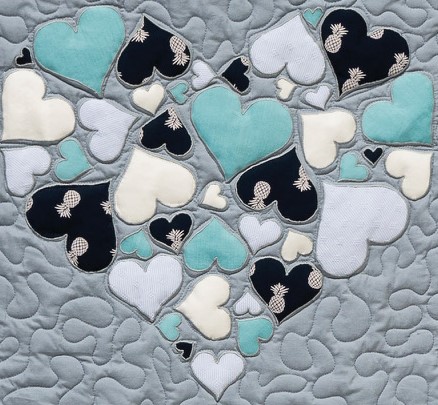
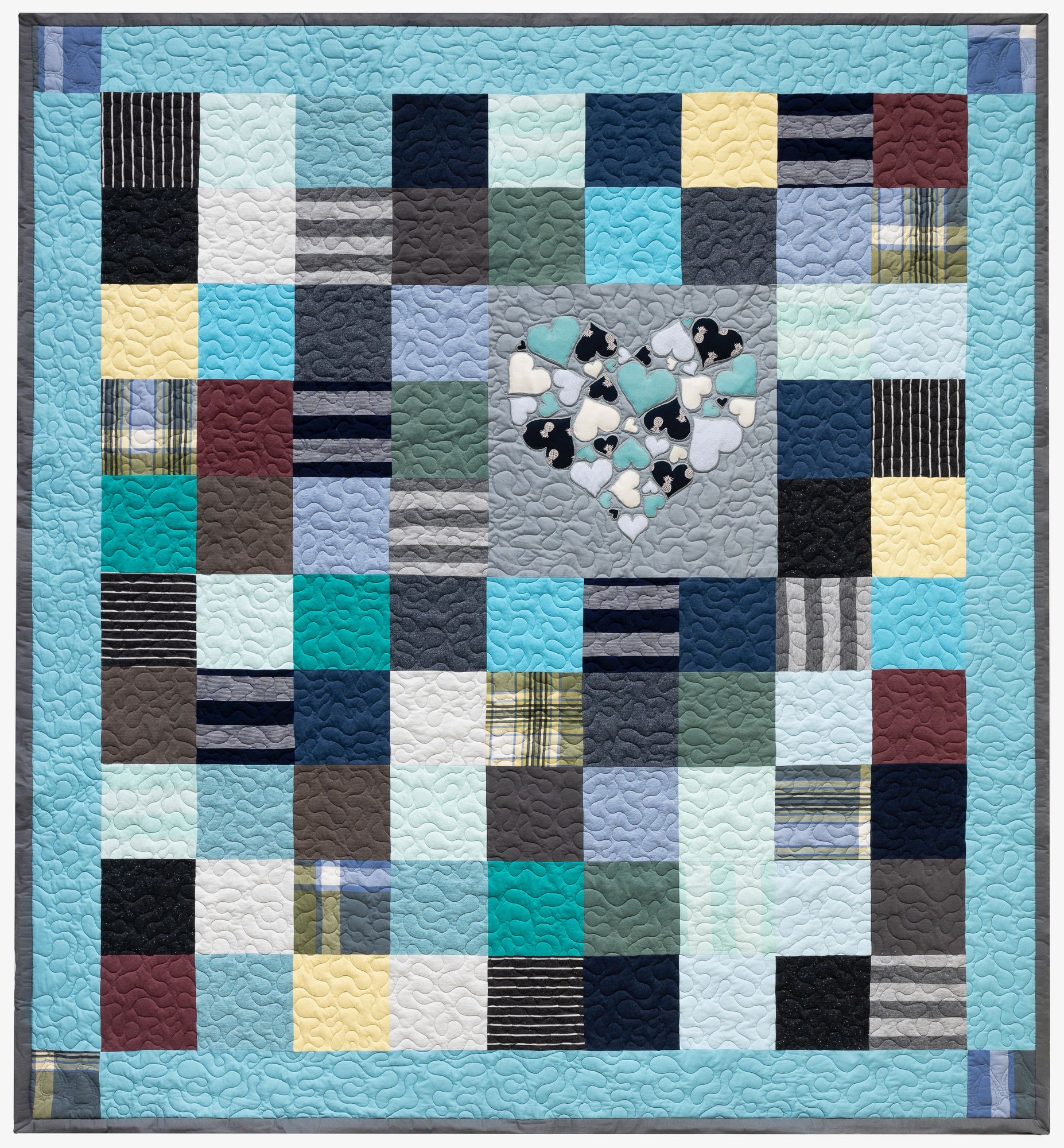
Hearts can be happy when they remind us of loved ones. Hearts can be sad when they remind us of a special someone who is no longer with us. This quilt was the vision of a widow in memory of her husband, a pilot, who died in a plane crash. It’s all made from the clothes he wore.

In the corners we quilted penguins. They met at the zoo and liked the fact that penguins mate for life and had planned to live together forever. The penguins, the hearts, his clothes in the form of a quilt, become a surrogate to have and to hug as if he was still here. Grieving represents love. Love never dies.