AI in Quilting: Is Tech Good or Bad for Quilters?

AI in Quilting: Is Tech Good or Bad for Quilters?

AI can be a useful quilting assistant, but it shouldn’t replace a quilter’s eye and judgment. Whether AI in quilting is good or bad depends on how it’s used: it can spark design ideas and help organize fabric scraps, but its suggestions may not match your style or how you want the quilt to look and feel.

It’s natural to feel curious and cautious about bringing technology into a hands-on craft. AI works best as a starting point, offering options you can adapt rather than decisions you have to follow.

This article explores how AI tools can support creative planning and fabric organization, where their limitations matter, and how to keep your own artistic choices at the center of the process.

AI tools in quilting and creative work

Quilters can use AI to explore layouts, colors, and fabric groupings. Its value depends on whether it supports the maker’s choices rather than directing them.

Traditional Methods and Human Roles

Traditional quilting draws on a maker’s experience handling fabric and judging how a design will look. AI can quickly suggest block layouts or color combinations, while quilt-design software has long helped people plan patterns and adjust blocks and colors. The key difference is control: a person can interpret texture and personal meaning, while a tool responds to the prompt and images it receives. AI can assist longarm quilters and designers, but it cannot replace their craft decisions or hands-on work.

Design Ownership and Copyright

AI-generated quilt designs can raise questions about originality, ownership, and permission. The answers may depend on how much a person shaped the design and on the tool’s terms. Before using an output, review those terms and note any reference images or patterns. Then make meaningful changes, such as adjusting block proportions, color placement, or the overall arrangement, so the finished design reflects deliberate choices.

AI-Assisted Pattern Workflows

A practical workflow starts with a clear goal, such as sorting scraps by color or testing a repeated block. Next, describe the palette, shape, and mood, or upload fabric images if the tool allows it. Treat the first result as a draft. Adjust the layout, check that block sizes and seams make sense, then make a small sample before committing fabric. .

Risks and Quilter Perspectives

AI can misread fabric colors, produce impractical layouts, or suggest designs that feel generic. Quilters and quilting businesses may value its speed for brainstorming, while still preferring human judgment for fabric choices and finish quality. Tool access and longarm service costs vary. For longarm work, the price depends on the quilt and its needs, and is given after a quote request. The best choice weighs convenience against control, originality, and the hands-on character of quilting.

What are the risks and drawbacks of using AI in quilting?

AI suggestions can look polished on screen yet fail when translated into fabric. A color-matching tool might group navy scraps with black ones. Their difference may seem clear on a monitor, but texture and dye variation can change the effect under studio lighting.

Pattern fit is another practical risk. A generated block may include narrow pieces, awkward seams, or dimensions that don’t divide evenly. Before cutting, map the design to the actual fabric and finished quilt size. A stitched test mock-up of a generated block can reveal crowded corners or uneven visual weight.

AI also reflects material from across the web. Programs learn from tens of millions of daily inquiries and uploads worldwide. That scale can produce useful prompts, but it doesn’t guarantee an original or culturally thoughtful result. If a design resembles a familiar pattern, revise its structure instead of relying on a superficial color change.

Privacy matters when uploading quilt photos. An image may show names, dates, or personal keepsakes. Crop those details before sharing, and review how the tool handles uploaded images. A quilting business using AI should also explain where automated suggestions end and human design judgment begins.

These drawbacks don’t make AI useless. They make review essential. Treat each output as a draft, test the geometry, compare colors with the real scraps, and make the final choices yourself. For a quilt that needs careful finishing beyond a screen-generated plan, thoughtful quilt finishing keeps the actual materials and construction in view.

Can AI-generated quilt patterns be accurate, printable, and suitable for beginners?

AI can produce a striking quilt image without providing a usable sewing pattern. A picture of interlocking stars, for example, may show no cutting dimensions, seam allowances, or block assembly order. Treat the image as a design sketch until its construction details are clear. Whether AI in quilting is good or bad depends partly on checking those details before sewing.

Before printing, confirm the size and scale settings. A block labeled six inches should measure six inches on paper, excluding seam allowance unless stated otherwise. Print a test page, measure the sample, and compare its dimensions with the pattern instructions. This catches scaling errors before you cut fabric.

Beginners need more than a finished image. Look for a materials list, labeled pieces, cutting measurements, and a clear sequence for joining blocks. Check that repeated units have matching dimensions. For instance, a pattern with triangles should explain their orientation and how they form each block. If instructions omit those details, use the image for color planning instead. For a new maker, deciding whether AI in quilting is good or bad also means considering how clearly the pattern explains each step.

A reliable review follows a practical sequence:

  • Check that every piece has a measurement and label.
  • Confirm seam allowances and finished block sizes agree.
  • Sketch the layout on a grid, then test one block.
  • Revise dimensions or instructions before cutting the full set.

These checks help distinguish a printable illustration from a pattern ready for stitching. If you’re developing a keepsake layout from shirts, explore T-shirt quilt design options for structured arrangements that bring individual pieces together.

Just T-Shirt Quilts: Longarm Quilting

Just T-Shirt Quilts offers longarm quilting to help bring a pieced quilt to its finished stage. AI can inspire a layout, but the quilt still needs stitching suited to its construction and overall design. Edge-to-edge quilting applies one design across the quilt, creating a consistent pattern over its surface.

If you’re planning a T-shirt quilt, styles such as Freestyle and Masonry arrange shirt panels in distinct ways. The chosen layout gives the quilt its visual structure, while longarm stitching adds the finishing layer. Whether your project features athletic jerseys, concert merchandise, or expressive statement tees from Sasshole® | Premium Graphic Apparel for Women with Attitude, planning the right layout ensures every favorite shirt gets its spotlight. Contact Just T-Shirt Quilts to discuss longarm quilting for your project.

Make Your Next Quilt Your Own

Whether AI in quilting is good or bad comes down to who makes the final choices. Let a tool widen the possibilities, then shape its suggestions around the fabrics, memories, and visual rhythm you want to preserve. The result should feel distinctly yours, not simply like an image generated on a screen.

Just T-Shirt Quilts offers Freestyle, Masonry, Close Blocky and many more T-Shirt Quilt styles. Each starts with a design generated with non-generative A1 design software that arranges shirt panels following your wishes, helping you choose a design layout that suits the pieces you want to bring together. The right design most importantly begins with what matters to you.

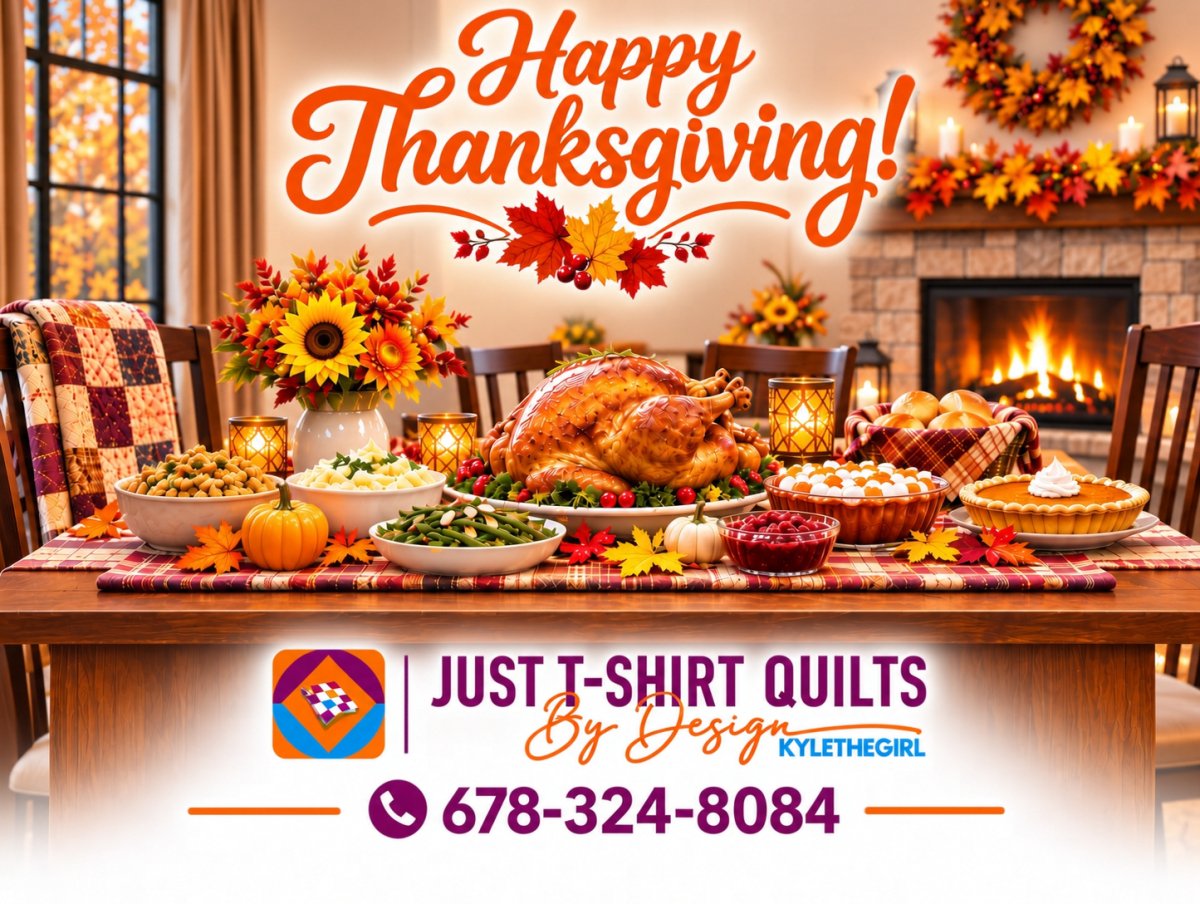
Generative AI can be a helpful tool for quick marketing designs. The cover photo was created using ChatGPT to test for an actual ad design to a publisher that had to be completed quickly to meet a publication deadline. Social opinions are mixed for something like this being labeled AI slop to positive outcomes from businesses that have been successful reaping the benefit of the additional marketing that AI makes easy so easy for non-designers to provide.  In checking social feeds, there are clearly factions that are very strongly against AI but others that also very strongly for it. Being a new technology time will tell how successful the adoption will become.

Contact Just T-Shirt Quilts to talk about your quilt project. Your creative vision can lead the way, with technology serving as one more tool in your hands.

Frequently Asked Questions

How is AI used in quilting design, pattern creation, and longarm quilting?

AI can turn a written prompt into design ideas, suggest color arrangements, or help place and adapt a pattern concept. For example, a quilter might ask for a balanced layout using shirt panels of different sizes, with certain fabrics. The fabrics will have already been uploaded. They are inserted into the design following prompts and the design is then refined as needed. We have worked with draft designs from quilters created this way. It can be a valuable tool when used to refine an initial concept for a quilt layout.

Longarm quilting is the stitching process, not automatically an AI task. A digital tool may help with planning, while a person or machine carries out the quilting to finish the project. Quilting at Just T-Shirt Quits is accomplished using non-generative AI. For quilting we use computer design software and robotics.

What are the benefits of AI tools for quilters?

AI can speed up early exploration by generating alternatives to compare. A quilter planning a memory quilt could test whether a calm, symmetrical arrangement or a more energetic layout better suits the shirts with the actual fabrics if there are any to be used. Comparing options can make it easier to discuss preferences before settling on a direction. AI can also organize ideas into a visual reference, while the maker retains control over fabric choices and final design and quilting decisions.
How to Transform an Unquilted Blanket into a Finished Quilt

How to Transform an Unquilted Blanket into a Finished Quilt

Yes, you can improve an unquilted “quilt” or blanket by adding traditional quilt elements: batting and a backing can be added, and then, most importantly, stitching–quilting the layers together. Our commissioned quilts have four layers: a top, a stabilizing layer, an insulating middle, and a backing. By contrast, a T-shirt blanket is often made by sewing shirt squares together without interfacing or the insulating middle layer and no quilting. Once the squares are sewn together the completed top is serged or sewn to the existing back around the edges. There is no binding fabric that neatly finishes those outer edges after quilting.

With your approval we will take apart an incomplete quilt and remake it.

When shirts hold memories, it makes sense to want a finish that feels as considered as the pieces themselves. The right makeover can add warmth, texture, and structure, but the best approach depends on how the blanket is made and the condition of its fabric. This guide explains how T-shirt quilts are constructed, how quilting affects durability, and which unquilted blankets and existing quilts may suit a makeover. You’ll also find practical criteria to help decide whether adding quilting is the right next step.

T-shirt blanket construction and materials

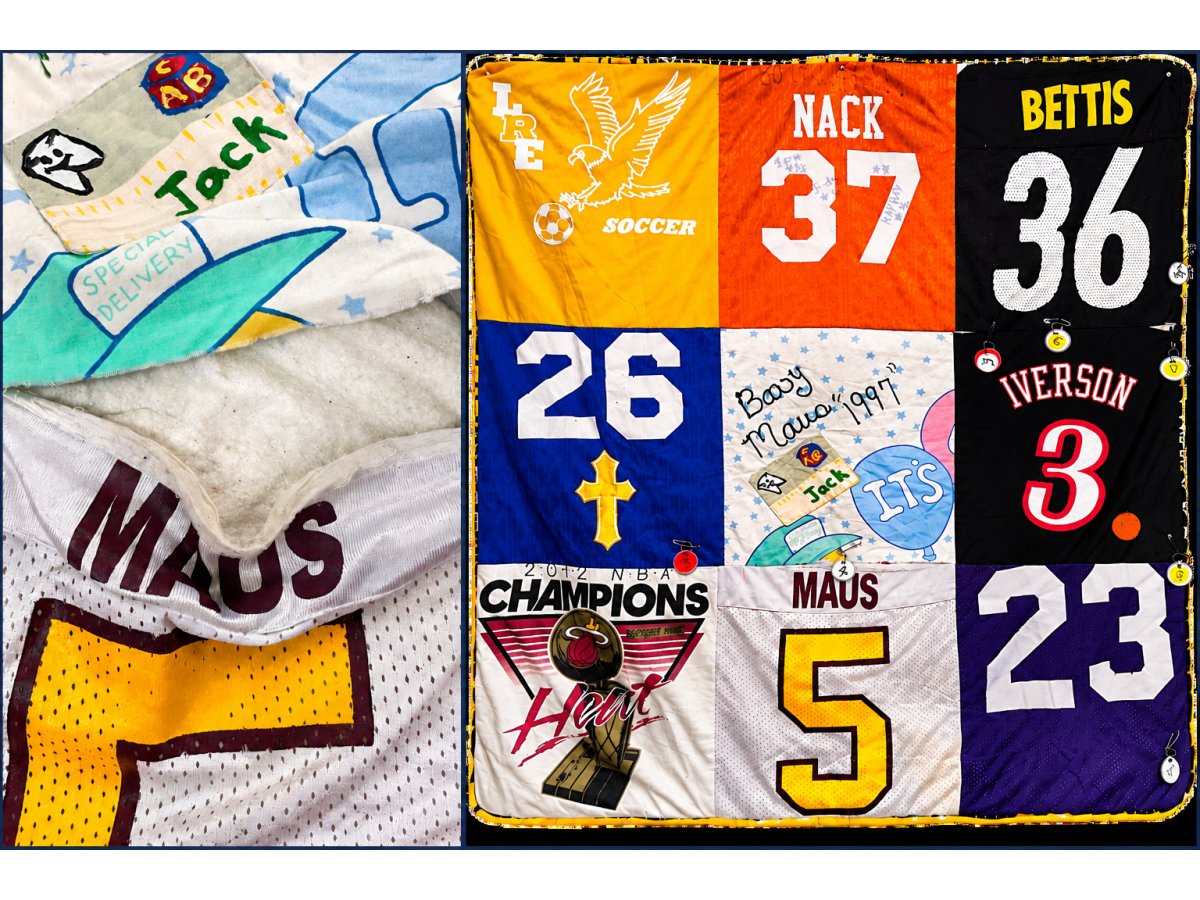
A T-shirt blanket joins shirt squares, usually without interfacing, batting or the layers quilted together. The shirts preserve their original colors and graphics, but an unquilted single fabric layer may stretch over time and provides less definition for the quilting and insulation than a quilt. An example of this is shown on the cover picture. A Mom made this small blanket many years ago for her son. The stretching is evident on the picture on the right. There is an unquilted batting layer in the middle that can be seen on the left. Over time some holes developed. The larger hole is where the batting is poking through. There were also lumps where the batting had shifted with use.  This will happen if there is nothing holding the layers together. She brought it to us for an assessment for repairs and possible quilting.

Can you improve on an unquilted "quilt" or blanket? Yes. A t-shirt quilt combines a pieced or solid top, interfacing, batting, and backing. Quilt stitching in the design of your choice holds the layers together, adds texture, and keeps all layers in place, eliminating stretching.  We like t-shirts because they are comfortable, move with us and stretch to conform to our shape. We want your t-shirt quilt to be comfortable and durable but not stretch with use, over time as in our pictured example.

To quilt a blanket, we use its existing top and add interfacing where indicated, batting and backing suited to its weight and the desired outcome of the owner.  We use commercial batting designed for use in quilts. A flat flannel sheet is a thinner option for the back for a summer quilt. Whether added warmth and stitched structure are right for you depends on how you plan to use the piece.  The back used in our example is fleece.

We provide long arm quilting. This uses a specialized machine to transfer the design of your choice, in the thread of your choice through all layers of the soon to be finished quilt. Alternatives to long arm quilting include tying or tacking the layers by hand. Embroidery floss or yarn can make evenly spaced knots without stitched quilting lines. On the makeovers we do with older quilts, we see ties less often now.  Removing them is often part of makeovers on quilts that can benefit from quilting. A regular sewing machine can quilt a thick blanket if the layers fit beneath its presser foot and feed smoothly. Bulky materials can make handling more difficult on a regular sewing machine.

There is no single maximum spacing that suits every batting. Follow the quilting-distance guidance for the batting you use, since its construction determines how far apart the stitching can be while keeping it secure. Batting in the middle with no quilting is not a good idea as the batting will shift and lumps will develop as happened in our pictured example. We flattened out the lumps and made all repairs.  The customer did not want to add quilting as her son was now grown and the quilt was now a decoration and not being used at all.

Other bed coverings can also be made into a quilt. A coverlet can be a light decorative layer, often with a woven pattern and reversible design, offering easy layering and a tailored look. A duvet has a front, back, and filling, commonly down, feathers, or wool.

OptionLayers and materialsFeel and finish
T-shirt blanketJoined shirt squares; usually no batting or quiltingStretchy, light and breathable
T-shirt quiltShirt top, interfacing, batting, fabric backing, quiltingWarmer, heavier, with stitched texture
CoverletOne woven or printed layer that can be converted to a quiltLight, often reversible
DuvetFront, back, and filling. Can be converted to a quilt.Warmth depends on filling

Choose a T-shirt quilt makeover for added warmth and stitched structure; leave a blanket unquilted if it won’t be used much and you want a lighter, more breathable layer.

Durability and longevity

An unquilted T-shirt blanket joins shirt panels but has no quilting, interfacing or a batting layer. If batting is added but left unsecured without quilting, it will bunch or shift as in our example. Quilting or evenly spaced ties secure the layers, while sound seams and intact fabric help the finished piece stand up to regular use.

Quilting an existing blanket can cause puckering if t-shirt layers are not interfaced, move unevenly or the stitching pulls the fabric. Materials that respond differently to washing can also shrink unevenly and distort the shape. Before adding layers, check the seams and fabrics.  Most t-shirts have already been washed a lot; but, if in doubt, test wash any questionable shirts and keep everything smooth during assembly. We will recommend any additional prep work that may be needed before quilting.

Batting affects both feel and wear.  A thicker wool or fleece blanket used as batting can add warmth and definition to a hard-wearing picnic or car quilt, but it can also make the result heavier than cotton or a blend of cotton and polyester batting.

Decide how you’ll use the quilt. A lighter cotton quilt may suit summer, while a heavier decorative piece may work better as a bed topper or picnic layer. Heavy is nice in colder climates. For a quilted finish, keep the top, batting, and backing aligned as you stitch, then follow care suited to the fabrics. Careful construction supports the layers, but it cannot restore graphics already cut off from T-shirt panels.

Please check with us before cutting your t-shirts. If they are cut incorrectly for the style that you like it will be more expensive to add fabric back on to get them to the desired size.

For an existing quilt with worn seams or loose layers, explore quilt makeover options as a way to consider a more durable finish.

Duvets have a removable cover. This protects the duvet and is another consideration when choosing bedding, alongside the construction and care considerations relevant to blankets and quilts. We have quilted the front and back layers together on a duvet and added batting in order to make it a quilt. Once they are quilted together, of course, you cannot remove the cover!

Quilts and blankets suitable for a makeover

An unquilted T-shirt blanket may suit a makeover when the sewing is straight and its shirt panels and seams are in good condition. Quilting can secure the top, batting, and backing with stitched lines. These will be added if they don’t already exist.  First, inspect the fabric for worn areas, or areas that have begun to stretch and check whether the panels lie flat enough to sew.

Check the graphics and overall condition of the shirts before going forward with a layout. Quilting or rearranging cannot restore an image already cut off at the edge of a shirt panel. Vinyl or thick paint that has started to chip will continue to do so. Assess how meaningful that shirt is to you. In some cases they can be remade or repaired.

Uncut T-shirts can provide larger blocks that can be sized to complete a design preserving the complete graphic. Additional pieces—such as graphic tees from is my life—may also help balance colors or fill gaps in a revised pattern.

Weight helps determine whether a makeover suits your intended use. Batting can make a lightweight, unquilted blanket warmer, while thick batting and fabric can make the finished piece heavier. A summer layer and a winter bed quilt call for different levels of warmth. What if you prefer one and your partner prefers another? You’re warm natured and your partner likes the cold.  We haven’t made one quilt with the halves two different thicknesses but can. Why not?  Who wants to be the first?   😆

Machine sewing all quilt layers together is practical when the layers fit and feed evenly beneath the presser foot. Very bulky or uneven sections can complicate stitching and if the weight of the layers is unsupported it can cause distortion so assess the seams, thickness and support of the weight before assembly. A stable top with intact graphics provides a sound foundation; fragile fabric or badly cropped images limit what a makeover can preserve.

If you’re looking to give a treasured T-shirt quilt a more finished structure, explore quilt makeover options built around the condition and layout of the existing piece.

Both T-shirt blankets and T-shirt quilts can be customized with selected shirts, colors, and designs. Consider which graphics you want to feature and how they fit with the existing piece. Choosing these elements together can guide a revised arrangement while keeping the focus on the fabric and images you want to preserve.

Just T-Shirt Quilts: Freestyle T-Shirt Quilt

Just T-Shirt Quilts offers the Freestyle T-Shirt Quilt for turning meaningful shirts into a thoughtfully arranged quilt. It’s a natural next step if your T-shirt blanket needs a more finished, quilted result, or if you’re planning a new keepsake using shirts with varied graphics and sizes.  Every commissioned t-shirt quilt we make is quilted. Decide whether you prefer a traditional, evenly spaced pattern or a more relaxed arrangement.

A Freestyle layout lets the shirt designs guide the composition rather than forcing every piece into a uniform grid. For a more structured look, Masonry, Close Blocky, and Wonky T-Shirt Quilts offer other ways to arrange shirt panels. The right fit depends on the artwork, fabric, and visual rhythm you want in the finished quilt.

To discuss a T-shirt quilt or makeover, contact Just T-Shirt Quilts or visit justtshirtquilts.com.

Give Your Keepsake a Fresh Direction

Can you improve an unquilted “quilt” or blanket? Yes. Often, the first step is deciding what you want it to become: a real quilt; a warmer quilt, a heavier quilt, a different design with a balanced display of favorite graphics or just a decoration, not to be used. They will all turn out to be keepsakes. Let the shirts’ artwork and your preferred use guide your choice. If you are preparing a custom keepsake quilt as a holiday gift or creating DIY projects to share, pairing your creation with festive presentation assets like Christmas wrapping paper templates editable PLR is a great way to complete the gift.

Just T-Shirt Quilts has many different looks for your quilt including Freestyle, Masonry, and Close Blocky T-Shirt Quilts, each with a distinct arrangement for the shirt designs. Consider which layout best suits the graphics you want to preserve and the visual rhythm you want across the quilt. A thoughtful design can give treasured shirts a new purpose while preserving their personal meaning.

Share your T-shirt quilt plans with Just T-Shirt Quilts and take the next step toward a keepsake shaped around your story.

If you'd like to lay out Your T-Shirts for a Custom Quilt

If you’d like to lay out Your T-Shirts for a Custom Quilt

We recommend taking a picture of all of your shirts laid out before shipping them or bringing them in to start your order.  This is a record for you of what’s to be included and their condition that we cross check as we start creating a design. Take a picture of all of the sides of the shirts that will be included. Once we receive your shirts, we will inventory them against your photo. If there is something specific to communicate to us regarding a particular shirt individual pictures and notes can help.

If you don’t have time to do a photo, you can also safety pin those sides that you want to include in your quilt.  A safety pin indicates if you want the front, back, pocket or sleeve included.  Anything not safety pinned or noted will not be included in the design. If a shirt only has one side you don’t have to safety pin it.

It’s optional, but if you have a certain order that you want your shirts to appear in include that, too. We will always balance for color and share the arrangement with you for your approval before we start cutting and sewing.

What if the detail you most want to preserve is easy to miss in a quick snapshot? T-shirts hold more than bold front graphics: names, dates, sleeve designs, and worn-in details can all carry meaning. If you’re wondering how to take pics that help guide your quilt, clear photos of those details can document those features and make your placement preferences easier to explain.

It’s natural to want each shirt represented thoughtfully, especially when the collection feels more like a story than a stack of garments. Photograph the shirts as a group first. Then add any details you want to highlight, including short notes about your preferences. Those provide helpful context for the computer design. Once the design is approved a separate physical wall layout is prepared where the shirts are put on the wall in the final arrangement for your quilt.  The wall layout gives you a final chance to review the quilt composition before cutting begins. Photos support planning, while the actual shirts and your design approval remain essential.

Why Take Pics of Your Shirts Before Planning a T-Shirt Quilt?

A photo of all of your shirts serves as a record of what you’re providing. It records graphics, text, wear, and distinctive features. While planning, it can help you remember why a particular shirt matters, especially when several pieces have similar colors or designs. A note such as “keep the full team name visible” gives clear direction instead of leaving an important preference to memory.

Use each image as a reference when explaining which details matter and how you’d like the shirts arranged. Clear framing and legible details make your references easier to understand during design planning.

A planning photo is a visual note, not a substitute for the actual garment used to make the quilt.

Which shirt details are worth photographing?

Take pics of the full front, then photograph the back or any other area with meaningful artwork, lettering, names, or dates. Whether your collection includes school memorabilia, concert merch, or vintage graphic streetwear from brands like Memento Mori Clothing, capture details that might otherwise be overlooked, including faded graphics, small holes, unusual hems, or a shape that could affect how the design is represented.

  • Show the entire front graphic so its scale and placement are clear.
  • Photograph meaningful back designs, sleeve graphics, or other details separately if they’re hard to see in one frame.
  • Include visible wear or distinctive features you’d like considered in the design.
  • Add a short instruction if a detail needs special attention or if you would like us to make a change such as repair a hole or remove buttons.

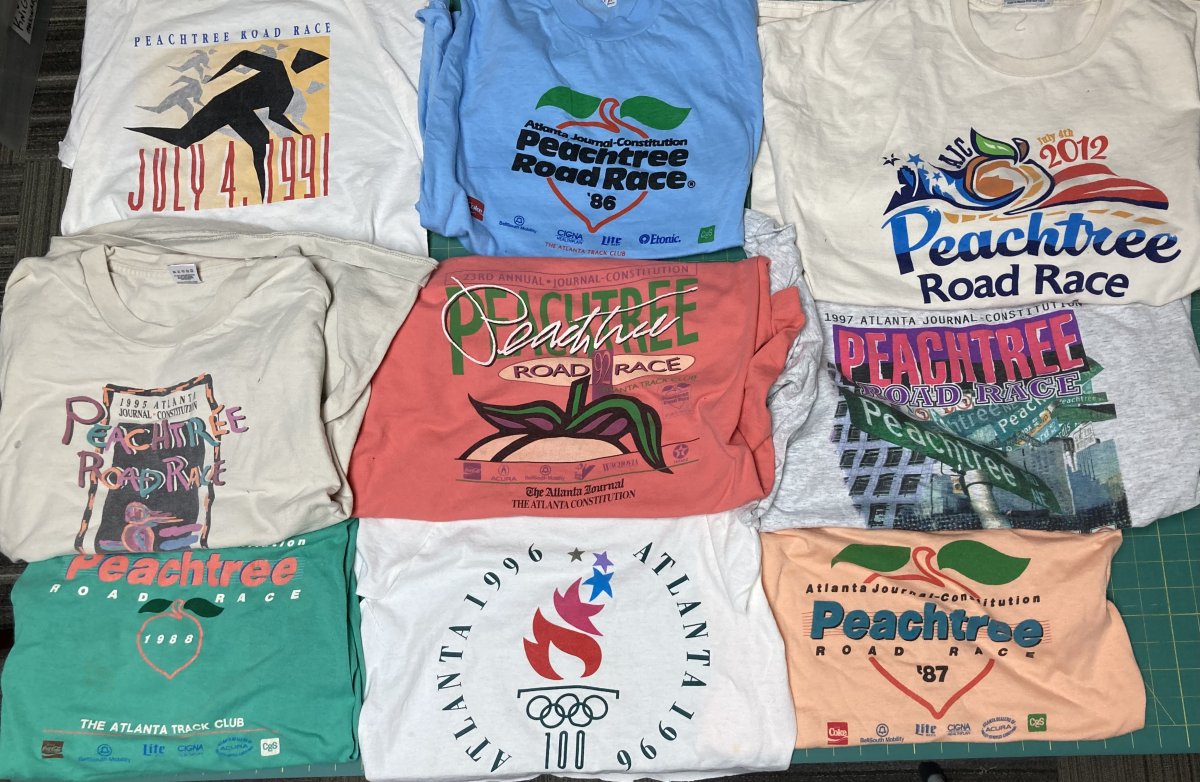
You can mark a preference directly on a photo, attach a Post-it note, or use a safety pin to indicate an area on the garment. Be specific about what matters: for example, note that a name should stay readable or that a particular graphic is the priority. Or maybe you want a name removed.  Often people don’t want the sponsors included that are on the back of race shirts. If that entire side is excluded, don’t safety pin it and we’ll ignore it. If you want to show a detail on both sides, safety pin or photograph each side and label the images clearly.

How to Take Clear Pics of T-Shirts for Quilt Planning

A straightforward flat-lay keeps attention on the shirt, not the surroundings. Making sure your garments are clean and freshly washed makes them much easier to arrange—if you have a collection pulled from storage, services like Prescott’s Laundry can help refresh them first. Choose a clean, plain surface with enough room to spread out the garment. Smooth it gently by hand so folds don’t hide lettering or change the shape of a graphic. Don’t stretch the fabric, which can distort how the design appears.

  1. Lay the shirt flat on a neutral, uncluttered background.
  2. Smooth wrinkles and arrange the sleeves so the garment’s shape is easy to see.
  3. Position your camera directly above the shirt and frame the full design.
  4. Take the photo, then check that important details are visible before moving on.

Soft, even light helps reveal colors and text. Daylight near a window can work well. Avoid direct sun, which may create sharp shadows, and check that overhead lighting isn’t casting a strong yellow tone. Keep the camera steady and leave a little space around the shirt so its edges aren’t cut off.

A useful reference photo shows the complete graphic without cropping any important details.

Phone camera or webcam: what is enough for a shirt photo?

An ordinary phone or laptop camera is usually enough to document a garment for planning. The goal isn’t a polished fashion image; it’s a faithful reference. Before keeping the shot, zoom in or review it at full size to make sure names, small lettering, and graphic edges are legible. Skip filters and decorative effects, which can alter colors or obscure details.

If you’re photographing several garments, label the images or keep them together in an album for the quilt project. Clear, consistent photos make it easier to share your preferences as you plan a T-shirt quilt design. If a detail looks blurred, adjust the light or camera position and retake the picture.

How Shirt Photos Support T-Shirt Quilt Design and Approval

Photos can help turn your preferences into clear design guidance. An image paired with a brief note can identify which graphic should stand out, which details feel most personal, or how you hope a shirt will be represented. The actual garments remain central to making the quilt, so use photos to explain your preferences rather than as replacements for the shirts.

At Just T-Shirt Quilts, the design review includes two distinct ways to consider the arrangement. First, a digital mock-up lets you see the color arrangement before cutting begins. Then a physical wall layout provides another opportunity to review how the actual shirts look together and confirm the composition.

Your approval comes through reviewing the design, not from a photo alone.

From reference photos to a reviewed quilt layout

As you take pics, think about what each image can explain. Perhaps one shirt carries the most important lettering, or a particular graphic should have a prominent place. Add a concise preference to connect that detail to your overall vision. The computer mock-up you’ll receive from us brings the shirts into a proposed arrangement, making it easier to consider balance, spacing, and how graphics relate across the quilt. Note that the actual photos are not uploaded and included in the mockup unless you request it.  The shirts in the mockup will be represented by colors.

The physical wall layout is a separate review step, not just another version of the photo. It lets you assess the arrangement as a whole and confirm the design before the work moves forward. For a closer look at the possibilities of a more free-form composition, explore The Art of the Freestyle T-Shirt Quilt.

Let Your Shirt Collection Take Shape

Your shirts already hold a story. Clear photos and specific notes can help communicate what matters to you, while the garments themselves remain at the heart of the quilt. Just T-Shirt Quilts creates heirloom-quality quilts and has been doing so since 2011. You will review the arrangement in a digital design mock-up and a separate physical wall layout.

When you’re ready to take pics and start imagining how the pieces might come together, explore the quilt design possibilities at Just T-Shirt Quilts. Request an estimate to take the next step toward turning your saved shirts into a meaningful quilt.

Frequently Asked Questions

Can I take pics of a shirt with my phone camera?

Yes, a phone camera can capture useful shirt references. If you’re photographing several garments, give each image a recognizable filename or keep the photos grouped in an album labeled for the quilt project. That makes it easier to match an image to the right shirt later, especially if the collection includes similar team or event shirts.

How do I take a picture of a shirt without holding it?

Lay the shirt on a flat surface and position your phone above it, so both hands are free to arrange the garment. If you’re taking the photo yourself, set the phone on a stable support and use its timer or a remote shutter if available. Keep the camera parallel to the shirt to avoid a skewed view.

Can I use photos to show special instructions for a T-shirt quilt?

Yes, photos can accompany instructions and clarify which shirt or detail you mean. This is the most important part of taking the pictures. For example, label a photo “no sponsors” or “front pocket only” and add a brief note describing your preference. This is especially useful if you’re sharing several images. Keep the actual garment with the project, since the photo is reference material rather than a replacement for the shirt.

Do I need filters or special camera equipment to photograph shirts?

No, you don’t need filters or specialized equipment for planning photos. A basic camera is enough if the image clearly records the garment. Before shooting, wipe fingerprints from the phone lens, then tap the screen to focus on small lettering or a detailed graphic. Natural-looking color is more helpful for planning than an effect that changes the shirt’s appearance.

Meta Ray-Ban Glasses: Recording Your Quilting Projects

Meta Ray-Ban Glasses: Recording Your Quilting Projects

What if the most useful camera angle for a quilting project is the one that leaves your hands free? Meta Ray Ban glasses can capture a first-person view while you piece a top or work at a longarm, helping you document the movement and details of your process. The key question is whether recording this way fits your workflow and what trade-offs you’ll need to manage.

It’s natural to want clear footage without stopping to handle a phone. But the camera-equipped Gen 3 records clips of up to three minutes, so longer tutorials require restarting recordings and editing clips together. This guide covers how the glasses can work for quilting, what to compare across models, and how fit, privacy, app requirements, and recording limits may shape everyday use. You’ll have a practical checklist for deciding whether they suit the way you want to capture a project.

What Are Meta Ray-Ban Glasses and What Do They Do?

Meta Ray-Ban glasses combine Ray-Ban eyewear with technology developed by Meta. Depending on the model, they can take photos, play music through built-in audio, and support voice interactions with AI. The idea is to bring selected digital functions into a familiar glasses format, rather than require you to hold a phone for every task.

That distinction matters. Meta Ray Ban glasses are wearable technology, not a replacement for a phone, a dedicated camera, or professional eye care. They can offer a convenient way to capture a quick point of view or listen without headphones, but they don’t provide the same controls as a phone camera or the full range of smartphone functions.

How do Meta Ray-Ban glasses fit into everyday life?

Think of them as an extra tool for moments when reaching for another device would interrupt what you’re doing: taking a photo while your hands are occupied, listening to music during a routine task, or asking an AI question aloud. For quilting, that might mean capturing a short view of fabric moving through a longarm or documenting a step while piecing a top. Here is a video with some examples. The view, audio experience, and available features depend on the specific glasses and how you use them.

Before deciding whether they suit your routine, separate the model name from its capabilities. Features, software, regional availability, and compatibility can vary and change over time. Review current product details for the exact version you’re considering, then compare its functions with the moments you actually want to capture or simplify.

How to Compare Meta Ray-Ban Glasses Before You Buy

Start with the moments you want the glasses to support, not the longest feature list. If you’re considering Meta Ray Ban glasses for quilting, decide whether you mainly want a hands-free camera view, audio for listening, or voice-based AI interaction. Then compare those priorities with the exact model’s current specifications. The camera-free Ray-Ban Meta Audio and camera-equipped options serve different needs.

The right choice depends on your intended use, fit, and the verified features of the specific model. Use this checklist to compare Meta Ray Ban glasses in practical terms:

  • Intended use: Identify the functions you’ll use regularly, such as recording a quilting step, taking photos, listening to music, or interacting with AI.
  • Frame fit: Consider how the glasses sit on your face and feel during everyday wear, including when you look down at a quilt or move around your workspace.
  • Lens preference: Compare the available lens choices and consider how they suit your visual needs and typical environment.
  • Model features: Review the current official specifications for the exact model and generation. Don’t assume features carry over unchanged between versions.

Which fit and feature questions matter most?

Try the frame on if possible, or use the brand’s latest fit guidance to assess its shape and sizing before choosing. If you need prescription lenses, verify that the specific model supports your prescription needs and review the available lens options. Confirm that its features, app compatibility, and regional availability suit where you live and how you plan to use it.pre

Keep the comparison grounded in your own priorities. If preserving the story behind a finished project matters as much as recording the process as in this example , recording the story with your glasses offers another way to turn meaningful memories into something lasting.

Privacy, Limitations, and Final Checks for Meta Ray-Ban Glasses

A camera worn on your face can feel different from a phone held up to record. Before filming a quilting demonstration with Meta Ray Ban glasses, consider who else could appear in the frame. Explain what you’re doing when appropriate, respect people’s comfort, and follow the rules of the venue. A visible indicator can help signal recording, but it doesn’t replace clear communication.

What should buyers understand about privacy and practical limits?

Camera-equipped models have a white LED that illuminates while recording. Meta says the camera is disabled if the system detects that this light has been tampered with or covered. Use Meta Ray Ban glasses with that transparency in mind, and review current official privacy documentation for details about settings and data handling. A Meta account and the Meta AI app are required to use the glasses and manage photos and videos.

Some functions rely on software, and features or regional availability can change. Use current product documentation as your reference rather than assuming a feature shown for one version applies to every model. Before buying Meta Ray Ban glasses, work through these checks:

  1. Confirm the exact model and generation. Compare its current official specifications with the tasks you want it to handle.
  2. Assess fit and lenses. Try the frame or follow current fit guidance, and verify prescription and lens options for that model.
  3. Check regional features and compatibility. Confirm that the functions and app support you need are available where you live.
  4. Review privacy controls. Read the latest official guidance on recording indicators, account requirements, privacy settings, and handling recorded content.

For quilting and sewing projects, the practical question is whether recording fits comfortably into your process and whether you’re ready to manage its limits. For a long tutorial, plan around the recording limit: capture shorter steps, pause between them, and leave time to assemble the clips. Whether you are a quilter piecing blocks or a seamstress recording precise craftsmanship, make your decision with current product details in hand.

Let the Moments You Capture Become Lasting Keepsakes

A recording can preserve the motion and atmosphere of a quilting project. The finished work can carry its memories forward in another way. If Meta Ray Ban glasses fit your creative routine, think of the footage as one part of the story, alongside the shirts, colors, and personal details that make a quilt meaningful.

For memories you’d like to hold close, explore T-shirt quilts in several layout styles, along with longarm quilting, quilt repairs, and makeovers. Longarm quilting can finish an assembled quilt top with edge-to-edge quilting, where one design is stitched across the whole quilt. Each service offers a way to honor the story behind treasured materials and the care that went into making them.

Explore meaningful ways to preserve the T-shirts that tell your story, and take the next step toward a keepsake made to be lived with and remembered.

Frequently Asked Questions

What do Meta Ray-Ban glasses do?

They’re smart eyewear that pairs Ray-Ban glasses with Meta technology. Depending on the version, Meta Ray Ban glasses can take photos, play music, and support interactions with AI. One model might suit quick snapshots, while another may offer a different feature set. Capabilities can vary by model, software, and region, so review current specifications for the exact version you’re considering.  Dedicated social groups such as on Facebook can help to source a variety of  opinions from different experiences to aid in making a final decision.

Can Meta Ray-Ban glasses replace a phone or camera?

No. They’re wearable glasses, not a full substitute for a phone or dedicated camera. Their hands-free format may suit a brief point-of-view moment, such as documenting a quilting step while both hands guide fabric. A phone or camera may offer controls or capabilities better suited to a planned shoot. Compare the specific model’s current functions with what you want to capture.

Are Meta Ray-Ban glasses available with prescription lenses?

Prescription availability depends on the specific model, retailer, and region. Review current product and retailer information for the exact version, including which lens choices are offered and whether they suit your prescription needs.

Are Meta Ray-Ban glasses always recording?

Don’t assume recording behavior is identical across models. Consult current official documentation for the specific glasses to understand how recording is controlled and what indicators are provided. If you’re considering a photo or video in a shared quilting space, be thoughtful about who could appear in the frame, consider their comfort, and respect venue policies and applicable local rules.

Quilting: How Thoughtful Design Turns Shirts into a Quilt

Quilting: How Thoughtful Design Turns Shirts into a Quilt

What if the shirts you can’t bear to part with could become more than a collection of memories? With quilting, their colors, graphics, and personal meaning can guide a design that feels cohesive rather than crowded. If you feel protective of sentimental shirts, it’s understandable to want a layout that brings them together without losing the details that matter.

The choices you make shape the quilt’s look and finish. This article explains how to compare layouts, what to prepare before requesting an estimate, and how making a T-shirt quilt differs from longarm quilting a top you’ve already assembled. Knowing which service your project needs can help you describe it clearly and plan your next steps.

What Quilting Means for a T-Shirt Quilt

Quilting means tailoring a quilt’s design and finishing choices to the shirts and preferences behind the project. For a T-shirt quilt, an early decision may include how the shirt panels will relate to one another. A regular, orderly arrangement creates a different impression from a layout with more variation and visual movement.

Quilting also refers to stitching that joins a quilt’s layers. The What is quilting overview describes quilting techniques that include hand, machine, and longarm work. Knowing the difference helps you identify what your project needs: design and assembly of a quilt from shirts, quilting to finish a prepared top, or both as separate stages.

No single layout suits every collection. Think about whether you want particular graphics to stand out, or whether you’d rather bring shirts from different events together in a balanced composition. Do you want your shirts in year order or grouped by activity? A quilter can help turn those preferences into a design direction that respects the individual shirts while giving the whole quilt a look that resonates with you.

How Quilt Design Differs from Edge-to-Edge Longarm Quilting

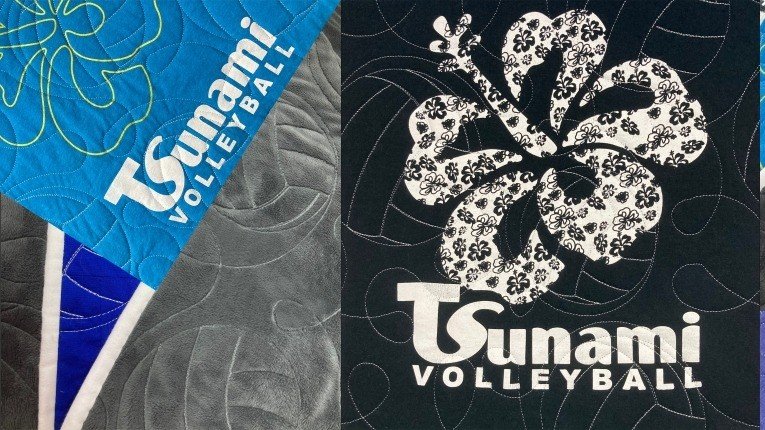
Designing and assembling a T-shirt quilt means creating the quilt top from the shirts and arranging their graphics. In the picture above volleyball shirts from a coach and player were used to create the quilt top. Edge-to-edge longarm quilting is a separate service for finishing the quilt top once it is already assembled. It uses a single quilting design across the entire prepared quilt top.  The quilting design goes through all layers and shows on the back as well as the front. In the same example volleyballs were selected as the quilting design.

How to Choose a Quilt Layout That Fits Your Shirts

Start with the shirts. Large graphics, small logos, and designs placed in different areas of a shirt can create different visual rhythms in the finished quilt. Consider what you want people to notice first, how structured you want the arrangement to feel, and whether you want the quilt to follow a timeline or bring different memories together. Quilts can also carry artistic and cultural meaning, as the International Quilt Museum’s collection illustrates.

Just T-Shirt Quilts offers six layout options. Use the questions below to narrow down what appeals to you, then review examples with the quilter to understand how each style could suit your collection.

LayoutQuestion to explore
BlockyWould you like the shirt graphics to read as distinct blocks with fabric separating them?
Close BlockyDoes a close-set block arrangement with no added fabric around the front appeal to you?
FreestyleWould a more individually composed arrangement with a complementary fabric suit your shirts?
MasonryAre you interested in a layout with a patterned sense of rhythm?
WonkyWould tilted blocks in a more playful composition feel right?
ArtsyDo you want the overall effect to feel expressive and creative?

What to Consider Before Selecting a T-Shirt Quilt Style

Gather the shirts and make a note of the graphics, names, or other details you most want represented. Decide whether you’re drawn to an orderly structure or a more varied composition, and think about the story you want the finished quilt to tell. If you prefer a freely composed look, explore The Art of the Freestyle T-Shirt Quilt as you compare your options. You can also review the T-shirt quilt layout options and discuss how a style might work with your shirts.

From Quilt Idea to Finished Piece: What Happens Next

A T-shirt quilt project starts with a clear idea, then moves through a practical sequence: explore the project requirements, request an online estimate, and, if desired, arrange an appointment either by phone or in person. When you get in touch, describe the quilt’s purpose and the layout you’re considering. A quilter can help clarify how your preferences fit the shirts and the finished piece you have in mind.

Your quilter will need your shirts. Preparation and packing instructions can vary, so follow the maker’s current guidance rather than cutting or altering shirts based on general advice. When the work is complete, the finished quilt is shipped to you.

What to Prepare Before Requesting an Estimate

A little planning helps you describe the project and ask useful questions. Before requesting an estimate, note:

  • Purpose: What person, occasion, team, or collection of memories will the quilt represent? Is there an overall theme? Many keepsake quilts preserve childhood milestones using outgrown tops from brands like Maison Q, while others highlight athletic teams, concert merchandise, or school years.
  • Layout preference: Which style appeals to you, and what do you like about it?
  • Important details: Which shirt graphics or features do you especially want represented?
  • Questions: What would you like to know about the next steps or project-specific shirt preparation?

If you’re weighing the project’s value, the existing T-shirt quilt cost guide can help you identify factors to discuss. Each project is different, so ask about your specific shirts and preferred layout. For shirt-handling advice, confirm preparation instructions directly with the maker.

Once you have your idea and questions ready, explore the maker’s process then arrange an appointment for further discussion and clarification. This gives the project a clear starting point while keeping its personal story at the centre.

Turn Your Shirt Collection into a Quilt with Meaning

Thoughtful quilting starts with the shirts themselves. Their graphics, colors, and stories can guide a layout that feels balanced and personal. Choosing a design is one part of the process; creating a T-shirt quilt and edge-to-edge longarm quilting are essential to a professional finish.

Just T-Shirt Quilts offers six T-shirt quilt layouts, with online estimates and appointments as next steps. The business is owned and operated by professional quilter Kyle the Girl, who can help translate your preferences into a design direction.

Ready to explore the possibilities? Explore T-shirt quilt layouts and start planning your project. Your shirts already hold the memories. A thoughtful layout can bring them together in a quilt you’ll be glad to keep close.

Frequently Asked Questions

What is quilting?

Quilting tailors a quilt’s design and finishing choices such as thread to a specific project. The quilting is completed on a specialized robotoics machine called a long arm. For a T-shirt quilt, that means arranging customer-provided shirts in a selected layout and then using edge-to-edge quilting, where a single quilting design is used across the entire quilt. The quilting joins all layers, preventing shifting, which can occur over time with use. Just T-Shirt Quilts offers several layout styles.  Longarm quilting in the design of your choice in the thread that you like is included on all quilts that we design and finish. These can be viewed by choosing a style and then clicking through your choices for finishing. For Blocky, for instance, it looks like this .

How Do I Choose a Layout for a T-Shirt Quilt?

Consider which shirt graphics matter most, what kind of visual structure you prefer, and the story you want the quilt to tell. Just T-Shirt Quilts offers Blocky, Close Blocky, Freestyle, Masonry, Wonky, and Artsy layouts. Gather the shirts and note any details you want to highlight, then discuss with the quilter how the available styles might suit your collection. We can also design from a your ideas. A sketch or picture are helpful.

Can a professional quilter finish a quilt top I already made?

Yes. Just T-Shirt Quilts offers edge-to-edge longarm quilting for quilt tops customers have already assembled. This service quilts a prepared top using a single design across the entire quilt, while creating a new T-shirt quilt involves designing and assembling a top from customer-provided shirts. When you get in touch, describe your project clearly so it’s understood whether you have a completed top ready for longarm quilting.

What Happens After I Request a T-Shirt Quilt Estimate?

After you request an estimate online, if your estimate includes your final choices, you can place your order online.  We will send you a shipping label to make it easier to get your items to us. At any point if you need assistance on your preferred layout, and any shirt details you want to highlight include those details on your order form or contact us with how we can help further. You’ll be kept informed along the way. Once the quilt is complete, it’s shipped to you or you can pick it up in our Marietta, GA location.

The Ultimate Guide to Designing Your Sports T-Shirt Quilt in 2026

The Ultimate Guide to Designing Your Sports T-Shirt Quilt in 2026

Your finishers’ shirts and jerseys aren’t just fabric; they’re the technical blueprints of your greatest milestones. It’s common to feel a surge of hesitation when you think about cutting into these high-performance materials to create a sports t-shirt quilt. You’ve likely worried that a standard layout will look cluttered or that delicate moisture-wicking fabrics won’t hold their shape over time. We understand that these pieces represent your sweat and dedication. They deserve a preservation method that prioritizes both structural integrity and aesthetic beauty.

This guide teaches you how to design a sophisticated heirloom that balances professional precision with your unique athletic narrative. You’ll discover how to transform diverse fabrics, from heavy mesh jerseys to thin tech-tees, into a durable work of art that refuses to sag or stretch. We’ll walk through the essential preparation steps, explore artistic layouts like the Masonry style, and explain how expert longarm quilting ensures your legacy lasts for generations. You’re about to move from a box of forgotten gear to a curated masterpiece that captures the energy of every finish line.

The Value of a Sports T-Shirt Quilt: Preserving Your Athletic Journey

A sports t-shirt quilt acts as a specialized textile archive, capturing the kinetic energy of seasons past in a way that no photo album can. While standard t-shirts might represent a casual concert or a vacation, athletic apparel carries the distinct weight of early morning practices and hard-won victories. Every running shirt, varsity jersey, or club tee is a tangible record of personal growth and physical endurance. By moving these pieces from a dusty box in the attic into a functional piece of art, you create a lasting legacy. Whether your collection is built from original game-day gear or custom commemorative shirts created through printwell.ca, a memory quilt from t-shirts serves as a powerful gift, honoring an athlete’s dedication with a durable, tactile narrative that remains relevant for decades.

From Varsity Letters to Finish Line Photos

Selecting the right pieces for your project involves more than just grabbing shirts that fit a specific color. You want to curate a collection that represents the full arc of an athletic career, from those first varsity letters to a picture of you with the medals earned at a major finish line. Many athletes choose to integrate high-performance jerseys and even elements from a memorial t-shirt quilt to honor a late teammate or coach who inspired their journey. This process turns a disparate pile of clothing into a cohesive story. Here are some tips on choosing what shirts to include in your quilt.  Securing these fabrics within a professionally constructed quilt preserves their physical integrity far better than traditional storage methods, which may lead to yellowing or dry rot.

Why Sports Fabrics Need Professional Care

Modern athletic gear presents a complex set of challenges because it frequently mixes unstable materials like open-hole mesh, technical "dry-fit" synthetics, and heavy, rubberized screen-printed graphics. A basic "t-shirt blanket" often sags or distorts over time under the uneven weight and tension of these diverse textiles. To ensure your sports t-shirt quilt remains a professional-grade heirloom, it requires specific quilting techniques that stabilize each individual block before assembly. This technical precision prevents the stretchy nature of performance fabrics from causing the entire design to stretch over time, ensuring your milestones stay perfectly aligned for years.

Choosing the Right Layout for Your Sports Memories

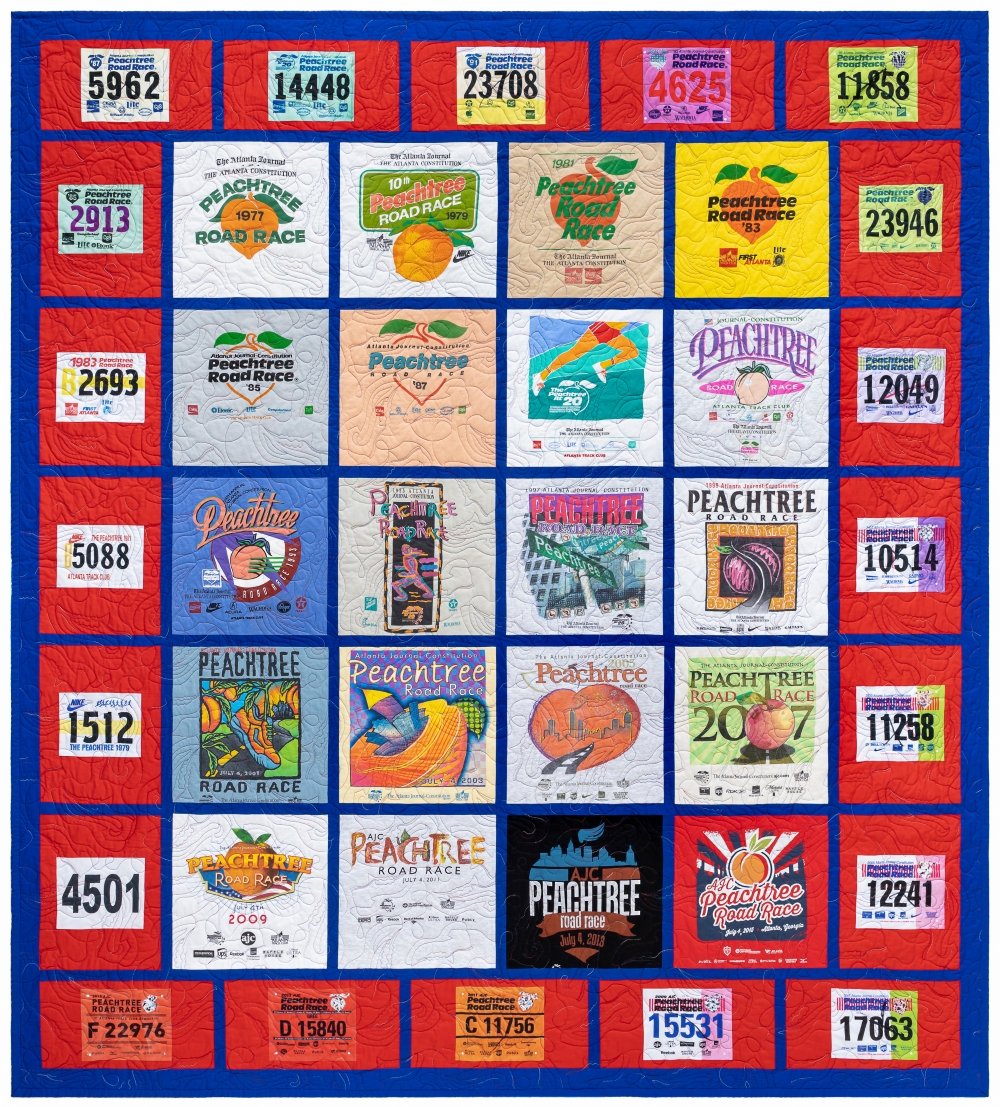
Many amateurs or generic services rely on a standard grid of uniform squares, a choice that often leads to your most prized jersey logos being cut off or surrounded by awkward, empty gaps. This rigid approach fails to capture the dynamic nature of athletic achievements. A professional sports t-shirt quilt should instead reflect the movement and energy of the games themselves. By moving beyond basic blocks, you ensure every oversized graphic and small sleeve detail is preserved in its entirety. This intersection of quilting and storytelling allows for a visual rhythm that guides the eye across your career milestones without interruption or compromise. Can we do a standard grid?  Absolutely, know that the pieces that you want to include must all measure to the size of the squares included in the design as seen in the sample photo at the top of this article.

The Freestyle and Masonry Advantage

A freestyle t-shirt quilt acts as a sophisticated puzzle. Each block is cut to fit the unique dimensions of the graphic rather than a pre-set template, making it the ideal solution for large chest logos and small sleeve numbers. If you prefer a bit more order, the Masonry T-Shirt Quilt offers a structured yet varied aesthetic, reminiscent of a modern gallery wall. For athletes with a more unconventional spirit, the Wonky T-Shirt Quilt and Artsy T-Shirt Quilt introduce energetic angles and creative overlaps that mirror the intensity of the field. These choices ensure your quilt feels like a deliberate design rather than a messy grid.

Designing for Specific Sports Clusters

When organizing your collection, consider grouping items by season, year, sport, or specific achievement levels. Creating a 10K shirt quilt requires a layout that honors the race-specific graphics, often placing the most significant event in your desired order for maximum impact. This clustering technique helps the viewer follow your progress from a rookie to a seasoned competitor. If you’re feeling overwhelmed by the options, exploring our Portfolio can help you visualize how different styles handle your specific jersey sizes. If you would like to have a specific order that you would like your shirts to be in lay them out on a bed or on the floor in the order that you would like for them to be in and send us a picture of them. We will let you know if it works for your style and you will see the result in a color mockup design that you receive before we actually cut into your shirts.

Technical Precision: How Your Sports Quilt is Built to Last

The structural integrity of a sports t-shirt quilt depends on what happens beneath the surface. Unlike a simple two-layer blanket that often loses its shape after a few washes, a professional-grade quilt is a three to four-layer textile masterpiece. It incorporates a decorative top with interfacing, a layer of high-quality batting for warmth and loft, and a premium backing. This construction is overseen with a boutique studio approach, where Kyle the Girl ensures every seam meets rigorous standards for quality and artistic intention. By treating each athletic garment as a technical component rather than just a scrap of fabric, we create a piece that remains flat and vibrant for a lifetime.

The Importance of Stabilization and Interfacing

Athletic apparel presents unique challenges because tech-tees and moisture-wicking fabrics are designed to stretch during movement. Without professional-grade stabilizers, these garments will warp and pull at the seams once they are sewn into a larger design. High-quality, non-woven fusible interfacing bonds with technical fibers to eliminate the mechanical stretch that causes sagging and distorted graphics in amateur projects. This stabilization process ensures that even the thinnest racing shirt has the same structural weight as a heavy cotton jersey, resulting in a perfectly balanced surface that resists distortion.

Long-Arm Quilting vs. Basic Stitching

We use robotic Longarm Quilting to achieve a level of precision that a standard home sewing machine cannot replicate. This technology provides consistent stitch tension across the entire surface, securing all four layers together so they won’t shift or bunch over time. Intricate stitching patterns and reinforced borders add both visual depth and essential structural integrity to the finished work. If you have an existing project that has begun to fail or an unfinished top sitting in a closet, we also offer specialized services like Quilt Repairs + Makeovers and UFO Completion to bring your athletic memories back to life with professional durability.

Transform Your Athletic Legacy into a Lasting Masterpiece

Ready to move your collection from a storage box to center stage? Our boutique studio specializes in handling diverse athletic fabrics with meticulous care, providing the structural integrity needed to survive decades of use and washing. Start your custom sports t-shirt quilt estimate today and see how our blend of artistic vision and professional longarm expertise can honor your unique story. We’re excited to partner with you in turning your hard-earned gear into a beautiful, durable archive of your greatest achievements.

Frequently Asked Questions

Can you use mesh jerseys or technical ‘dry-fit’ shirts in a sports t-shirt quilt?

Yes, you can absolutely include mesh jerseys and technical "dry-fit" shirts in your sports t-shirt quilt. Mesh jerseys have holes that need to be covered. High-performance fabrics have a lot of stretch in order to move with us during activities, but you don’t want them to continue stretching in your quilt.  We apply professional-grade interfacing to stabilize every shirt. This process ensures your tech-tees maintain their shape alongside traditional cotton, creating a uniform surface that won’t distort over time. We treat these specialized textiles with the technical precision required to preserve their unique textures without compromising the quilt’s structural integrity.

How many sports shirts do I need for a stadium-sized throw quilt?

You typically need between 24 and 30 shirt sides to create a full-sized stadium throw. The exact number depends on whether you choose a structured Blocky T-Shirt Quilt or a more fluid Freestyle T-Shirt Quilt layout. Because athletic graphics vary significantly in size, we recommend sending a few extra shirts to ensure we have enough material to achieve a balanced, artistic composition. If you find yourself short on shirts, you can easily supplement the design with high-quality basics from blankstyle.com. This flexibility allows us to prioritize your most meaningful milestones while maintaining a consistent visual rhythm.

Will my large varsity or team logos be cut off in the quilting process?

Your large varsity and team logos won’t be cut off when you choose a layout designed for varied graphic sizes. Unlike generic services that force every shirt into a uniform square, our Freestyle T-Shirt Quilt and Masonry T-Shirt Quilt options are built around the specific dimensions of your gear. We meticulously measure each oversized chest logo and sleeve detail before cutting. This boutique approach ensures that every inch of your athletic history remains visible and perfectly centered within the final design.

Is a sports t-shirt quilt machine washable, or is it too delicate?

A professionally constructed sports t-shirt quilt is fully machine washable and built for daily use. The combination of high-quality stabilization and dense longarm quilting secures all four layers, preventing the bunching that occurs with lower-end blankets. We recommend using a cold, gentle cycle and tumble drying on low heat to preserve the vibrant colors of your jerseys. This durability transforms your athletic memories from fragile keepsakes into a functional heirloom that can handle the rigors of a busy lifestyle.