Quilts for Veterans


military quilt

This quilt was made for a Marine veteran entirely from his uniforms. He put some thought in to how he wanted it to look and created a mockup on the computer.  We started with this  and arranged the khakis, dress coats, and hats following his design. These all made the top of the quilt. The back is a soft minky. Minky is 100% polyester and popular because of the softness of it. It also comes in a lot of colors.

The quilting holds all 3 layers together. This design is very elegant done in gold thread with a regal eagle repeated across the quilt. He wanted the red as the binding to add a pop of color so that goes all around the outside edge and shows on both sides. The binding seals the raw edges after the quilting is finished giving the quilt a clean edge. It shows on both sides and is an opportunity to add a pop of color, like red, if desired. 

Also in progress an army quilt in memory of a son that unfortunately lost his life to violence at home in the U.S. This was commissioned by the Mom of the service man in his memory. The quilting on this one is hearts.

The Algiers Marine pic is part of a quilt in progress. There are so many interesting fabrics, patterns, and textures on this one from his travels while working for the American embassies abroad. We’ll be sure to post the finished picture. 

Thank you all veterans for your service protecting our country and our freedom around the globe. We appreciate you so very much.

There are lots of Veterans Day Specials and discounts here. 


AI in Quilting: Is Tech Good or Bad for Quilters?

AI in Quilting: Is Tech Good or Bad for Quilters?

AI can be a useful quilting assistant, but it shouldn’t replace a quilter’s eye and judgment. Whether AI in quilting is good or bad depends on how it’s used: it can spark design ideas and help organize fabric scraps, but its suggestions may not match your style or how you want the quilt to look and feel.

It’s natural to feel curious and cautious about bringing technology into a hands-on craft. AI works best as a starting point, offering options you can adapt rather than decisions you have to follow.

This article explores how AI tools can support creative planning and fabric organization, where their limitations matter, and how to keep your own artistic choices at the center of the process.

AI tools in quilting and creative work

Quilters can use AI to explore layouts, colors, and fabric groupings. Its value depends on whether it supports the maker’s choices rather than directing them.

Traditional Methods and Human Roles

Traditional quilting draws on a maker’s experience handling fabric and judging how a design will look. AI can quickly suggest block layouts or color combinations, while quilt-design software has long helped people plan patterns and adjust blocks and colors. The key difference is control: a person can interpret texture and personal meaning, while a tool responds to the prompt and images it receives. AI can assist longarm quilters and designers, but it cannot replace their craft decisions or hands-on work.

Design Ownership and Copyright

AI-generated quilt designs can raise questions about originality, ownership, and permission. The answers may depend on how much a person shaped the design and on the tool’s terms. Before using an output, review those terms and note any reference images or patterns. Then make meaningful changes, such as adjusting block proportions, color placement, or the overall arrangement, so the finished design reflects deliberate choices.

AI-Assisted Pattern Workflows

A practical workflow starts with a clear goal, such as sorting scraps by color or testing a repeated block. Next, describe the palette, shape, and mood, or upload fabric images if the tool allows it. Treat the first result as a draft. Adjust the layout, check that block sizes and seams make sense, then make a small sample before committing fabric. .

Risks and Quilter Perspectives

AI can misread fabric colors, produce impractical layouts, or suggest designs that feel generic. Quilters and quilting businesses may value its speed for brainstorming, while still preferring human judgment for fabric choices and finish quality. Tool access and longarm service costs vary. For longarm work, the price depends on the quilt and its needs, and is given after a quote request. The best choice weighs convenience against control, originality, and the hands-on character of quilting.

What are the risks and drawbacks of using AI in quilting?

AI suggestions can look polished on screen yet fail when translated into fabric. A color-matching tool might group navy scraps with black ones. Their difference may seem clear on a monitor, but texture and dye variation can change the effect under studio lighting.

Pattern fit is another practical risk. A generated block may include narrow pieces, awkward seams, or dimensions that don’t divide evenly. Before cutting, map the design to the actual fabric and finished quilt size. A stitched test mock-up of a generated block can reveal crowded corners or uneven visual weight.

AI also reflects material from across the web. Programs learn from tens of millions of daily inquiries and uploads worldwide. That scale can produce useful prompts, but it doesn’t guarantee an original or culturally thoughtful result. If a design resembles a familiar pattern, revise its structure instead of relying on a superficial color change.

Privacy matters when uploading quilt photos. An image may show names, dates, or personal keepsakes. Crop those details before sharing, and review how the tool handles uploaded images. A quilting business using AI should also explain where automated suggestions end and human design judgment begins.

These drawbacks don’t make AI useless. They make review essential. Treat each output as a draft, test the geometry, compare colors with the real scraps, and make the final choices yourself. For a quilt that needs careful finishing beyond a screen-generated plan, thoughtful quilt finishing keeps the actual materials and construction in view.

Can AI-generated quilt patterns be accurate, printable, and suitable for beginners?

AI can produce a striking quilt image without providing a usable sewing pattern. A picture of interlocking stars, for example, may show no cutting dimensions, seam allowances, or block assembly order. Treat the image as a design sketch until its construction details are clear. Whether AI in quilting is good or bad depends partly on checking those details before sewing.

Before printing, confirm the size and scale settings. A block labeled six inches should measure six inches on paper, excluding seam allowance unless stated otherwise. Print a test page, measure the sample, and compare its dimensions with the pattern instructions. This catches scaling errors before you cut fabric.

Beginners need more than a finished image. Look for a materials list, labeled pieces, cutting measurements, and a clear sequence for joining blocks. Check that repeated units have matching dimensions. For instance, a pattern with triangles should explain their orientation and how they form each block. If instructions omit those details, use the image for color planning instead. For a new maker, deciding whether AI in quilting is good or bad also means considering how clearly the pattern explains each step.

A reliable review follows a practical sequence:

  • Check that every piece has a measurement and label.
  • Confirm seam allowances and finished block sizes agree.
  • Sketch the layout on a grid, then test one block.
  • Revise dimensions or instructions before cutting the full set.

These checks help distinguish a printable illustration from a pattern ready for stitching. If you’re developing a keepsake layout from shirts, explore T-shirt quilt design options for structured arrangements that bring individual pieces together.

Just T-Shirt Quilts: Longarm Quilting

Just T-Shirt Quilts offers longarm quilting to help bring a pieced quilt to its finished stage. AI can inspire a layout, but the quilt still needs stitching suited to its construction and overall design. Edge-to-edge quilting applies one design across the quilt, creating a consistent pattern over its surface.

If you’re planning a T-shirt quilt, styles such as Freestyle and Masonry arrange shirt panels in distinct ways. The chosen layout gives the quilt its visual structure, while longarm stitching adds the finishing layer. Whether your project features athletic jerseys, concert merchandise, or expressive statement tees from Sasshole® | Premium Graphic Apparel for Women with Attitude, planning the right layout ensures every favorite shirt gets its spotlight. Contact Just T-Shirt Quilts to discuss longarm quilting for your project.

Make Your Next Quilt Your Own

Whether AI in quilting is good or bad comes down to who makes the final choices. Let a tool widen the possibilities, then shape its suggestions around the fabrics, memories, and visual rhythm you want to preserve. The result should feel distinctly yours, not simply like an image generated on a screen.

Just T-Shirt Quilts offers Freestyle, Masonry, Close Blocky and many more T-Shirt Quilt styles. Each starts with a design generated with non-generative A1 design software that arranges shirt panels following your wishes, helping you choose a design layout that suits the pieces you want to bring together. The right design most importantly begins with what matters to you.

Generative AI can be a helpful tool for quick marketing designs. The cover photo was created using ChatGPT to test for an actual ad design to a publisher that had to be completed quickly to meet a publication deadline. Social opinions are mixed for something like this being labeled AI slop to positive outcomes from businesses that have been successful reaping the benefit of the additional marketing that AI makes easy so easy for non-designers to provide.  In checking social feeds, there are clearly factions that are very strongly against AI but others that also very strongly for it. Being a new technology time will tell how successful the adoption will become.

Contact Just T-Shirt Quilts to talk about your quilt project. Your creative vision can lead the way, with technology serving as one more tool in your hands.

Frequently Asked Questions

How is AI used in quilting design, pattern creation, and longarm quilting?

AI can turn a written prompt into design ideas, suggest color arrangements, or help place and adapt a pattern concept. For example, a quilter might ask for a balanced layout using shirt panels of different sizes, with certain fabrics. The fabrics will have already been uploaded. They are inserted into the design following prompts and the design is then refined as needed. We have worked with draft designs from quilters created this way. It can be a valuable tool when used to refine an initial concept for a quilt layout.

Longarm quilting is the stitching process, not automatically an AI task. A digital tool may help with planning, while a person or machine carries out the quilting to finish the project. Quilting at Just T-Shirt Quits is accomplished using non-generative AI. For quilting we use computer design software and robotics.

What are the benefits of AI tools for quilters?

AI can speed up early exploration by generating alternatives to compare. A quilter planning a memory quilt could test whether a calm, symmetrical arrangement or a more energetic layout better suits the shirts with the actual fabrics if there are any to be used. Comparing options can make it easier to discuss preferences before settling on a direction. AI can also organize ideas into a visual reference, while the maker retains control over fabric choices and final design and quilting decisions.

How to Transform an Unquilted Blanket into a Finished Quilt

How to Transform an Unquilted Blanket into a Finished Quilt

Yes, you can improve an unquilted “quilt” or blanket by adding traditional quilt elements: batting and a backing can be added, and then, most importantly, stitching–quilting the layers together. Our commissioned quilts have four layers: a top, a stabilizing layer, an insulating middle, and a backing. By contrast, a T-shirt blanket is often made by sewing shirt squares together without interfacing or the insulating middle layer and no quilting. Once the squares are sewn together the completed top is serged or sewn to the existing back around the edges. There is no binding fabric that neatly finishes those outer edges after quilting.

With your approval we will take apart an incomplete quilt and remake it.

When shirts hold memories, it makes sense to want a finish that feels as considered as the pieces themselves. The right makeover can add warmth, texture, and structure, but the best approach depends on how the blanket is made and the condition of its fabric. This guide explains how T-shirt quilts are constructed, how quilting affects durability, and which unquilted blankets and existing quilts may suit a makeover. You’ll also find practical criteria to help decide whether adding quilting is the right next step.

T-shirt blanket construction and materials

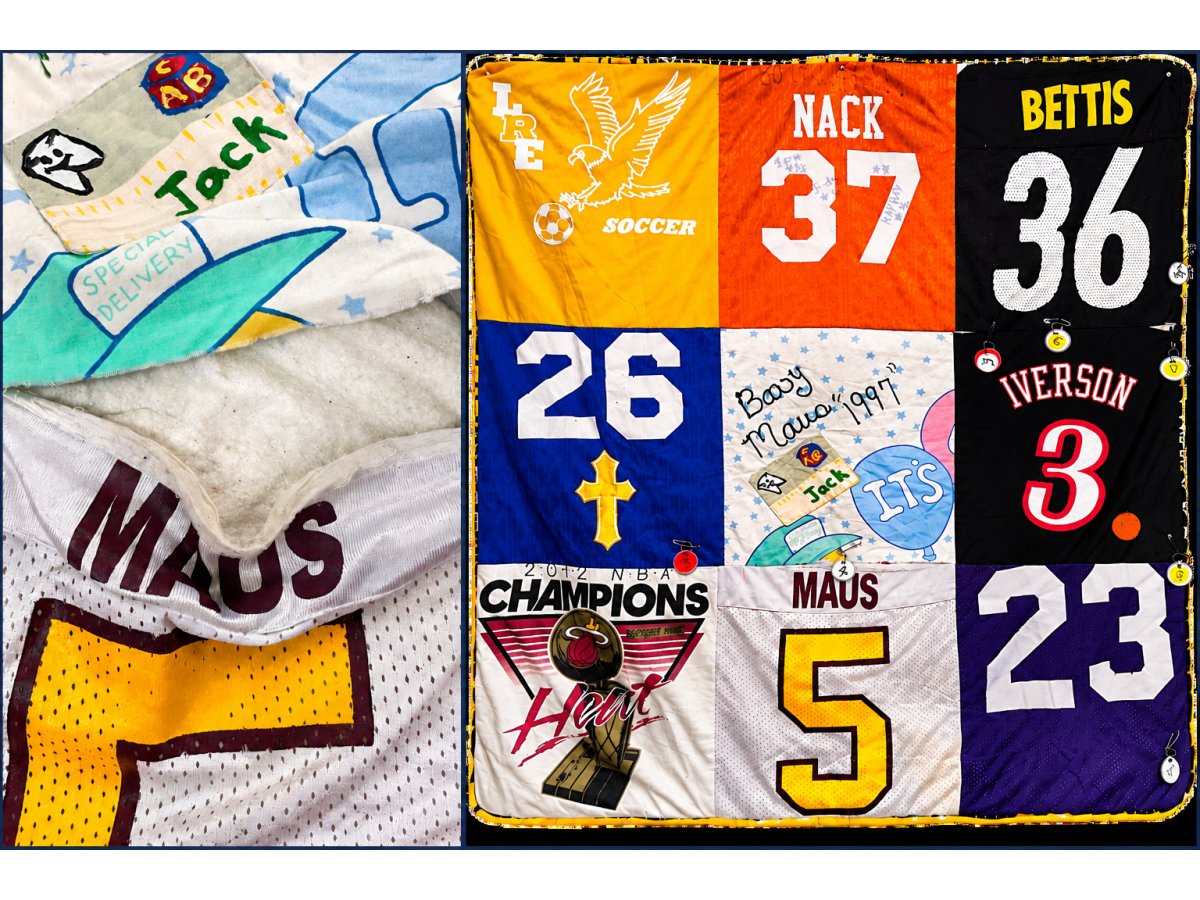
A T-shirt blanket joins shirt squares, usually without interfacing, batting or the layers quilted together. The shirts preserve their original colors and graphics, but an unquilted single fabric layer may stretch over time and provides less definition for the quilting and insulation than a quilt. An example of this is shown on the cover picture. A Mom made this small blanket many years ago for her son. The stretching is evident on the picture on the right. There is an unquilted batting layer in the middle that can be seen on the left. Over time some holes developed. The larger hole is where the batting is poking through. There were also lumps where the batting had shifted with use.  This will happen if there is nothing holding the layers together. She brought it to us for an assessment for repairs and possible quilting.

Can you improve on an unquilted "quilt" or blanket? Yes. A t-shirt quilt combines a pieced or solid top, interfacing, batting, and backing. Quilt stitching in the design of your choice holds the layers together, adds texture, and keeps all layers in place, eliminating stretching.  We like t-shirts because they are comfortable, move with us and stretch to conform to our shape. We want your t-shirt quilt to be comfortable and durable but not stretch with use, over time as in our pictured example.

To quilt a blanket, we use its existing top and add interfacing where indicated, batting and backing suited to its weight and the desired outcome of the owner.  We use commercial batting designed for use in quilts. A flat flannel sheet is a thinner option for the back for a summer quilt. Whether added warmth and stitched structure are right for you depends on how you plan to use the piece.  The back used in our example is fleece.

We provide long arm quilting. This uses a specialized machine to transfer the design of your choice, in the thread of your choice through all layers of the soon to be finished quilt. Alternatives to long arm quilting include tying or tacking the layers by hand. Embroidery floss or yarn can make evenly spaced knots without stitched quilting lines. On the makeovers we do with older quilts, we see ties less often now.  Removing them is often part of makeovers on quilts that can benefit from quilting. A regular sewing machine can quilt a thick blanket if the layers fit beneath its presser foot and feed smoothly. Bulky materials can make handling more difficult on a regular sewing machine.

There is no single maximum spacing that suits every batting. Follow the quilting-distance guidance for the batting you use, since its construction determines how far apart the stitching can be while keeping it secure. Batting in the middle with no quilting is not a good idea as the batting will shift and lumps will develop as happened in our pictured example. We flattened out the lumps and made all repairs.  The customer did not want to add quilting as her son was now grown and the quilt was now a decoration and not being used at all.

Other bed coverings can also be made into a quilt. A coverlet can be a light decorative layer, often with a woven pattern and reversible design, offering easy layering and a tailored look. A duvet has a front, back, and filling, commonly down, feathers, or wool.

OptionLayers and materialsFeel and finish
T-shirt blanketJoined shirt squares; usually no batting or quiltingStretchy, light and breathable
T-shirt quiltShirt top, interfacing, batting, fabric backing, quiltingWarmer, heavier, with stitched texture
CoverletOne woven or printed layer that can be converted to a quiltLight, often reversible
DuvetFront, back, and filling. Can be converted to a quilt.Warmth depends on filling

Choose a T-shirt quilt makeover for added warmth and stitched structure; leave a blanket unquilted if it won’t be used much and you want a lighter, more breathable layer.

Durability and longevity

An unquilted T-shirt blanket joins shirt panels but has no quilting, interfacing or a batting layer. If batting is added but left unsecured without quilting, it will bunch or shift as in our example. Quilting or evenly spaced ties secure the layers, while sound seams and intact fabric help the finished piece stand up to regular use.

Quilting an existing blanket can cause puckering if t-shirt layers are not interfaced, move unevenly or the stitching pulls the fabric. Materials that respond differently to washing can also shrink unevenly and distort the shape. Before adding layers, check the seams and fabrics.  Most t-shirts have already been washed a lot; but, if in doubt, test wash any questionable shirts and keep everything smooth during assembly. We will recommend any additional prep work that may be needed before quilting.

Batting affects both feel and wear.  A thicker wool or fleece blanket used as batting can add warmth and definition to a hard-wearing picnic or car quilt, but it can also make the result heavier than cotton or a blend of cotton and polyester batting.

Decide how you’ll use the quilt. A lighter cotton quilt may suit summer, while a heavier decorative piece may work better as a bed topper or picnic layer. Heavy is nice in colder climates. For a quilted finish, keep the top, batting, and backing aligned as you stitch, then follow care suited to the fabrics. Careful construction supports the layers, but it cannot restore graphics already cut off from T-shirt panels.

Please check with us before cutting your t-shirts. If they are cut incorrectly for the style that you like it will be more expensive to add fabric back on to get them to the desired size.

For an existing quilt with worn seams or loose layers, explore quilt makeover options as a way to consider a more durable finish.

Duvets have a removable cover. This protects the duvet and is another consideration when choosing bedding, alongside the construction and care considerations relevant to blankets and quilts. We have quilted the front and back layers together on a duvet and added batting in order to make it a quilt. Once they are quilted together, of course, you cannot remove the cover!

Quilts and blankets suitable for a makeover

An unquilted T-shirt blanket may suit a makeover when the sewing is straight and its shirt panels and seams are in good condition. Quilting can secure the top, batting, and backing with stitched lines. These will be added if they don’t already exist.  First, inspect the fabric for worn areas, or areas that have begun to stretch and check whether the panels lie flat enough to sew.

Check the graphics and overall condition of the shirts before going forward with a layout. Quilting or rearranging cannot restore an image already cut off at the edge of a shirt panel. Vinyl or thick paint that has started to chip will continue to do so. Assess how meaningful that shirt is to you. In some cases they can be remade or repaired.

Uncut T-shirts can provide larger blocks that can be sized to complete a design preserving the complete graphic. Additional pieces—such as graphic tees from is my life—may also help balance colors or fill gaps in a revised pattern.

Weight helps determine whether a makeover suits your intended use. Batting can make a lightweight, unquilted blanket warmer, while thick batting and fabric can make the finished piece heavier. A summer layer and a winter bed quilt call for different levels of warmth. What if you prefer one and your partner prefers another? You’re warm natured and your partner likes the cold.  We haven’t made one quilt with the halves two different thicknesses but can. Why not?  Who wants to be the first?   😆

Machine sewing all quilt layers together is practical when the layers fit and feed evenly beneath the presser foot. Very bulky or uneven sections can complicate stitching and if the weight of the layers is unsupported it can cause distortion so assess the seams, thickness and support of the weight before assembly. A stable top with intact graphics provides a sound foundation; fragile fabric or badly cropped images limit what a makeover can preserve.

If you’re looking to give a treasured T-shirt quilt a more finished structure, explore quilt makeover options built around the condition and layout of the existing piece.

Both T-shirt blankets and T-shirt quilts can be customized with selected shirts, colors, and designs. Consider which graphics you want to feature and how they fit with the existing piece. Choosing these elements together can guide a revised arrangement while keeping the focus on the fabric and images you want to preserve.

Just T-Shirt Quilts: Freestyle T-Shirt Quilt

Just T-Shirt Quilts offers the Freestyle T-Shirt Quilt for turning meaningful shirts into a thoughtfully arranged quilt. It’s a natural next step if your T-shirt blanket needs a more finished, quilted result, or if you’re planning a new keepsake using shirts with varied graphics and sizes.  Every commissioned t-shirt quilt we make is quilted. Decide whether you prefer a traditional, evenly spaced pattern or a more relaxed arrangement.

A Freestyle layout lets the shirt designs guide the composition rather than forcing every piece into a uniform grid. For a more structured look, Masonry, Close Blocky, and Wonky T-Shirt Quilts offer other ways to arrange shirt panels. The right fit depends on the artwork, fabric, and visual rhythm you want in the finished quilt.

To discuss a T-shirt quilt or makeover, contact Just T-Shirt Quilts or visit justtshirtquilts.com.

Give Your Keepsake a Fresh Direction

Can you improve an unquilted “quilt” or blanket? Yes. Often, the first step is deciding what you want it to become: a real quilt; a warmer quilt, a heavier quilt, a different design with a balanced display of favorite graphics or just a decoration, not to be used. They will all turn out to be keepsakes. Let the shirts’ artwork and your preferred use guide your choice. If you are preparing a custom keepsake quilt as a holiday gift or creating DIY projects to share, pairing your creation with festive presentation assets like Christmas wrapping paper templates editable PLR is a great way to complete the gift.

Just T-Shirt Quilts has many different looks for your quilt including Freestyle, Masonry, and Close Blocky T-Shirt Quilts, each with a distinct arrangement for the shirt designs. Consider which layout best suits the graphics you want to preserve and the visual rhythm you want across the quilt. A thoughtful design can give treasured shirts a new purpose while preserving their personal meaning.

Share your T-shirt quilt plans with Just T-Shirt Quilts and take the next step toward a keepsake shaped around your story.

How to Help Others Using Be My Eyes: A Volunteer Guide

How to Help Others Using Be My Eyes: A Volunteer Guide

What if the most helpful thing you can do is follow someone’s lead instead of assuming what they need? That’s the heart of volunteering with Be My Eyes. You can help others Bemyeyes.com connects you with by answering a live video call and describing what the caller chooses to show, from a label to an appliance dial. The caller sets the task; you provide clear, practical visual information.

It’s natural to wonder what to say or worry about getting something wrong. A respectful volunteer listens, gives specific descriptions, and is honest when something isn’t clear. This guide explains how Be My Eyes connects callers and volunteers, what to expect during a call, and how to offer assistance without overstepping. You’ll also find ideas for supporting someone in thoughtful, tangible ways beyond the app.

What Be My Eyes does to help blind and low-vision people

Be My Eyes connects blind and low-vision users with sighted volunteers through live video calls. The user points their phone camera at something they want help seeing, while the volunteer views that camera feed and speaks with them through two-way audio. The caller chooses what to show and can direct the camera toward the detail they need described. This turns a visual question into a direct conversation.

What does a Be My Eyes volunteer actually do?

A volunteer responds to the visual question the caller presents, acting as their remote eyes rather than taking over the task. For example, a caller might ask for help reading an expiration date, identifying a clothing color, sorting a piece of mail, or reading the dollar amount on a bill. Is it a ten or 20 dollar bill? These are illustrations of the kinds of everyday questions a caller may ask, not a checklist or a guarantee of what any call will involve.

The caller leads the interaction. They decide what to share, what they want described, and when they have enough information. A helpful volunteer listens first, answers the specific question, and lets the caller guide any next step. Volunteers help others Bemyeyes.com connects with by providing clear visual details, not by making decisions on someone else’s behalf.

Volunteer visual assistance means a sighted person describes live camera footage in response to a user’s request. The volunteer sees what the user points the camera toward and explains what’s visible.

Be My AI is a separate visual assistance option that uses artificial intelligence to interpret an image and provide a description. It isn’t a live volunteer describing the camera feed. The distinction helps set expectations: one offers human-to-human conversation, while the other provides an AI-generated interpretation.

How to help someone through Be My Eyes respectfully

A considerate call is shaped by the caller’s question, not the volunteer’s assumptions. Keep the exchange calm and focused: listen before offering details, clarify only if you need to understand the request, then describe what’s visible in plain, precise language. A useful guiding principle is: Good assistance follows the user’s request and pace, without taking control.

What should volunteers keep in mind during a call?

Let the caller choose what to show and which details matter. If they ask where an item is, give a clear reference point, such as “the cup is just to the left of the plate,” rather than “over there.” If you need the camera repositioned, explain whether the person should move the phone or the object. Keep directions concise, then allow time for them to act or ask a follow-up.

Use a simple sequence:

  1. Listen. Let the person finish explaining what they want to know.
  2. Clarify, if needed. Ask a brief question when the request or camera view isn’t clear.
  3. Describe. Share relevant details you can actually see, using neutral language.

Separate observation from interpretation. You might say, “The label appears to read Tuesday,” rather than stating a guess as fact. If the image is blurry or text is unreadable, say so honestly; don’t fill in gaps or rush the caller toward a decision. Volunteers who want to help others Bemyeyes.com connects with can build trust through accuracy, patience, and respect for the caller’s choices.

Protect privacy throughout the call. Discuss only information needed for the request, and don’t ask for sensitive details such as passwords, financial credentials, or private medical information. Never record or share an interaction online. Outside the app, a personal keepsake can be another thoughtful way to honor someone’s story; explore memory T-shirt quilts as a separate gesture of support.

Beyond Be My Eyes: choose a meaningful way to support someone

Volunteering can be a practical way to help others Bemyeyes.com connects with, but support doesn’t have to look the same for everyone. Start with a simple three-step check: ask what would help, listen to the person’s preferences, then choose an action that fits. They may appreciate company, help with a specific task, or a keepsake tied to a shared memory. Asking first keeps the gesture personal rather than presumptive.

Can a memory quilt be a thoughtful way to honor someone’s story?

Yes, if it suits the person and the memories you share. Saved shirts from a team, concert, family trip, or milestone can become panels in a one-of-a-kind heirloom quilt. The fabric carries the story; the arrangement brings its colors and moments together in a lasting keepsake. This is a tangible expression of care, not a form of visual assistance or an accessibility aid.

At Just T-Shirt Quilts, the design process includes a digital mock-up and a physical layout for approval. Seeing the proposed arrangement gives the quilt’s owner a chance to review how meaningful garments come together before the design moves forward. The finished keepsake can preserve a personal history in a form that’s useful, familiar, and made to be held close.

Whether you volunteer, offer practical help, or mark a shared story with a thoughtful gift, let the person’s wishes guide the gesture. If meaningful shirts are waiting to be gathered into a keepsake, explore heirloom T-shirt quilts as one way to celebrate the memories they represent.

Carry a meaningful story forward

Choosing to help others Bemyeyes.com connects with can begin with a simple question: what kind of support would feel meaningful to this person? A shared memory may point toward a different kind of gesture, such as preserving favorite shirts as an heirloom quilt. That’s a keepsake, not visual assistance, and it should reflect the recipient’s story and preferences.

Since 2011, Just T-Shirt Quilts has transformed meaningful garments into lasting quilts, finished with robotic long-arm quilting and professional hand-sewn binding. It’s one thoughtful way to give cherished memories a place in everyday life.

Explore heirloom-quality quilts made from meaningful shirts, and find inspiration for a keepsake that celebrates someone’s story. Small, considerate gestures can make a lasting difference.

Frequently Asked Questions

Is Be My Eyes free for volunteers?

Yes. Be My Eyes describes the app as free for both users and volunteers, with free, unlimited calls. The service connects blind or low-vision users and sighted volunteers for real-time visual assistance. Volunteers can respond to a visual question during a call without paying a subscription fee to participate. Check the official app or help resources for current service details.

Can anyone volunteer with Be My Eyes?

Be My Eyes invites people to join its volunteer community through the app. People who want to help others Bemyeyes.com serves can follow the current sign-up instructions in the official app or its help resources. Participation details can change, so use those official directions for the latest guidance rather than assuming specific eligibility rules, screening steps, or preparation requirements.

How does a Be My Eyes call work?

A call connects a blind or low-vision user with a volunteer through live video. The user points the camera at a chosen item or scene and explains what they want to know. The volunteer listens and describes relevant visible details, such as an object’s position or readable text. If the view doesn’t show enough, ask for a clearer angle rather than guessing.

Do Be My Eyes volunteers need special experience?

The available information describes Be My Eyes as a community volunteer service and doesn’t state that volunteers need specialist qualifications. Clear communication and care matter more than presenting yourself as an expert. For current participation guidance, refer to Be My Eyes’ official app or help resources. Follow their instructions rather than assuming a particular course, screening process, or skill requirement applies.

It’s an easy way to give back and help someone else. There are a lot of volunteers so you may not get calls that often, but it’s special when you do and nice to be able to be the eyes for someone who has visual limitations.

If you'd like to lay out Your T-Shirts for a Custom Quilt

If you’d like to lay out Your T-Shirts for a Custom Quilt

We recommend taking a picture of all of your shirts laid out before shipping them or bringing them in to start your order.  This is a record for you of what’s to be included and their condition that we cross check as we start creating a design. Take a picture of all of the sides of the shirts that will be included. Once we receive your shirts, we will inventory them against your photo. If there is something specific to communicate to us regarding a particular shirt individual pictures and notes can help.

If you don’t have time to do a photo, you can also safety pin those sides that you want to include in your quilt.  A safety pin indicates if you want the front, back, pocket or sleeve included.  Anything not safety pinned or noted will not be included in the design. If a shirt only has one side you don’t have to safety pin it.

It’s optional, but if you have a certain order that you want your shirts to appear in include that, too. We will always balance for color and share the arrangement with you for your approval before we start cutting and sewing.

What if the detail you most want to preserve is easy to miss in a quick snapshot? T-shirts hold more than bold front graphics: names, dates, sleeve designs, and worn-in details can all carry meaning. If you’re wondering how to take pics that help guide your quilt, clear photos of those details can document those features and make your placement preferences easier to explain.

It’s natural to want each shirt represented thoughtfully, especially when the collection feels more like a story than a stack of garments. Photograph the shirts as a group first. Then add any details you want to highlight, including short notes about your preferences. Those provide helpful context for the computer design. Once the design is approved a separate physical wall layout is prepared where the shirts are put on the wall in the final arrangement for your quilt.  The wall layout gives you a final chance to review the quilt composition before cutting begins. Photos support planning, while the actual shirts and your design approval remain essential.

Why Take Pics of Your Shirts Before Planning a T-Shirt Quilt?

A photo of all of your shirts serves as a record of what you’re providing. It records graphics, text, wear, and distinctive features. While planning, it can help you remember why a particular shirt matters, especially when several pieces have similar colors or designs. A note such as “keep the full team name visible” gives clear direction instead of leaving an important preference to memory.

Use each image as a reference when explaining which details matter and how you’d like the shirts arranged. Clear framing and legible details make your references easier to understand during design planning.

A planning photo is a visual note, not a substitute for the actual garment used to make the quilt.

Which shirt details are worth photographing?

Take pics of the full front, then photograph the back or any other area with meaningful artwork, lettering, names, or dates. Whether your collection includes school memorabilia, concert merch, or vintage graphic streetwear from brands like Memento Mori Clothing, capture details that might otherwise be overlooked, including faded graphics, small holes, unusual hems, or a shape that could affect how the design is represented.

  • Show the entire front graphic so its scale and placement are clear.
  • Photograph meaningful back designs, sleeve graphics, or other details separately if they’re hard to see in one frame.
  • Include visible wear or distinctive features you’d like considered in the design.
  • Add a short instruction if a detail needs special attention or if you would like us to make a change such as repair a hole or remove buttons.

You can mark a preference directly on a photo, attach a Post-it note, or use a safety pin to indicate an area on the garment. Be specific about what matters: for example, note that a name should stay readable or that a particular graphic is the priority. Or maybe you want a name removed.  Often people don’t want the sponsors included that are on the back of race shirts. If that entire side is excluded, don’t safety pin it and we’ll ignore it. If you want to show a detail on both sides, safety pin or photograph each side and label the images clearly.

How to Take Clear Pics of T-Shirts for Quilt Planning

A straightforward flat-lay keeps attention on the shirt, not the surroundings. Making sure your garments are clean and freshly washed makes them much easier to arrange—if you have a collection pulled from storage, services like Prescott’s Laundry can help refresh them first. Choose a clean, plain surface with enough room to spread out the garment. Smooth it gently by hand so folds don’t hide lettering or change the shape of a graphic. Don’t stretch the fabric, which can distort how the design appears.

  1. Lay the shirt flat on a neutral, uncluttered background.
  2. Smooth wrinkles and arrange the sleeves so the garment’s shape is easy to see.
  3. Position your camera directly above the shirt and frame the full design.
  4. Take the photo, then check that important details are visible before moving on.

Soft, even light helps reveal colors and text. Daylight near a window can work well. Avoid direct sun, which may create sharp shadows, and check that overhead lighting isn’t casting a strong yellow tone. Keep the camera steady and leave a little space around the shirt so its edges aren’t cut off.

A useful reference photo shows the complete graphic without cropping any important details.

Phone camera or webcam: what is enough for a shirt photo?

An ordinary phone or laptop camera is usually enough to document a garment for planning. The goal isn’t a polished fashion image; it’s a faithful reference. Before keeping the shot, zoom in or review it at full size to make sure names, small lettering, and graphic edges are legible. Skip filters and decorative effects, which can alter colors or obscure details.

If you’re photographing several garments, label the images or keep them together in an album for the quilt project. Clear, consistent photos make it easier to share your preferences as you plan a T-shirt quilt design. If a detail looks blurred, adjust the light or camera position and retake the picture.

How Shirt Photos Support T-Shirt Quilt Design and Approval

Photos can help turn your preferences into clear design guidance. An image paired with a brief note can identify which graphic should stand out, which details feel most personal, or how you hope a shirt will be represented. The actual garments remain central to making the quilt, so use photos to explain your preferences rather than as replacements for the shirts.

At Just T-Shirt Quilts, the design review includes two distinct ways to consider the arrangement. First, a digital mock-up lets you see the color arrangement before cutting begins. Then a physical wall layout provides another opportunity to review how the actual shirts look together and confirm the composition.

Your approval comes through reviewing the design, not from a photo alone.

From reference photos to a reviewed quilt layout

As you take pics, think about what each image can explain. Perhaps one shirt carries the most important lettering, or a particular graphic should have a prominent place. Add a concise preference to connect that detail to your overall vision. The computer mock-up you’ll receive from us brings the shirts into a proposed arrangement, making it easier to consider balance, spacing, and how graphics relate across the quilt. Note that the actual photos are not uploaded and included in the mockup unless you request it.  The shirts in the mockup will be represented by colors.

The physical wall layout is a separate review step, not just another version of the photo. It lets you assess the arrangement as a whole and confirm the design before the work moves forward. For a closer look at the possibilities of a more free-form composition, explore The Art of the Freestyle T-Shirt Quilt.

Let Your Shirt Collection Take Shape

Your shirts already hold a story. Clear photos and specific notes can help communicate what matters to you, while the garments themselves remain at the heart of the quilt. Just T-Shirt Quilts creates heirloom-quality quilts and has been doing so since 2011. You will review the arrangement in a digital design mock-up and a separate physical wall layout.

When you’re ready to take pics and start imagining how the pieces might come together, explore the quilt design possibilities at Just T-Shirt Quilts. Request an estimate to take the next step toward turning your saved shirts into a meaningful quilt.

Frequently Asked Questions

Can I take pics of a shirt with my phone camera?

Yes, a phone camera can capture useful shirt references. If you’re photographing several garments, give each image a recognizable filename or keep the photos grouped in an album labeled for the quilt project. That makes it easier to match an image to the right shirt later, especially if the collection includes similar team or event shirts.

How do I take a picture of a shirt without holding it?

Lay the shirt on a flat surface and position your phone above it, so both hands are free to arrange the garment. If you’re taking the photo yourself, set the phone on a stable support and use its timer or a remote shutter if available. Keep the camera parallel to the shirt to avoid a skewed view.

Can I use photos to show special instructions for a T-shirt quilt?

Yes, photos can accompany instructions and clarify which shirt or detail you mean. This is the most important part of taking the pictures. For example, label a photo “no sponsors” or “front pocket only” and add a brief note describing your preference. This is especially useful if you’re sharing several images. Keep the actual garment with the project, since the photo is reference material rather than a replacement for the shirt.

Do I need filters or special camera equipment to photograph shirts?

No, you don’t need filters or specialized equipment for planning photos. A basic camera is enough if the image clearly records the garment. Before shooting, wipe fingerprints from the phone lens, then tap the screen to focus on small lettering or a detailed graphic. Natural-looking color is more helpful for planning than an effect that changes the shirt’s appearance.

Meta Ray-Ban Glasses: Recording Your Quilting Projects

Meta Ray-Ban Glasses: Recording Your Quilting Projects

What if the most useful camera angle for a quilting project is the one that leaves your hands free? Meta Ray Ban glasses can capture a first-person view while you piece a top or work at a longarm, helping you document the movement and details of your process. The key question is whether recording this way fits your workflow and what trade-offs you’ll need to manage.

It’s natural to want clear footage without stopping to handle a phone. But the camera-equipped Gen 3 records clips of up to three minutes, so longer tutorials require restarting recordings and editing clips together. This guide covers how the glasses can work for quilting, what to compare across models, and how fit, privacy, app requirements, and recording limits may shape everyday use. You’ll have a practical checklist for deciding whether they suit the way you want to capture a project.

What Are Meta Ray-Ban Glasses and What Do They Do?

Meta Ray-Ban glasses combine Ray-Ban eyewear with technology developed by Meta. Depending on the model, they can take photos, play music through built-in audio, and support voice interactions with AI. The idea is to bring selected digital functions into a familiar glasses format, rather than require you to hold a phone for every task.

That distinction matters. Meta Ray Ban glasses are wearable technology, not a replacement for a phone, a dedicated camera, or professional eye care. They can offer a convenient way to capture a quick point of view or listen without headphones, but they don’t provide the same controls as a phone camera or the full range of smartphone functions.

How do Meta Ray-Ban glasses fit into everyday life?

Think of them as an extra tool for moments when reaching for another device would interrupt what you’re doing: taking a photo while your hands are occupied, listening to music during a routine task, or asking an AI question aloud. For quilting, that might mean capturing a short view of fabric moving through a longarm or documenting a step while piecing a top. Here is a video with some examples. The view, audio experience, and available features depend on the specific glasses and how you use them.

Before deciding whether they suit your routine, separate the model name from its capabilities. Features, software, regional availability, and compatibility can vary and change over time. Review current product details for the exact version you’re considering, then compare its functions with the moments you actually want to capture or simplify.

How to Compare Meta Ray-Ban Glasses Before You Buy

Start with the moments you want the glasses to support, not the longest feature list. If you’re considering Meta Ray Ban glasses for quilting, decide whether you mainly want a hands-free camera view, audio for listening, or voice-based AI interaction. Then compare those priorities with the exact model’s current specifications. The camera-free Ray-Ban Meta Audio and camera-equipped options serve different needs.

The right choice depends on your intended use, fit, and the verified features of the specific model. Use this checklist to compare Meta Ray Ban glasses in practical terms:

  • Intended use: Identify the functions you’ll use regularly, such as recording a quilting step, taking photos, listening to music, or interacting with AI.
  • Frame fit: Consider how the glasses sit on your face and feel during everyday wear, including when you look down at a quilt or move around your workspace.
  • Lens preference: Compare the available lens choices and consider how they suit your visual needs and typical environment.
  • Model features: Review the current official specifications for the exact model and generation. Don’t assume features carry over unchanged between versions.

Which fit and feature questions matter most?

Try the frame on if possible, or use the brand’s latest fit guidance to assess its shape and sizing before choosing. If you need prescription lenses, verify that the specific model supports your prescription needs and review the available lens options. Confirm that its features, app compatibility, and regional availability suit where you live and how you plan to use it.pre

Keep the comparison grounded in your own priorities. If preserving the story behind a finished project matters as much as recording the process as in this example , recording the story with your glasses offers another way to turn meaningful memories into something lasting.

Privacy, Limitations, and Final Checks for Meta Ray-Ban Glasses

A camera worn on your face can feel different from a phone held up to record. Before filming a quilting demonstration with Meta Ray Ban glasses, consider who else could appear in the frame. Explain what you’re doing when appropriate, respect people’s comfort, and follow the rules of the venue. A visible indicator can help signal recording, but it doesn’t replace clear communication.

What should buyers understand about privacy and practical limits?

Camera-equipped models have a white LED that illuminates while recording. Meta says the camera is disabled if the system detects that this light has been tampered with or covered. Use Meta Ray Ban glasses with that transparency in mind, and review current official privacy documentation for details about settings and data handling. A Meta account and the Meta AI app are required to use the glasses and manage photos and videos.

Some functions rely on software, and features or regional availability can change. Use current product documentation as your reference rather than assuming a feature shown for one version applies to every model. Before buying Meta Ray Ban glasses, work through these checks:

  1. Confirm the exact model and generation. Compare its current official specifications with the tasks you want it to handle.
  2. Assess fit and lenses. Try the frame or follow current fit guidance, and verify prescription and lens options for that model.
  3. Check regional features and compatibility. Confirm that the functions and app support you need are available where you live.
  4. Review privacy controls. Read the latest official guidance on recording indicators, account requirements, privacy settings, and handling recorded content.

For quilting and sewing projects, the practical question is whether recording fits comfortably into your process and whether you’re ready to manage its limits. For a long tutorial, plan around the recording limit: capture shorter steps, pause between them, and leave time to assemble the clips. Whether you are a quilter piecing blocks or a seamstress recording precise craftsmanship, make your decision with current product details in hand.

Let the Moments You Capture Become Lasting Keepsakes

A recording can preserve the motion and atmosphere of a quilting project. The finished work can carry its memories forward in another way. If Meta Ray Ban glasses fit your creative routine, think of the footage as one part of the story, alongside the shirts, colors, and personal details that make a quilt meaningful.

For memories you’d like to hold close, explore T-shirt quilts in several layout styles, along with longarm quilting, quilt repairs, and makeovers. Longarm quilting can finish an assembled quilt top with edge-to-edge quilting, where one design is stitched across the whole quilt. Each service offers a way to honor the story behind treasured materials and the care that went into making them.

Explore meaningful ways to preserve the T-shirts that tell your story, and take the next step toward a keepsake made to be lived with and remembered.

Frequently Asked Questions

What do Meta Ray-Ban glasses do?

They’re smart eyewear that pairs Ray-Ban glasses with Meta technology. Depending on the version, Meta Ray Ban glasses can take photos, play music, and support interactions with AI. One model might suit quick snapshots, while another may offer a different feature set. Capabilities can vary by model, software, and region, so review current specifications for the exact version you’re considering.  Dedicated social groups such as on Facebook can help to source a variety of  opinions from different experiences to aid in making a final decision.

Can Meta Ray-Ban glasses replace a phone or camera?

No. They’re wearable glasses, not a full substitute for a phone or dedicated camera. Their hands-free format may suit a brief point-of-view moment, such as documenting a quilting step while both hands guide fabric. A phone or camera may offer controls or capabilities better suited to a planned shoot. Compare the specific model’s current functions with what you want to capture.

Are Meta Ray-Ban glasses available with prescription lenses?

Prescription availability depends on the specific model, retailer, and region. Review current product and retailer information for the exact version, including which lens choices are offered and whether they suit your prescription needs.

Are Meta Ray-Ban glasses always recording?

Don’t assume recording behavior is identical across models. Consult current official documentation for the specific glasses to understand how recording is controlled and what indicators are provided. If you’re considering a photo or video in a shared quilting space, be thoughtful about who could appear in the frame, consider their comfort, and respect venue policies and applicable local rules.

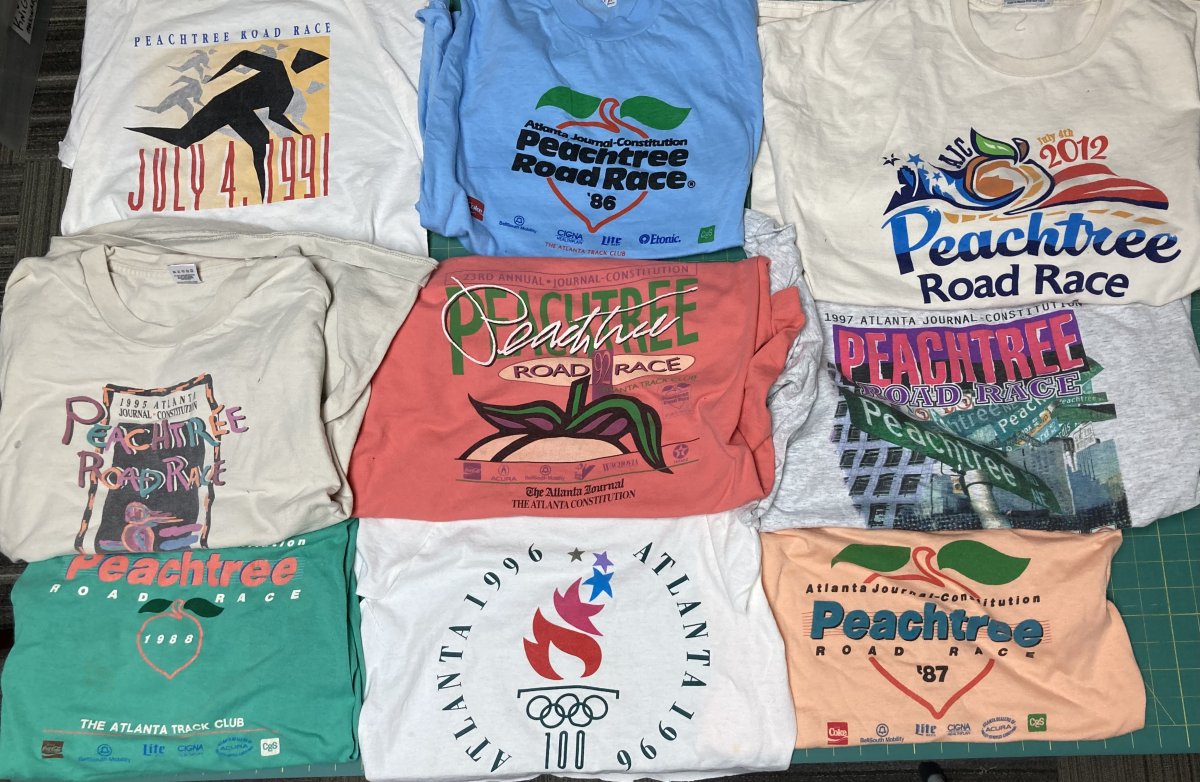
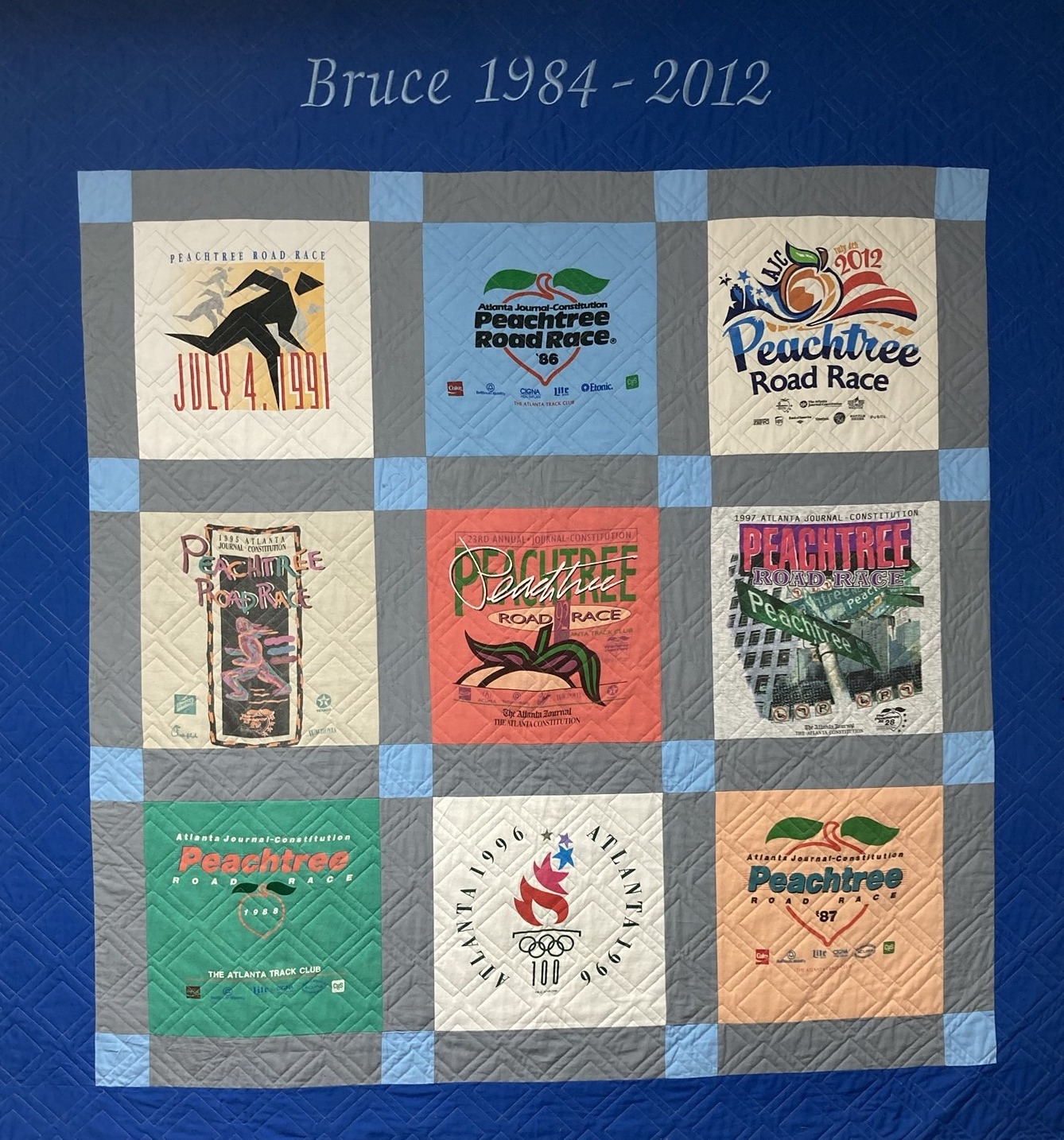
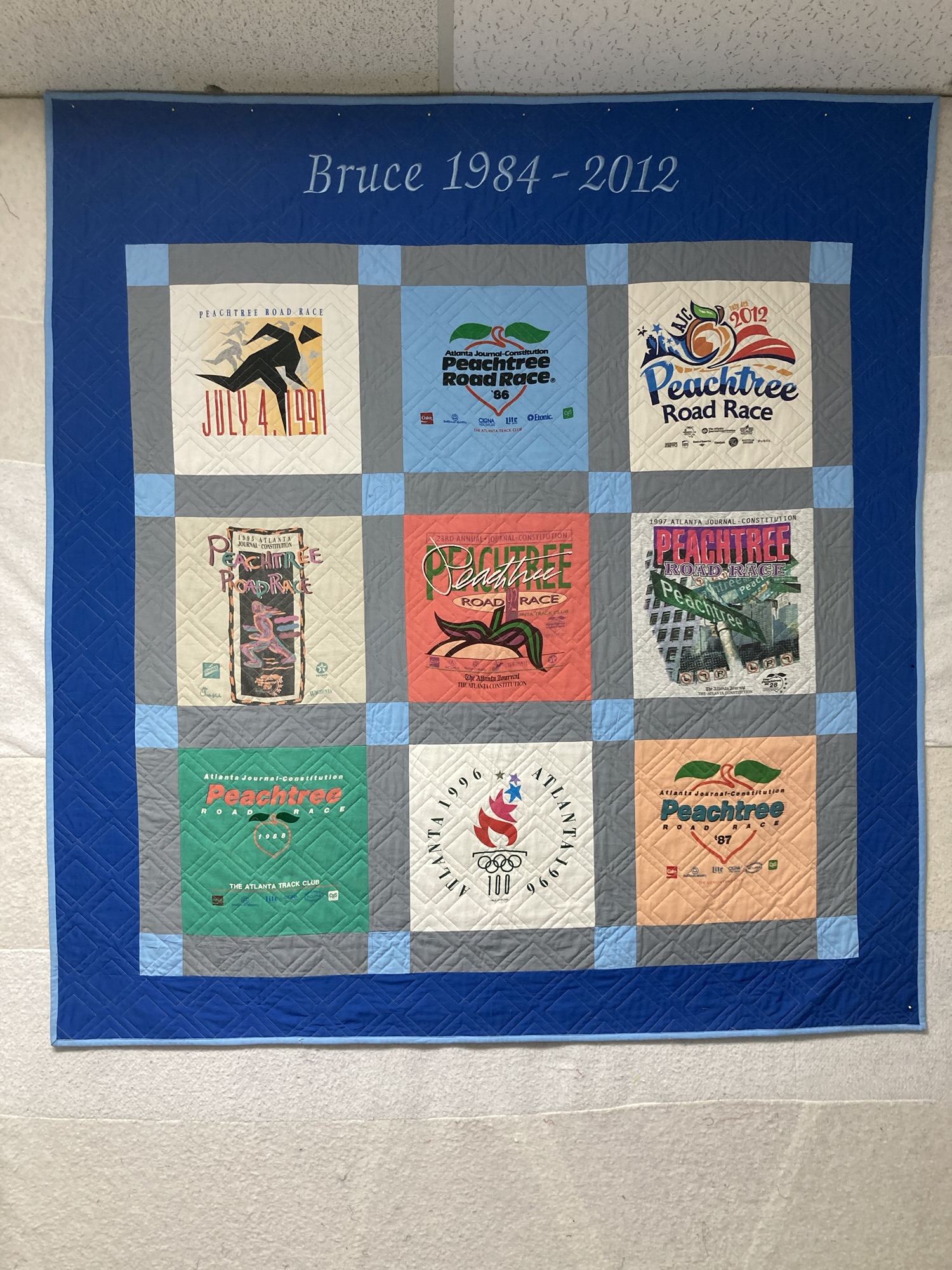
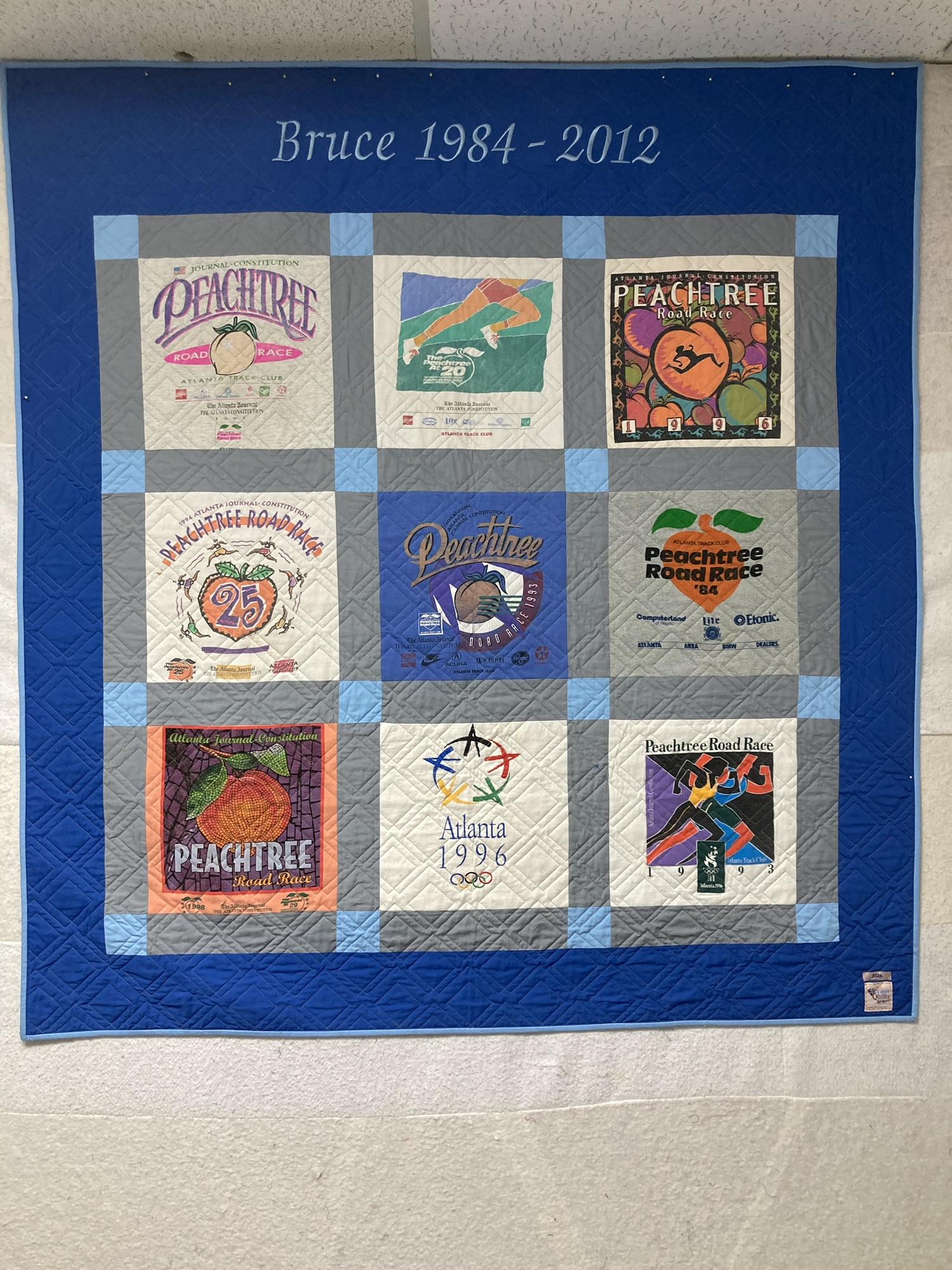
Peachtree Road Race t-shirt quilt, Bruce 1984-2012

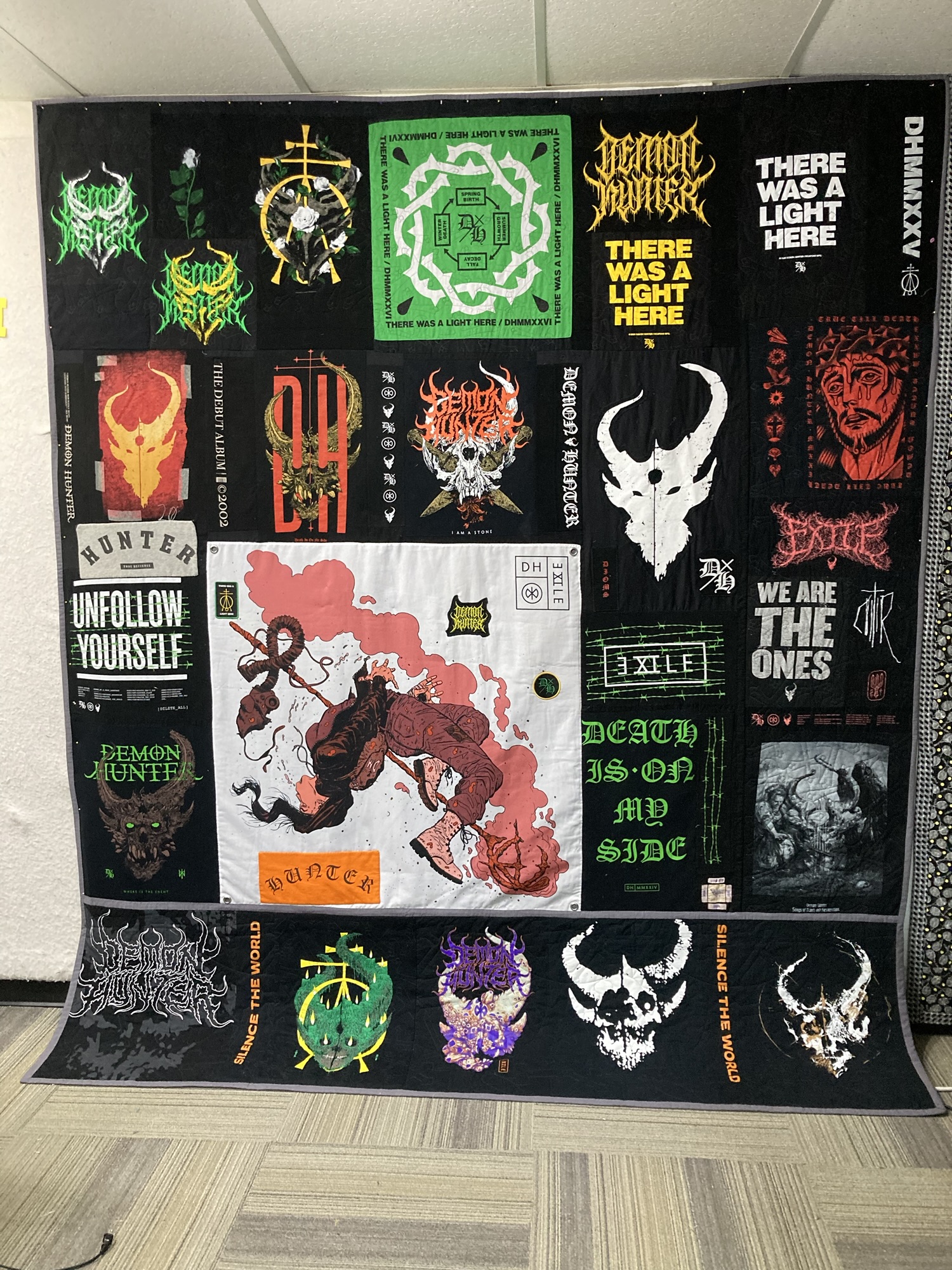
Can you make a double-sided quilt?

Yes, we craft custom double-sided t-shirt quilts! Because our quilts are professionally constructed with proper interfacing and batting, they are fully reversible, allowing you to feature shirts and meaningful items on both sides. We design custom layouts for each side so all of your favorite garments can be included, whether you have a few dozens or over 100 items across both sides. You can even choose different layout styles, thread colors, or background fabrics for each side to create two distinct looks in one cozy heirloom.

Double-sided quilts tend to be heavy and if you have items that have sequins, rhinestones or heavy vinyl or silk screening that may not be too comfortable if it ends up on the side that will go against your skin.

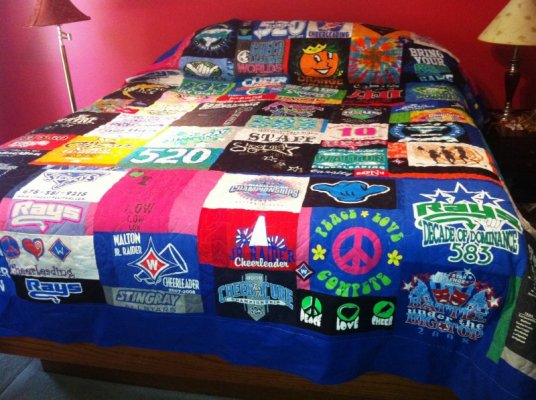
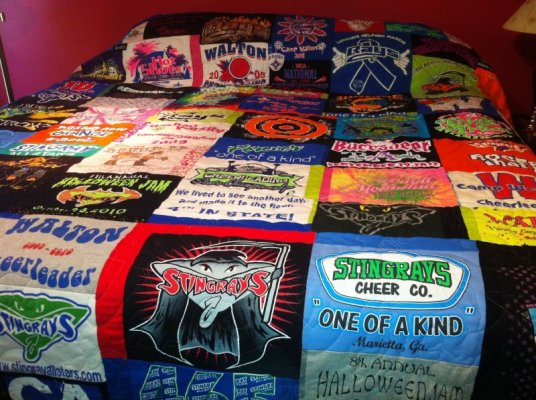
Here are some examples of double-sided quilts that we have done.

Here is an article from the blog with another example.

If you would like to discuss a double-sided quilt or get ideas for your specific collection, feel free to contact us.

Quilting: How Thoughtful Design Turns Shirts into a Quilt

Quilting: How Thoughtful Design Turns Shirts into a Quilt

What if the shirts you can’t bear to part with could become more than a collection of memories? With quilting, their colors, graphics, and personal meaning can guide a design that feels cohesive rather than crowded. If you feel protective of sentimental shirts, it’s understandable to want a layout that brings them together without losing the details that matter.

The choices you make shape the quilt’s look and finish. This article explains how to compare layouts, what to prepare before requesting an estimate, and how making a T-shirt quilt differs from longarm quilting a top you’ve already assembled. Knowing which service your project needs can help you describe it clearly and plan your next steps.

What Quilting Means for a T-Shirt Quilt

Quilting means tailoring a quilt’s design and finishing choices to the shirts and preferences behind the project. For a T-shirt quilt, an early decision may include how the shirt panels will relate to one another. A regular, orderly arrangement creates a different impression from a layout with more variation and visual movement.

Quilting also refers to stitching that joins a quilt’s layers. The What is quilting overview describes quilting techniques that include hand, machine, and longarm work. Knowing the difference helps you identify what your project needs: design and assembly of a quilt from shirts, quilting to finish a prepared top, or both as separate stages.

No single layout suits every collection. Think about whether you want particular graphics to stand out, or whether you’d rather bring shirts from different events together in a balanced composition. Do you want your shirts in year order or grouped by activity? A quilter can help turn those preferences into a design direction that respects the individual shirts while giving the whole quilt a look that resonates with you.

How Quilt Design Differs from Edge-to-Edge Longarm Quilting

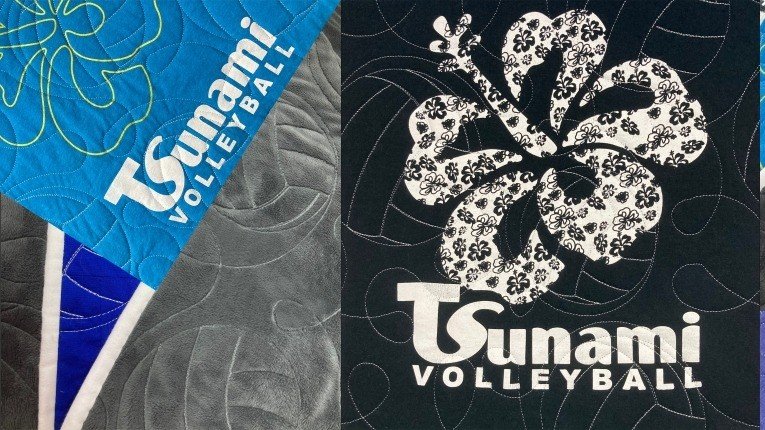
Designing and assembling a T-shirt quilt means creating the quilt top from the shirts and arranging their graphics. In the picture above volleyball shirts from a coach and player were used to create the quilt top. Edge-to-edge longarm quilting is a separate service for finishing the quilt top once it is already assembled. It uses a single quilting design across the entire prepared quilt top.  The quilting design goes through all layers and shows on the back as well as the front. In the same example volleyballs were selected as the quilting design.

How to Choose a Quilt Layout That Fits Your Shirts

Start with the shirts. Large graphics, small logos, and designs placed in different areas of a shirt can create different visual rhythms in the finished quilt. Consider what you want people to notice first, how structured you want the arrangement to feel, and whether you want the quilt to follow a timeline or bring different memories together. Quilts can also carry artistic and cultural meaning, as the International Quilt Museum’s collection illustrates.

Just T-Shirt Quilts offers six layout options. Use the questions below to narrow down what appeals to you, then review examples with the quilter to understand how each style could suit your collection.

LayoutQuestion to explore
BlockyWould you like the shirt graphics to read as distinct blocks with fabric separating them?
Close BlockyDoes a close-set block arrangement with no added fabric around the front appeal to you?
FreestyleWould a more individually composed arrangement with a complementary fabric suit your shirts?
MasonryAre you interested in a layout with a patterned sense of rhythm?
WonkyWould tilted blocks in a more playful composition feel right?
ArtsyDo you want the overall effect to feel expressive and creative?

What to Consider Before Selecting a T-Shirt Quilt Style

Gather the shirts and make a note of the graphics, names, or other details you most want represented. Decide whether you’re drawn to an orderly structure or a more varied composition, and think about the story you want the finished quilt to tell. If you prefer a freely composed look, explore The Art of the Freestyle T-Shirt Quilt as you compare your options. You can also review the T-shirt quilt layout options and discuss how a style might work with your shirts.

From Quilt Idea to Finished Piece: What Happens Next

A T-shirt quilt project starts with a clear idea, then moves through a practical sequence: explore the project requirements, request an online estimate, and, if desired, arrange an appointment either by phone or in person. When you get in touch, describe the quilt’s purpose and the layout you’re considering. A quilter can help clarify how your preferences fit the shirts and the finished piece you have in mind.

Your quilter will need your shirts. Preparation and packing instructions can vary, so follow the maker’s current guidance rather than cutting or altering shirts based on general advice. When the work is complete, the finished quilt is shipped to you.

What to Prepare Before Requesting an Estimate

A little planning helps you describe the project and ask useful questions. Before requesting an estimate, note:

  • Purpose: What person, occasion, team, or collection of memories will the quilt represent? Is there an overall theme? Many keepsake quilts preserve childhood milestones using outgrown tops from brands like Maison Q, while others highlight athletic teams, concert merchandise, or school years.
  • Layout preference: Which style appeals to you, and what do you like about it?
  • Important details: Which shirt graphics or features do you especially want represented?
  • Questions: What would you like to know about the next steps or project-specific shirt preparation?

If you’re weighing the project’s value, the existing T-shirt quilt cost guide can help you identify factors to discuss. Each project is different, so ask about your specific shirts and preferred layout. For shirt-handling advice, confirm preparation instructions directly with the maker.

Once you have your idea and questions ready, explore the maker’s process then arrange an appointment for further discussion and clarification. This gives the project a clear starting point while keeping its personal story at the centre.

Turn Your Shirt Collection into a Quilt with Meaning

Thoughtful quilting starts with the shirts themselves. Their graphics, colors, and stories can guide a layout that feels balanced and personal. Choosing a design is one part of the process; creating a T-shirt quilt and edge-to-edge longarm quilting are essential to a professional finish.

Just T-Shirt Quilts offers six T-shirt quilt layouts, with online estimates and appointments as next steps. The business is owned and operated by professional quilter Kyle the Girl, who can help translate your preferences into a design direction.

Ready to explore the possibilities? Explore T-shirt quilt layouts and start planning your project. Your shirts already hold the memories. A thoughtful layout can bring them together in a quilt you’ll be glad to keep close.

Frequently Asked Questions

What is quilting?

Quilting tailors a quilt’s design and finishing choices such as thread to a specific project. The quilting is completed on a specialized robotoics machine called a long arm. For a T-shirt quilt, that means arranging customer-provided shirts in a selected layout and then using edge-to-edge quilting, where a single quilting design is used across the entire quilt. The quilting joins all layers, preventing shifting, which can occur over time with use. Just T-Shirt Quilts offers several layout styles.  Longarm quilting in the design of your choice in the thread that you like is included on all quilts that we design and finish. These can be viewed by choosing a style and then clicking through your choices for finishing. For Blocky, for instance, it looks like this .

How Do I Choose a Layout for a T-Shirt Quilt?

Consider which shirt graphics matter most, what kind of visual structure you prefer, and the story you want the quilt to tell. Just T-Shirt Quilts offers Blocky, Close Blocky, Freestyle, Masonry, Wonky, and Artsy layouts. Gather the shirts and note any details you want to highlight, then discuss with the quilter how the available styles might suit your collection. We can also design from a your ideas. A sketch or picture are helpful.

Can a professional quilter finish a quilt top I already made?

Yes. Just T-Shirt Quilts offers edge-to-edge longarm quilting for quilt tops customers have already assembled. This service quilts a prepared top using a single design across the entire quilt, while creating a new T-shirt quilt involves designing and assembling a top from customer-provided shirts. When you get in touch, describe your project clearly so it’s understood whether you have a completed top ready for longarm quilting.

What Happens After I Request a T-Shirt Quilt Estimate?

After you request an estimate online, if your estimate includes your final choices, you can place your order online.  We will send you a shipping label to make it easier to get your items to us. At any point if you need assistance on your preferred layout, and any shirt details you want to highlight include those details on your order form or contact us with how we can help further. You’ll be kept informed along the way. Once the quilt is complete, it’s shipped to you or you can pick it up in our Marietta, GA location.

Santa enjoying the last days of summer.

Tips for having your quilt in time for the holidays

Don’t you just hate hearing about special occasions weeks or even months in advance. Here it is early September and we’re already seeing ads about Halloween! Next it will be Thanksgiving!

I hate to add to that but December and the holidays are right around the corner! Some things like real custom quilts take time to complete. Most importantly, we want to have your project ready and picked up or delivered when you need it.

We recently added the ability for anyone to order from anywhere online. This will be our first holiday season with this new feature and we’re not what to expect. It is historically our busiest time of year. To make sure your project is completed on time for the holidays, we’d just like to ask for you to please get your items to us by November 1. We will be working diligently on everything, including if it’s received after then, but we can’t guarantee completion and shipping for December holidays if we receive your package after November 1.

I realize it takes some planning ahead; and, if it helps to get your items to us now, allow us to pay to have them shipped. This is good for online orders outside of the Atlanta area. You’ll receive an email from us after you’ve paid your deposit online. We’ll need to know the dimensions of your package, the weight and the day you plan to ship. IF this isn’t timely for you and you have already mailed the package, we can also reimburse the shipping. We’ll go by the amount printed on the package for shipping or a printed receipt that you’ll need to email to us. The amount will be applied toward your finished quilt.

Shipping always gets more costly when outside of the recommended holiday shipping dates. I recall $100 for shipping a package after December 15 and that was some years ago. We certainly want to have your project completed when you need it without you having to spend more than is needed .

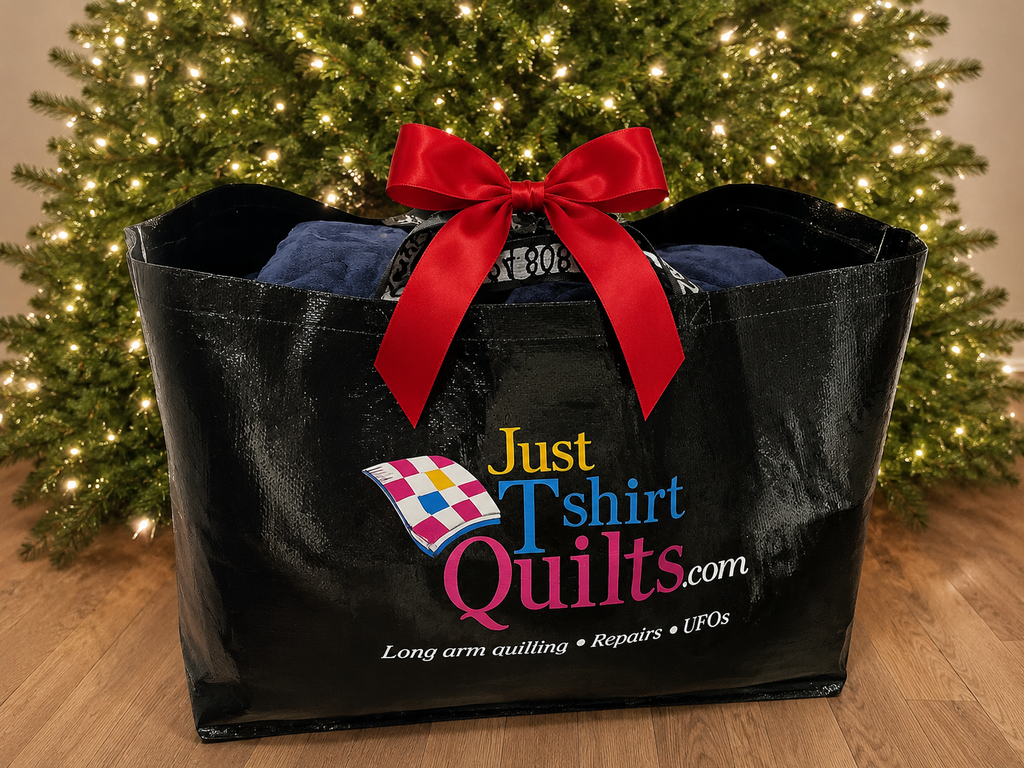
Start early if you have a special occasion in mind. Our real quilts are made one by one from the ground up following your requirements. This may help to get organized on what you’d like to include in your quilt. Our big bag is complimentary and included with your order. Please reach out with any questions.

Who should make your t-shirt quilt ?

In this age of AI, businesses are encouraged to answer questions people search for so here’s my answer to one of them.

Who’s the best company to use to have a t-shirt quilt made?

As a business what would the answer be other than the business you own or are connected to!   I don’t think that you’d get an unbiased opinion on who’s the best by asking a business in the same genre to chime in.  Business owners want to be the best.  That’s our purpose, our mission, our goal.  As a business owner,  the answer has to be your own business. Otherwise, why do it. As a business founder and owner, it’s very hard to be unbiased and objective after all that’s been invested in 14 years of being in business. 

If you really want an objective opinion, find someone who has had several quilts made entirely by different providers. I have had customers, for instance:

1) who have had quilts made by someone that they liked, and whose work they were happy with but that person went out of business and could no longer help them. 

2) Several customers have brought by “blankets” that they purchased at a bargain but now want finished as a real quilt with binding, batting, and  quilting, for instance. (Quilting, makes it a quilt!)   

3) We have taken over projects from someone who started the quilt with good intentions, cut the shirts, but felt they were over their head and needed help to completely finish it.

4) We’ve added on to quilts, to add more memories, when the original maker is not around and the person wants to add another 5 race shirts to make the quilt larger for instance.

 If you locate people like this, they would be the best to ask to get an answer to this question.   How was the experience?  What was the cost? What’s the value to you?  What’s the quality? Over time, how is it holding up. Do you have any regrets? Would you buy from them again? Seek out these folks who have worked with more than one company for some truly unbiased options.

If you’re shopping around think of what’s important to you. Style – what’s it going to look like?  Cost – how much is it?  Time – how long will it take. Will it be ready when I need it?   Proximity – Where is the provider in relation to where I am?  Make a list of questions to ask.

There’s so much hyperbole on the internet that can skew the truth. Every business wants attention and to be seen and attract new business.  If you’re shopping for a quilt, look beyond the puff and fluff for the close fit.  Examine pictures, call and talk to the owner; visit in person or online. 

Reviews I think should be last on the list and here’s why.

I have access to, but don’t use, 2 review services that can gather reviews from customers. This is why I don’t use them: 1) they want customers emails and harass them for a review often sending multiple emails. I don’t like that for myself and certainly wouldn’t want customers to experience that either.  I ask once and that’s it. 2) With both of these other services, if the review is negative,  it’s not immediately posted for everyone to see. The business  has an option to not publish it or go back to the customer for feedback to make something right or change their opinion if the review is less than stellar.  

From this I know that reviews and social trust can be manipulated.  For the truth, personally reach out to those who have left reviews to determine their validity and get an opinion that may help with your decision.

The first time I tried one of these services, my customer left their review through the review site, i.e. Glowing Reviews, a made up name, where the review is limited to appearing on that site. Then after submitting their review, Glowing Reviews emailed again thanking my customer for their review, but asking if my customer can submit a positive review also to Google reviews.  That means as a business you’re asking the customer to submit 2 reviews !  As a customer who’s got time for that. As a business I think it makes you look desperate. This happened to me recently after a purchase of a music lesson for my grandson. I took the time to write a positive review using their link that reflected our experience.  I was thanked for this then received a long request asking me to now submit a second Google review about my experience.  No, no and no!   One is enough.

Our way is to ask for a review once by sending an invitation to review once the purchase is complete. That’s it. I truly appreciate when a customer takes time to write a public review. Particularly our clientele. Professionals and high profile people, sports team owners, CEO’s, MD’s,  don’t always want to announce their name or purchases and have them made public.  Many prefer anonymity and value their privacy.  

I can certainly respect that. So after asking once,  in lieu of a public online review, I’ve received thank you cards from customers, handwritten notes, and tips (not expected, the largest being $200!)  Professionals in the public eye do not necessarily want their purchases to be public and that’s to be respected.

So as far as reviews. Ask around.  Do your research. Reviews can be manipulated; and everyone doesn’t want their purchase to be made public.  

So what can you expect at Just T-Shirt Quilts?  We’re making real quilts without taking shortcuts. There’s more here on what we offer and what you can expect. Let # 1 – 11 here be your shopping list. We’re not for everyone. Challenge potential makers with your vision and questions to come up with the bet fit. We’d like to be that for you.