How to Transform an Unquilted Blanket into a Finished Quilt

How to Transform an Unquilted Blanket into a Finished Quilt

Yes, you can improve an unquilted “quilt” or blanket by adding traditional quilt elements: batting and a backing can be added, and then, most importantly, stitching–quilting the layers together. Our commissioned quilts have four layers: a top, a stabilizing layer, an insulating middle, and a backing. By contrast, a T-shirt blanket is often made by sewing shirt squares together without interfacing or the insulating middle layer and no quilting. Once the squares are sewn together the completed top is serged or sewn to the existing back around the edges. There is no binding fabric that neatly finishes those outer edges after quilting.

With your approval we will take apart an incomplete quilt and remake it.

When shirts hold memories, it makes sense to want a finish that feels as considered as the pieces themselves. The right makeover can add warmth, texture, and structure, but the best approach depends on how the blanket is made and the condition of its fabric. This guide explains how T-shirt quilts are constructed, how quilting affects durability, and which unquilted blankets and existing quilts may suit a makeover. You’ll also find practical criteria to help decide whether adding quilting is the right next step.

T-shirt blanket construction and materials

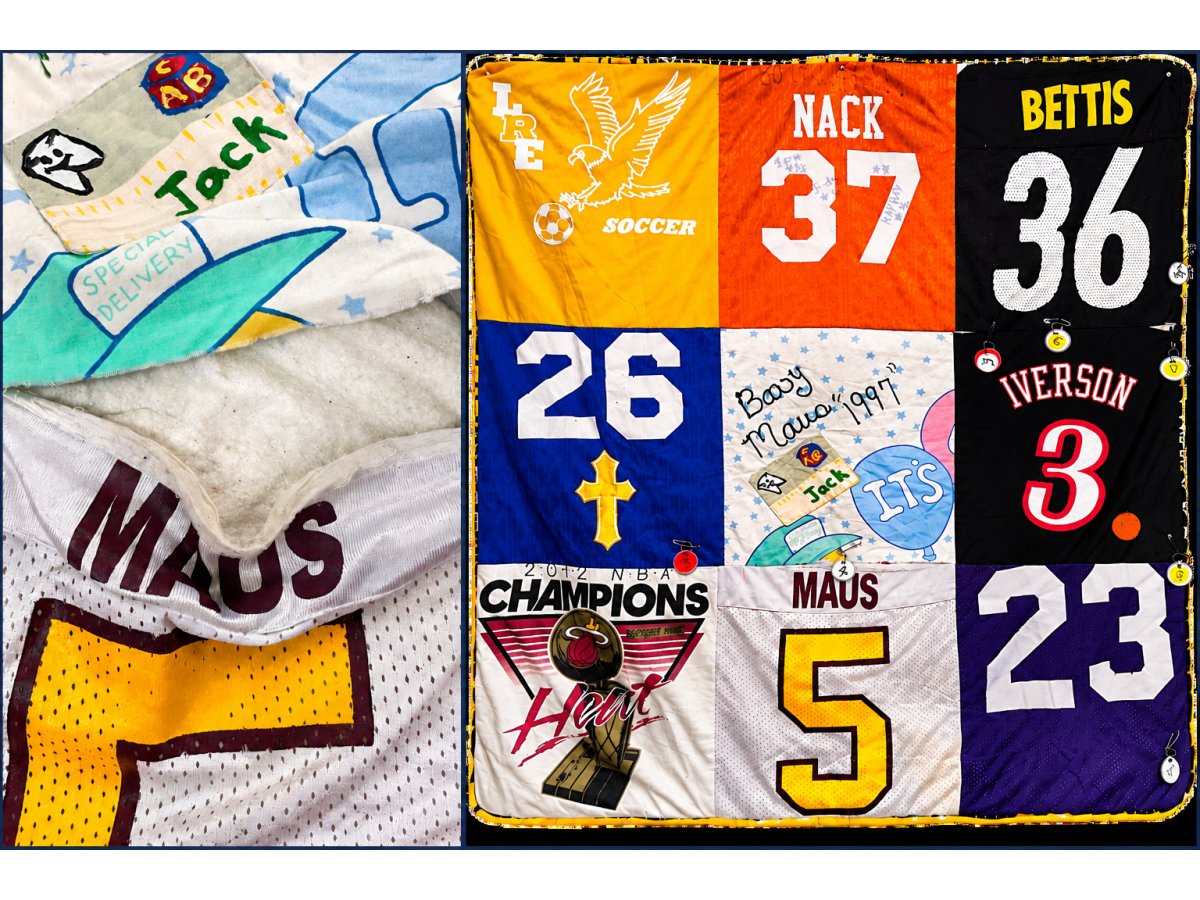
A T-shirt blanket joins shirt squares, usually without interfacing, batting or the layers quilted together. The shirts preserve their original colors and graphics, but an unquilted single fabric layer may stretch over time and provides less definition for the quilting and insulation than a quilt. An example of this is shown on the cover picture. A Mom made this small blanket many years ago for her son. The stretching is evident on the picture on the right. There is an unquilted batting layer in the middle that can be seen on the left. Over time some holes developed. The larger hole is where the batting is poking through. There were also lumps where the batting had shifted with use.  This will happen if there is nothing holding the layers together. She brought it to us for an assessment for repairs and possible quilting.

Can you improve on an unquilted "quilt" or blanket? Yes. A t-shirt quilt combines a pieced or solid top, interfacing, batting, and backing. Quilt stitching in the design of your choice holds the layers together, adds texture, and keeps all layers in place, eliminating stretching.  We like t-shirts because they are comfortable, move with us and stretch to conform to our shape. We want your t-shirt quilt to be comfortable and durable but not stretch with use, over time as in our pictured example.

To quilt a blanket, we use its existing top and add interfacing where indicated, batting and backing suited to its weight and the desired outcome of the owner.  We use commercial batting designed for use in quilts. A flat flannel sheet is a thinner option for the back for a summer quilt. Whether added warmth and stitched structure are right for you depends on how you plan to use the piece.  The back used in our example is fleece.

We provide long arm quilting. This uses a specialized machine to transfer the design of your choice, in the thread of your choice through all layers of the soon to be finished quilt. Alternatives to long arm quilting include tying or tacking the layers by hand. Embroidery floss or yarn can make evenly spaced knots without stitched quilting lines. On the makeovers we do with older quilts, we see ties less often now.  Removing them is often part of makeovers on quilts that can benefit from quilting. A regular sewing machine can quilt a thick blanket if the layers fit beneath its presser foot and feed smoothly. Bulky materials can make handling more difficult on a regular sewing machine.

There is no single maximum spacing that suits every batting. Follow the quilting-distance guidance for the batting you use, since its construction determines how far apart the stitching can be while keeping it secure. Batting in the middle with no quilting is not a good idea as the batting will shift and lumps will develop as happened in our pictured example. We flattened out the lumps and made all repairs.  The customer did not want to add quilting as her son was now grown and the quilt was now a decoration and not being used at all.

Other bed coverings can also be made into a quilt. A coverlet can be a light decorative layer, often with a woven pattern and reversible design, offering easy layering and a tailored look. A duvet has a front, back, and filling, commonly down, feathers, or wool.

OptionLayers and materialsFeel and finish
T-shirt blanketJoined shirt squares; usually no batting or quiltingStretchy, light and breathable
T-shirt quiltShirt top, interfacing, batting, fabric backing, quiltingWarmer, heavier, with stitched texture
CoverletOne woven or printed layer that can be converted to a quiltLight, often reversible
DuvetFront, back, and filling. Can be converted to a quilt.Warmth depends on filling

Choose a T-shirt quilt makeover for added warmth and stitched structure; leave a blanket unquilted if it won’t be used much and you want a lighter, more breathable layer.

Durability and longevity

An unquilted T-shirt blanket joins shirt panels but has no quilting, interfacing or a batting layer. If batting is added but left unsecured without quilting, it will bunch or shift as in our example. Quilting or evenly spaced ties secure the layers, while sound seams and intact fabric help the finished piece stand up to regular use.

Quilting an existing blanket can cause puckering if t-shirt layers are not interfaced, move unevenly or the stitching pulls the fabric. Materials that respond differently to washing can also shrink unevenly and distort the shape. Before adding layers, check the seams and fabrics.  Most t-shirts have already been washed a lot; but, if in doubt, test wash any questionable shirts and keep everything smooth during assembly. We will recommend any additional prep work that may be needed before quilting.

Batting affects both feel and wear.  A thicker wool or fleece blanket used as batting can add warmth and definition to a hard-wearing picnic or car quilt, but it can also make the result heavier than cotton or a blend of cotton and polyester batting.

Decide how you’ll use the quilt. A lighter cotton quilt may suit summer, while a heavier decorative piece may work better as a bed topper or picnic layer. Heavy is nice in colder climates. For a quilted finish, keep the top, batting, and backing aligned as you stitch, then follow care suited to the fabrics. Careful construction supports the layers, but it cannot restore graphics already cut off from T-shirt panels.

Please check with us before cutting your t-shirts. If they are cut incorrectly for the style that you like it will be more expensive to add fabric back on to get them to the desired size.

For an existing quilt with worn seams or loose layers, explore quilt makeover options as a way to consider a more durable finish.

Duvets have a removable cover. This protects the duvet and is another consideration when choosing bedding, alongside the construction and care considerations relevant to blankets and quilts. We have quilted the front and back layers together on a duvet and added batting in order to make it a quilt. Once they are quilted together, of course, you cannot remove the cover!

Quilts and blankets suitable for a makeover

An unquilted T-shirt blanket may suit a makeover when the sewing is straight and its shirt panels and seams are in good condition. Quilting can secure the top, batting, and backing with stitched lines. These will be added if they don’t already exist.  First, inspect the fabric for worn areas, or areas that have begun to stretch and check whether the panels lie flat enough to sew.

Check the graphics and overall condition of the shirts before going forward with a layout. Quilting or rearranging cannot restore an image already cut off at the edge of a shirt panel. Vinyl or thick paint that has started to chip will continue to do so. Assess how meaningful that shirt is to you. In some cases they can be remade or repaired.

Uncut T-shirts can provide larger blocks that can be sized to complete a design preserving the complete graphic. Additional pieces—such as graphic tees from is my life—may also help balance colors or fill gaps in a revised pattern.

Weight helps determine whether a makeover suits your intended use. Batting can make a lightweight, unquilted blanket warmer, while thick batting and fabric can make the finished piece heavier. A summer layer and a winter bed quilt call for different levels of warmth. What if you prefer one and your partner prefers another? You’re warm natured and your partner likes the cold.  We haven’t made one quilt with the halves two different thicknesses but can. Why not?  Who wants to be the first?   😆

Machine sewing all quilt layers together is practical when the layers fit and feed evenly beneath the presser foot. Very bulky or uneven sections can complicate stitching and if the weight of the layers is unsupported it can cause distortion so assess the seams, thickness and support of the weight before assembly. A stable top with intact graphics provides a sound foundation; fragile fabric or badly cropped images limit what a makeover can preserve.

If you’re looking to give a treasured T-shirt quilt a more finished structure, explore quilt makeover options built around the condition and layout of the existing piece.

Both T-shirt blankets and T-shirt quilts can be customized with selected shirts, colors, and designs. Consider which graphics you want to feature and how they fit with the existing piece. Choosing these elements together can guide a revised arrangement while keeping the focus on the fabric and images you want to preserve.

Just T-Shirt Quilts: Freestyle T-Shirt Quilt

Just T-Shirt Quilts offers the Freestyle T-Shirt Quilt for turning meaningful shirts into a thoughtfully arranged quilt. It’s a natural next step if your T-shirt blanket needs a more finished, quilted result, or if you’re planning a new keepsake using shirts with varied graphics and sizes.  Every commissioned t-shirt quilt we make is quilted. Decide whether you prefer a traditional, evenly spaced pattern or a more relaxed arrangement.

A Freestyle layout lets the shirt designs guide the composition rather than forcing every piece into a uniform grid. For a more structured look, Masonry, Close Blocky, and Wonky T-Shirt Quilts offer other ways to arrange shirt panels. The right fit depends on the artwork, fabric, and visual rhythm you want in the finished quilt.

To discuss a T-shirt quilt or makeover, contact Just T-Shirt Quilts or visit justtshirtquilts.com.

Give Your Keepsake a Fresh Direction

Can you improve an unquilted “quilt” or blanket? Yes. Often, the first step is deciding what you want it to become: a real quilt; a warmer quilt, a heavier quilt, a different design with a balanced display of favorite graphics or just a decoration, not to be used. They will all turn out to be keepsakes. Let the shirts’ artwork and your preferred use guide your choice. If you are preparing a custom keepsake quilt as a holiday gift or creating DIY projects to share, pairing your creation with festive presentation assets like Christmas wrapping paper templates editable PLR is a great way to complete the gift.

Just T-Shirt Quilts has many different looks for your quilt including Freestyle, Masonry, and Close Blocky T-Shirt Quilts, each with a distinct arrangement for the shirt designs. Consider which layout best suits the graphics you want to preserve and the visual rhythm you want across the quilt. A thoughtful design can give treasured shirts a new purpose while preserving their personal meaning.

Share your T-shirt quilt plans with Just T-Shirt Quilts and take the next step toward a keepsake shaped around your story.
Professional Quilt Makeover Service: Restoring Dated Quilts to Useable Condition

Professional Quilt Makeover Service: Restoring Dated Quilts to Useable Condition

Broken threads. Forgotten stories. Imagine unfolding a heavy cedar chest to find your grandmother’s unfinished quilt top, its edges frayed and its pattern stalled in time. It’s a common scene where a forgotten project started with love is tucked away, and seeking a professional quilt makeover service becomes the only way to save it. You likely feel a mix of sentimental guilt and creative frustration every time you see that "wonky" DIY attempt or the damaged heirloom taking up space. You want to honor the hands that started the work, but you also want a piece that feels relevant in your modern home.

Let’s breathe new life into damaged heirlooms and unfinished projects, turning them into durable, display-worthy art. We’ll explore the process of repairing structural damage and completing stalled UFOs with technical precision and artistic intention. This guide details how professional craftsmanship can update dated aesthetics to match contemporary decor, ensuring your precious textiles finally get the spotlight they deserve. Whether you are looking to stabilize a fragile antique or modernize a vintage blanket, we will show you how to transform the past into a functional masterpiece.

Key Takeaways

  • Distinguish between simple restoration and a full makeover to understand how to upgrade both the beauty and durability of your textile project.
  • Identify the four structural benchmarks that signal your heirloom or vintage top is a prime candidate for a professional quilt makeover service.
  • Gain insight into the methodical deconstruction and consultation process with us to ensure your artistic vision is captured perfectly.
  • Overcome the common technical hurdles that turn unfinished projects into stalled UFOs, from longarm anxiety to layout confusion.
  • Learn how choosing from six signature layout styles can transform dated blankets into sophisticated art pieces that match current home decor.

The Transformation Process: From Dated to Designer

The transition from a tired, forgotten blanket to a designer piece is a methodical journey that balances creative flair with engineering. Our quilt makeover service follows a structured workflow designed to prioritize both your artistic vision and the piece’s structural longevity. It begins with an initial consultation where you share your goals with Kyle the Girl. We don’t just look at what the quilt is; we look at its hidden potential. This often involves a delicate deconstruction phase. We carefully remove old, heavy batting or worn-out backing, ensuring the original top remains entirely intact. This "blank slate" approach allows us to rebuild the quilt from the inside out, using modern materials that offer better drape and durability.

Reimagining the layout is where the transformation truly takes hold. We apply contemporary design principles to your existing pieces, ensuring the final result feels balanced and intentional. For those handling older or particularly fragile textiles, we follow expert advice on quilt conservation to ensure every intervention supports the fabric’s health. The process reaches its peak with robotic longarm quilting. Unlike domestic machines, our robotic system provides a level of precision and consistency that is mathematically perfect. This technology allows us to execute complex, high-density patterns that secure every layer, providing a professional finish that hand-stitching simply cannot replicate.

Step 1: The Design Consultation

During our consultation, we dive into the aesthetic possibilities of your project. We’ll discuss whether a style with it new creative, overlapping elements or a structured symmetrical layout better suits your home’s decor. Choosing the right thread color and stitching pattern is vital; we select options that harmonize with the original palette. We also establish the final dimensions and weight, ensuring the finished piece feels exactly as you envisioned, whether it’s a light throw or a substantial bed quilt—much like the heritage-quality products from Matelas Expert, these pieces are built for comfort and longevity.

Step 2: Structural Reinforcement

Reinforcement is the invisible hero of a successful makeover. For t-shirt quilts, we apply high-quality interfacing to t-shirt blocks where needed to prevent the knit fabric from stretching or distorting under the tension of the longarm. Squaring up blocks is another essential step. This technical correction ensures the quilt lies perfectly flat on a bed and hangs straight on a wall, eliminating the "waves" or ripples often found in DIY attempts. If we encounter damaged sections, we replace them with sympathetic fabric choices that respect the original character while providing the strength needed for decades of future use.

Modernizing the UFO: Finishing Your Unfinished Objects

In the quilting community, a UFO (Unfinished Object) is more than just a project; it’s a lingering promise. It represents the hours spent cutting and piecing that eventually stalled due to life’s interruptions or technical hurdles. These projects often sit in boxes for years, gathering dust instead of providing warmth. Common "stalling points" include a paralyzing fear of the longarm, the repetitive nature of binding, or a sudden loss of confidence in the layout’s flow. By choosing a professional quilt makeover service, you transfer that creative burden to an expert who can navigate these obstacles with precision. This partnership allows you to honor the original maker’s intent while ensuring the final piece meets a high-end, gallery-quality standard.

Life happens. Projects stall. We understand that the transition from a pieced top to a finished quilt requires a different set of skills and equipment. Our studio acts as a creative partner, stepping in to bridge the gap between a work-in-progress and a completed masterpiece. We take the "wonky" seams and layout confusion off your plate, replacing frustration with the excitement of a professional result. It’s about moving from a state of "I should finish that" to "I can’t wait to display this."

Completing the Vision

We approach every UFO with a commitment to aesthetic continuity. Our team meticulously analyzes the existing style to match thread types and fabric weights, ensuring the transition between the original work and our additions is seamless. We often add missing elements such as custom borders, premium batting, and coordinated backing to bring the piece to its full potential. The integration of robotic longarm quilting is the definitive finishing touch. It provides "perfect" stitches that are mathematically consistent, giving your project a level of durability and visual balance that domestic machines cannot achieve. This technical precision ensures that the original handiwork is stabilized and highlighted, rather than overshadowed.

The Gift of Completion

Finishing a legacy project is often the ultimate tribute to a loved one’s craft. These textiles frequently become powerful memorial gifts, carrying the weight of history into a new chapter. If you have a project that has been tucked away for years, our UFO Completion service can turn those fragments into a cohesive masterpiece. We treat every element with the respect it deserves, ensuring the final product is a durable, display-worthy tribute to the stories you want to keep alive.

The Just T-Shirt Quilts Difference: Artistic Precision for Your Keepsakes

The Just T-Shirt Quilts difference is rooted in the intersection of artistic vision and technical mastery. Kyle the Girl approaches every project as a unique puzzle, blending the emotional weight of your memories with the structural requirements of a high-end textile. This boutique approach allows us to provide a quilt makeover service that respects the individuality of your fabric while applying a designer’s eye to the final composition. By utilizing robotic longarm quilting, we achieve a level of symmetry and stitch consistency that guarantees your keepsake will remain beautiful for a lifetime.

When long arm quilting is desired, technical superiority is our standard. Our robotic system executes complex patterns with mathematical perfection. This high-standard attitude toward craftsmanship ensures that every inch of your quilt is secured and stabilized. The result is a piece with incredible movement and balance, where the quilting design complements rather than competes with your fabric. This focus on precision means your quilt isn’t just a display piece; it’s a durable, functional item ready for years of daily comfort.

Why Quality Matters in a Makeover

Precision is the guardian of durability. Many budget services skip the essential stabilization phase, leading to quilts that stretch, warp, or even tear over time. We refuse to compromise on these hidden details. Our process includes meticulous interfacing and squaring up, creating a balanced "designer" look that stands up to daily use. When we provide a quilt makeover service, we check every seam and fabric substrate to ensure the final product feels cohesive and expensive. We build quilts to be wrapped in, loved, and passed down, not just stored away in a dark closet. Your heirloom deserves a structure that matches its sentimental value.

Starting Your Makeover Journey

The transition from a cedar chest to a finished masterpiece is seamless and transparent. You’ll be informed at every stage of the artistic process, from the first deconstruction to the final binding. This methodical workflow ensures you feel confident and excited as your project evolves. Contact us to discuss the details or book your appointment today! and let us help you turn your dated textiles into modern art.

Give Your Legacy a Modern Masterpiece Finish

Your sentimental textiles deserve more than a quiet life in a storage bin. We’ve explored how a professional quilt makeover service bridges the gap between a fragile heirloom and a functional work of art. By combining Kyle the Girl’s artistic vision with the mathematical perfection of robotic longarm precision, we ensure every project is built for a lifetime of use. Whether you’re finalizing a stalled UFO or reimagining a dated blanket the transformation is both structural and aesthetic.

It’s time to stop feeling guilty about that unfinished project or damaged quilt. You have the power to turn those memories into a centerpiece that reflects your current style while honoring the hands that first held the needle. Our methodical process takes the technical burden off your shoulders, leaving you with a durable, display-worthy result you’ll be proud to share with the next generation. Your story is ready for its next chapter.
To add a final personal touch, many families choose to hand-sign a custom label or add unique artistic details using premium supplies from PoscART, ensuring their contribution to the legacy remains as durable as the quilt itself.

Let’s work together to breathe new life into your most precious keepsakes and create something truly extraordinary.

Frequently Asked Questions

How is a quilt makeover different from a simple repair?

A quilt makeover service involves a complete aesthetic and structural evolution of your piece, whereas a simple repair only addresses functional issues like tears or frayed edges. During a makeover, we might deconstruct the original top to improve its layout or add modern borders and backing. This process transforms a dated or "wonky" blanket into a curated work of art that aligns with your current home decor.

Can you finish a quilt that my grandmother started years ago?

Yes, we specialize in finishing legacy projects through our UFO Completion service. We carefully assess your grandmother’s handiwork to match the existing style while adding necessary elements like batting and backing. Our goal is to honor the original maker’s intent while providing a professional, durable finish. This allows you to finally use and display a project that has been tucked away in storage for decades.

Is my t-shirt quilt too damaged to be saved?

Most t-shirt quilts can be saved unless the fabric is suffering from extreme dry rot or total disintegration. We use professional grade stabilization techniques, such as applying high quality fusible interfacing, to reinforce thinning areas and provide the strength needed for new quilting. If a section is truly unsalvageable, we can often replace it with sympathetic fabric that respects the original character of your keepsake.

What is longarm quilting and why is it used in makeovers?

Longarm quilting uses a specialized industrial machine to stitch through all four layers of the quilt with extreme precision. We use a robotic longarm system to ensure every stitch is mathematically consistent, which provides a level of durability that manual movement on a domestic machines simply can’t match. This process not only secures the fabric but also adds a professional, decorative finish that enhances the overall movement and balance of the design.

How do I prepare my unfinished quilt top for your service?

To prepare your unfinished top, ensure all loose threads are trimmed and the fabric is freshly pressed. Don’t worry about squaring up the edges yourself; our professional team handles that technical step to ensure the final piece hangs straight. When shipping, place the top in a waterproof bag inside a sturdy box to protect the fibers from moisture or damage during transit.

Can you change the layout of my existing t-shirt quilt?

Yes, we can completely reimagine the layout of an existing quilt. This often involves carefully deconstructing the original piece and reassembling the blocks into one of our signature styles, such as a structured Masonry or an energetic Freestyle layout. By adding new sashing or borders, we can correct "wonky" seams and give an old project a sophisticated, designer feel that matches your modern aesthetic.

We have also added to an existing t-shirt quilt to include shirts acquired after the original quilt was created.

How long does a professional quilt makeover take?

The timeline for a professional quilt makeover varies depending on the complexity of the deconstruction and the specific layout chosen. Our methodical process moves from initial consultation through structural reinforcement and robotic quilting. We prioritize quality over speed, ensuring every seam is square and every stitch is perfect. You’ll be informed of the expected schedule once we’ve assessed the unique needs of your specific project.

Will my quilt be machine washable after the makeover?

Yes, your quilt will be fully functional and machine washable after the makeover. We use high quality materials and dense robotic longarm stitching to ensure the layers stay secure through repeated laundering. We recommend using cold water and a gentle cycle to preserve the fabric’s integrity. This focus on durability means your heirloom is transformed from a fragile "closet dweller" into a piece that can be used and loved every day.

Sailing Takes Me Away

Sailboats! This beauty came to us for repair. It’s been very “well loved” and in her family for a long time. Her great grandmother was over 100 years old and refused to take her quilts to be quilted by anyone who used a machine! So it was quilted all by hand. Most of the repairs will be completed by hand. See more of our repair work here.

If you have an old quilt that needs repair, give us a call 678-324-8084. It’s a good idea to try and bring it in when you notice any holes or tears. Holes don’t repair themselves. Wouldn’t that be nice. Self-sealing quilts ! Fabrics used in quilts can vary from very good and still in very good condition to cheap with holes and showing more signs of wear. With time worn areas tend to get larger. We have had some quilts where just one fabric was the culprit and consistently had holes or tore across the entire quilt, when everything else was fine.

We’ll look at the back, too. Sometimes the back needs attention, but sometimes not. We’ll come up with an estimate based on what we think needs to be done and present for your approval. Once we receive your ok, we get started.

Repairs are hourly. You can set a time or dollar budget that we can use as a guideline. A time budget could be, for instance, do whatever it takes, no matter how long it takes or don’t go over 20 hours. A dollar budget would be, let me know if it’s going to be more than $800.

Hand repairs are usually not cheap, but if it’s a special quilt, it can be very well worth it to restore it so that it can hopefully last another hundred years!

Here’s one example of what we’re doing on the sailboat quilt. The sailboat on the left was pretty holey and you can see where the middle layer, the batting, was poking through. There were also holes in the surrounding red fabric. We thought it more efficient to recreate the entire block, or sailboat square, rather than to fix the individual holes.

We recreated the sailboat on the left and replaced it with fabrics the customer approved of on the right. Now we’ll hand sew it, replacing the “well loved” boat to restore areas like this on the quilt it to useable condition. It looks like it’s been on a trip or two!

Let us know if you have questions. Pictures can often give us a good idea of what needs to be done.